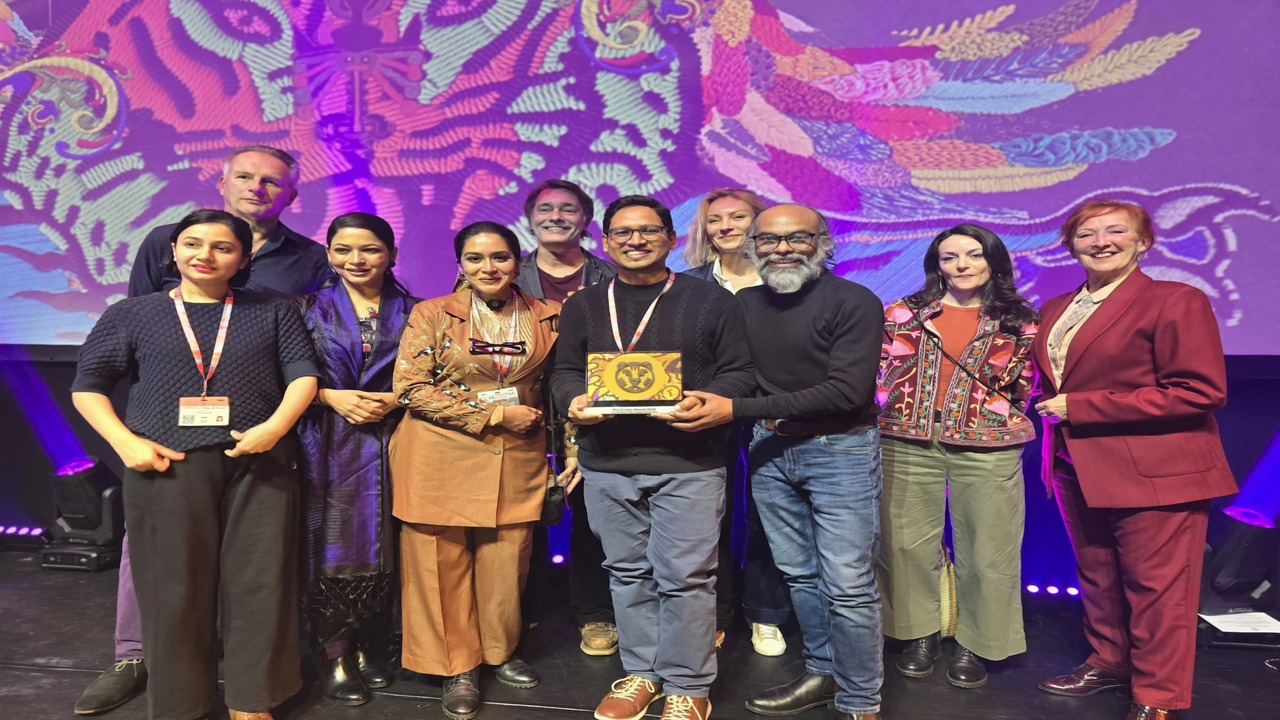
Acclaimed Bangladeshi filmmaker Rezwan Shahriar Sumit’s second feature ‘Master’ continues its international journey, following its Big Screen Award win at the 54th International Film Festival Rotterdam earlier this year and its recent Australian premiere at the 73rd Sydney Film Festival, while its Bangladesh release remains awaited.
In an exclusive conversation with TIMES of Bangladesh, Sumit traced the long, uneasy journey of the film.
“The first draft of ‘Master’ started taking shape around September or October 2022,” Sumit said. “However; the idea had been in my head much before that.”
Although the film unfolds in the fictional upazila of Mohoganj, its emotional geography is firmly rooted in Bangladesh’s climate-vulnerable coast. The origin, he explained, goes back to the shoot of his earlier and maiden film ‘Nonajoler Kabbo’, where he worked closely with 22 fishing families living on a disappearing char in Patuakhali.
“A year and a half after we shot there, the sea swallowed the village,” Sumit told ToB. “Those people became climate displaced.”

What followed was a second cycle of displacement. The families attempted to resettle in nearby forest areas, only to be evicted again by the forest department without warning.
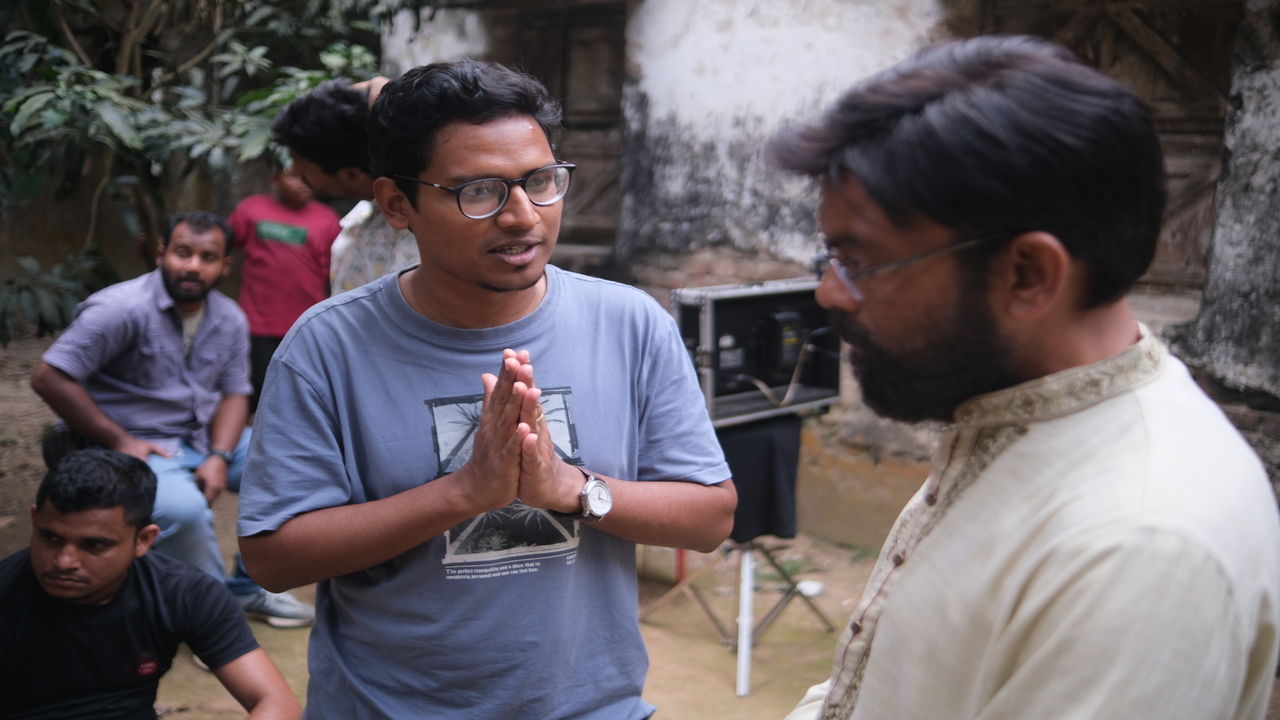
“I tried to document their struggle,” he said. “And in the process, I saw how local administration actually works, especially the UNO and upazila chairman level.”
That proximity reshaped his understanding of governance and responsibility. It also introduced a moral discomfort that eventually became the backbone of ‘Master’.
“Sometimes I helped them fill forms, sometimes I guided them through applications,” he said. “And then I realised something difficult. The people who are supposed to support them are often serving other invisible power structures or personal interests.”
From this lived observation emerged the film’s central tension: what happens when an idealist enters power and begins to change under its pressure?




At the centre of Master is Zahir, an ideal teacher played by acclaimed actor Nasir Uddin Khan, who becomes an upazila chairman and is forced to navigate the contradictions of authority, compromise and survival within a deeply layered system.
“An idealistic person people believe in, when he gains power, how does he change,” Sumit said. “That is what the film depicts.”
While the film engages with politics and administration, Sumit is careful not to frame it as partisan commentary.
“Even though I belong from a political family as my father is a renowned politician, I have always preferred to be known simply as a filmmaker,” he said. “My father’s political identity has never been something I foregrounded in my work.”
Instead, he views cinema as observation rather than argument, rooted in stories that often remain outside dominant narratives. “A filmmaker’s responsibility is to tell stories that others are not telling. Sometimes those stories may not be comfortable, but they exist,” according to Sumit.
He also rejects rigid distinctions between commercial and art cinema. “I respect commercial films, romance, music-driven storytelling,” he said. “But all kinds of stories must have space in cinema.”
The international reception of Master has given the film a broader platform than initially expected. Its Rotterdam recognition and Sydney screening have placed it alongside acclaimed global titles, increasing its visibility in competitive festival spaces.
Festival programmers have described the film as carefully composed, visually striking, and anchored by strong performances that highlight its underlying tensions. For Sumit, however, recognition is only one part of the journey.
“Good storytelling is not enough,” he said. “A film also needs proper marketing; only then can it reach audiences.”
He believes the ongoing moment is significant for Bangladeshi cinema, as audience appetite continues to evolve.
“Bangladeshi audiences are now ready for strong stories,” he said. “With the right promotion, I believe ‘Master’ can reach them.”
Behind the film lies a globally distributed production process, with post-production spanning Seoul and Busan studios, editing by Academy member Kristan Sprague, and music by Los Angeles-based composer Hao-Ting Shi. The film is jointly written by Sabbir Hossain Shovon and Rezwan Shahriar Sumit.
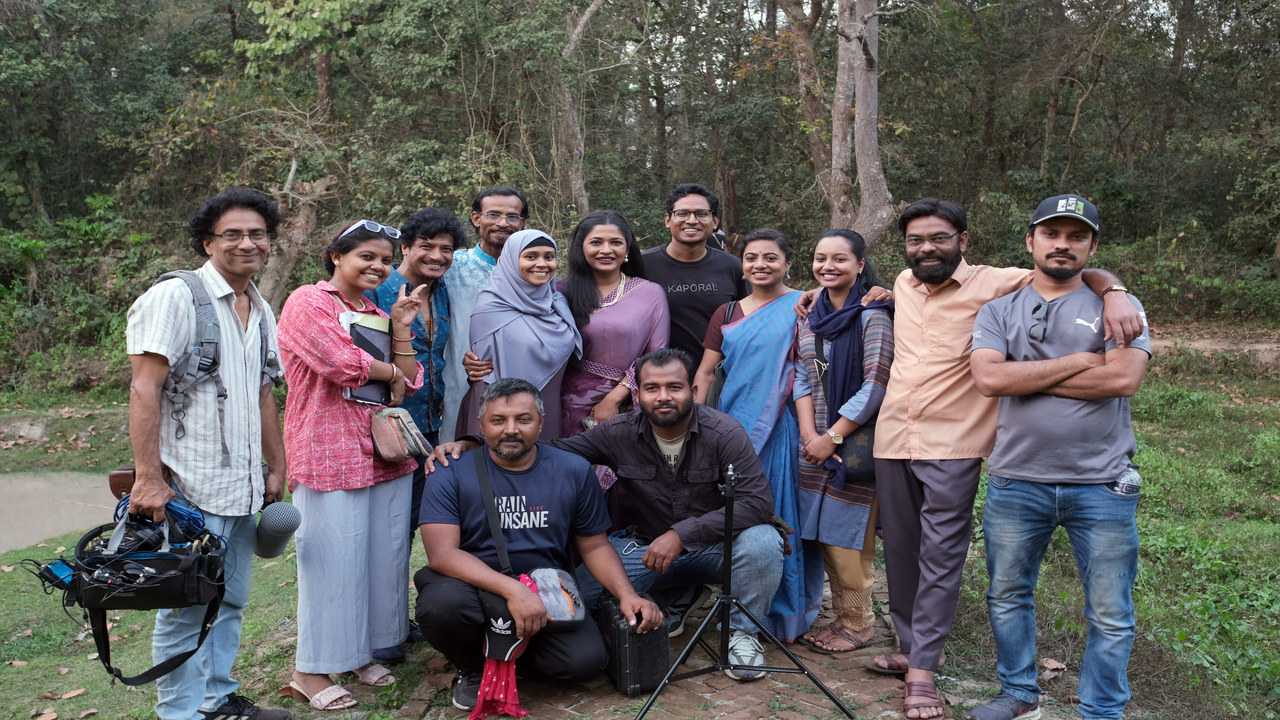
The ensemble cast of the film includes Nasir Uddin Khan, Azmeri Haque Badhon, Sharif Siraj, Fazlur Rahman Babu, Zakia Bari Mamo, Tasnova Tamanna and others.
As ‘Master’ moves toward its Bangladesh release after its global festival run, Sumit returns to the question that shaped it from the beginning, not only about power, but about what remains of belief when systems begin to fracture from within.