Fardin Ahmed, a young robotics engineer from Rajbari’s Goalanda Upazila, has dismantled the long-standing belief that sweet grapes cannot be grown in Bangladeshi soil. By successfully cultivating 204 varieties of grapes on 1.5 bighas of land, he has become a sensation for agricultural entrepreneurs across the country.
A graduate in Robotics Engineering from a private university in Dhaka, Fardin’s journey began amidst the adversity of COVID-19 pandemic.
When coaching centres in Dhaka closed, he returned to his ancestral home in Molla Para village, located in the Kuthi Pachuria Union of Goalanda. What started as a hobby – planting a single grape vine in his backyard – initially yielded inedible fruit, but Fardin was not deterred.
Utilising his engineering background and online research, he established an organisation named Grape Engineering Agro and Research. In May 2025, he commenced commercial cultivation on 1.5 bighas of land. His garden now hosts 500 trees, including world-renowned varieties such as Russian Baikonur, Ukraine’s Valez, Japanese Ruby Roman, Lamborghini, and Black Magic.

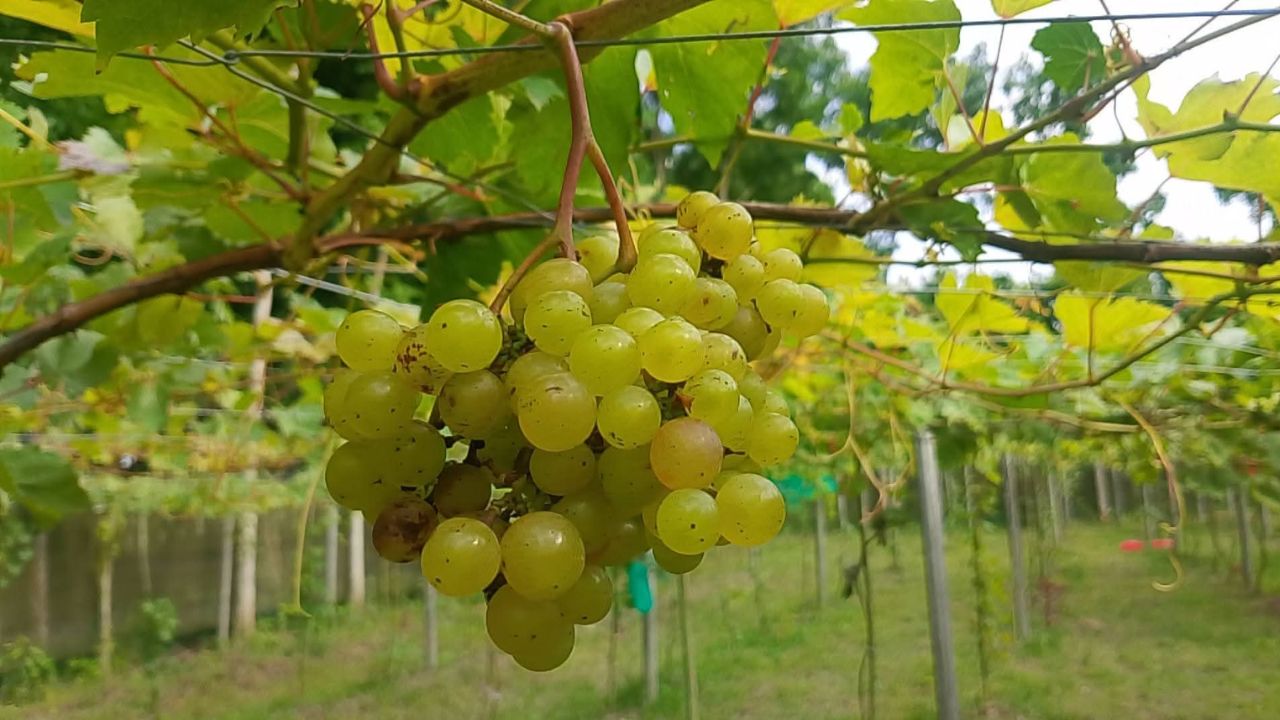
Fardin employs a modern “macha” (trellis) system to manage the crop. “Being an engineering student, I had a tendency to delve deep into subjects,” Fardin explained.
“I conducted intensive research through YouTube and the internet regarding fertilisers, medicine applications, and specific care protocols”. To date, he has invested approximately Tk13.5 lakh in the project.




The venture has already shown significant economic potential. Beyond harvesting fruit, Fardin earns a substantial income by selling saplings of these exotic varieties via courier services to enthusiasts nationwide.
The farm has also created employment for 10 to 12 people, including Shahid Mia, who noted that the garden supports their livelihoods.
Local interest is surging. Abdur Rahim, a local farmer, admitted he previously thought sweet grapes could only grow in cold climates and feared Fardin’s investment would be wasted.
“He has not just grown grapes; he has opened our eyes,” Rahim said. Similarly, Nusrat Jahan, an agriculture student, described the collection as a major learning opportunity for students.
Despite his success, Fardin noted a lack of initial support. “It is regrettable that I received no technical assistance or advice from the agriculture department during this long journey,” he stated, adding that many initially mocked his ambition. However, his first harvest has proven to be exceptionally sweet, and he is now expanding commercial cultivation of the Baikonur variety across an additional 4.5 bighas.
Addressing the achievement, Md Shahidul Islam, deputy director of the Rajbari District Department of Agricultural Extension, called the success a promising sign for the sector. He confirmed that the department is now monitoring Fardin’s activities and will provide necessary technical advice and field-level cooperation to help the initiative scale further.