Rabindranath Tagore’s classic essay ‘Crisis of Civilisation’ exposed the moral degeneration of society, a lack of humanity, and discrimination among individuals, which is still mirrored in today’s so-called new Bangladesh. Looking around, we can see that we are heading into a chaotic, directionless society. Morality and humanity are fading by the day. Almost all of us are affected by this degeneration in some way at all levels of society. The erosion of ideas and ideals caused by vested interests is increasingly apparent in politics, economics, and society. The country is plagued by social and extreme religious wickedness, corruption, and abuse of power in the social, political, and administrative systems. On one hand, hunger for power and violence among the wealthy is on the rise. On the other, insane religious extremists and opponents of the liberation war are on the rise. Examining the underlying principles of modern civilisation is critical.
To understand the current situation, we must look at the outlook and teachings of East and Western thinkers. One Western philosopher is Plato whose social, political, and philosophical thoughts have inspired the world and guided social change throughout the ages. His famous book The Republic discusses many critical issues of justice, policy, and the role of the state. According to Plato, rulers must have moral education to build a moral society, and governance must prioritise normative aspects. But what do we all see? No one would disagree that there is a gross lack of morality and abuse of power in our society. Justice and human values have been destroyed to human-to-human differences and discrimination. This situation will deteriorate unless there is an ideological change in society.
Another Western philosopher, Jean-Jacques Rousseau, noted in his Social Contract that humans are born free and equal. However, their freedom and equality are interfered through various rules and regulations of society. Here, the powerful have established a regime of corruption and discrimination for their own benefit, which creates social immorality.

Chinese philosopher Confucius stated that ‘the peace and stability of a society are maintained only when the rulers are just, and their rule is based on morality.’ If the ruling class does not follow moral values, peace and justice will not be established. Rabindranath Tagore wrote in his essay that ‘the crisis of civilisation begins when people lose their sense of morality and human values.’ This is more evident in today’s Bangladesh. Incidents of persecution, religious and ethnic conflict, mob justice, political oppression, and violence against minority communities are on the rise. These events question our human values and drive us towards an inhumane society. The root cause of this degeneration is the lack of moral education.
The education system of our country lacks teaching about humanity and ethics. The pressures of economic prosperity and competition have diverted our attention to moral education in the family, school, and other areas of society where morality should be taught. The practice of humanity and compassion is gradually decreasing in society, creating a moral crisis for future generations.




Among the early philosophers, Gautama Buddha, emphasised the importance of morality and humanity saying, “The best religion of humanity is kindness, compassion and justice.” If kindness, compassion, and justice are not practised at every level of society, social justice cannot be established, and inequality among people will not be eliminated. The corruption, discrimination, and violence we see in all spheres of life is a reflection of the true crisis of civilisation. The only way out of this crisis is to re-establish our human values and moral education. Rulers should conduct themselves according to the standards of moral education and establish justice for ordinary people. In order to reconstruct the current society of Bangladesh, morality and humanity must be practiced at every level of society. Then the future of our country will move towards a just and humane society.
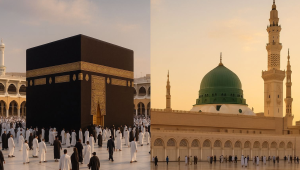
The incidents of oppression and discrimination against the minorities in Bangladesh is not only inhumane and immoral, but contrary to the basic tenets of Islam. One of the most fundamental teachings is Insaf, or justice. Islam places equal value to every human being’s dignity and rights. It promotes justice and prohibits any form of injustice against others. The Prophet Muhammad (PBUH) during his Last Hajj, emphasised that no one is superior to others. He spoke about human rights and social justice. It is a testament that Islam is against any form of discrimination or oppression by individuals or groups based on caste, religion, or tribe.
Records indicate that during the early Islamic period, the freedoms, and the religion of non-Muslim minorities especially Jews and Christians were fully protected by Muslims. The peaceful coexistence of religions in Islam was eloquently depicted after the conquest of Jerusalem, when Caliph Omar guaranteed that the conquerors will respect the property and places of worship of the non-Muslims. The fundamentalist groups targeting persecuting minorities in Bangladesh are antithetical to Islam’s core principles of tolerance and justice.
All religious individuals must embody the real principles of Swadharma: compassion, respect, and justice for all. Social stability and peace are achievable only when all individuals, regardless of religion, caste, or community, act with compassion and respect toward one another. Rabindranath’s assertion is also true with respect to the teachings of Islam. Islam enjoins that all societies and communities must have justice, compassion, and tolerance. There can only be progress of a nation, when every individual practices his or her religion in full responsibility, and recognises and respects the religion of others. All religions, Rabindranath’s humanism, and the Platonic ideals of justice, all argue that the condition for peace and prosperity in a society is compassion and justice. A just, prosperous, and peace-loving nation, in which all people can enjoy their rights and dignity, can only be founded on unity, morality and humanity.
The combined lifestyle of people of all religions, including Hindus, Muslims, Buddhists and Christians, has enriched the soil of Bangladesh. Rabindranath Tagore, Kazi Nazrul Islam, Mujtaba Ali, and great writers like Shamsur Rahman have shown that no religion can stifle creativity or the spirit of humanity. Their literature encompasses the message of oneness, love, and humanity for all. It is this spirit of oneness that will make Bangladesh prosperous, and peaceful.
Bangladesh is presently deep in the discrimination, the moral void, and injustice that prevail today. The unparalleled teachings of Islam, accompanied by the wisdom of Plato, Rousseau, Confucius, Gautama the Buddha, and Tagore, stresses the same message: the dignified treatment of people is the bedrock of morality, which gives us peace and stability. Bangladesh can become a model for coexistence again if it can reclaim the lost values of coexistence, which are the most basic and crucial values of the country. Since the country is losing these fundamental values, it must restore these values through the lens of shared responsibility and respect for one another’s rights and dignity. Bangladesh needs unity, a sense of community, and more social ethics to fulfill its potential.