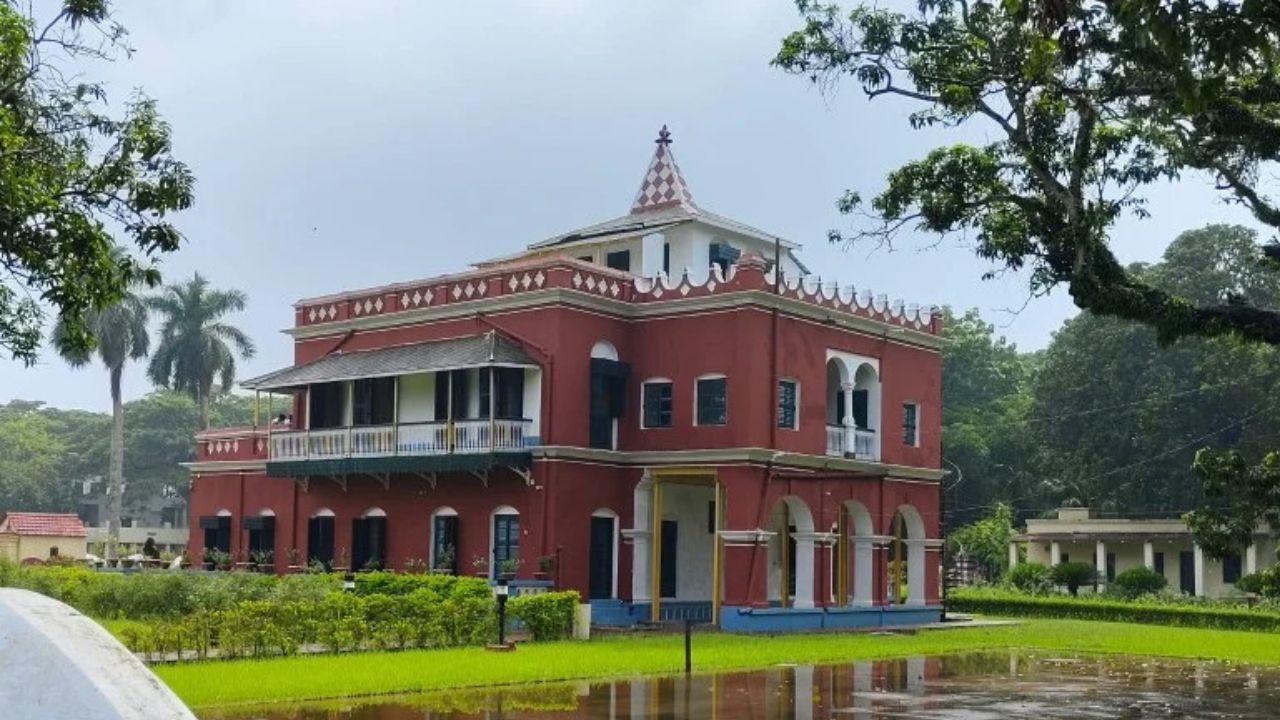



The Shilaidaha Rabindra Kuthibari in Kushtia, a site steeped in the memory of Nobel Laureate Rabindranath Tagore, currently wears a somber look.
The very courtyard where the poet penned numerous immortal works of Bengali literature is now submerged under rainwater following days of heavy downpours.
Located in Shilaidaha of Kumarkhali, roughly 800 metres west of the Padma River, this historical landmark is a primary destination for enthusiasts from across the country.
However, this monsoon, the beauty of the estate is being overshadowed by severe waterlogging.
A heritage submerged
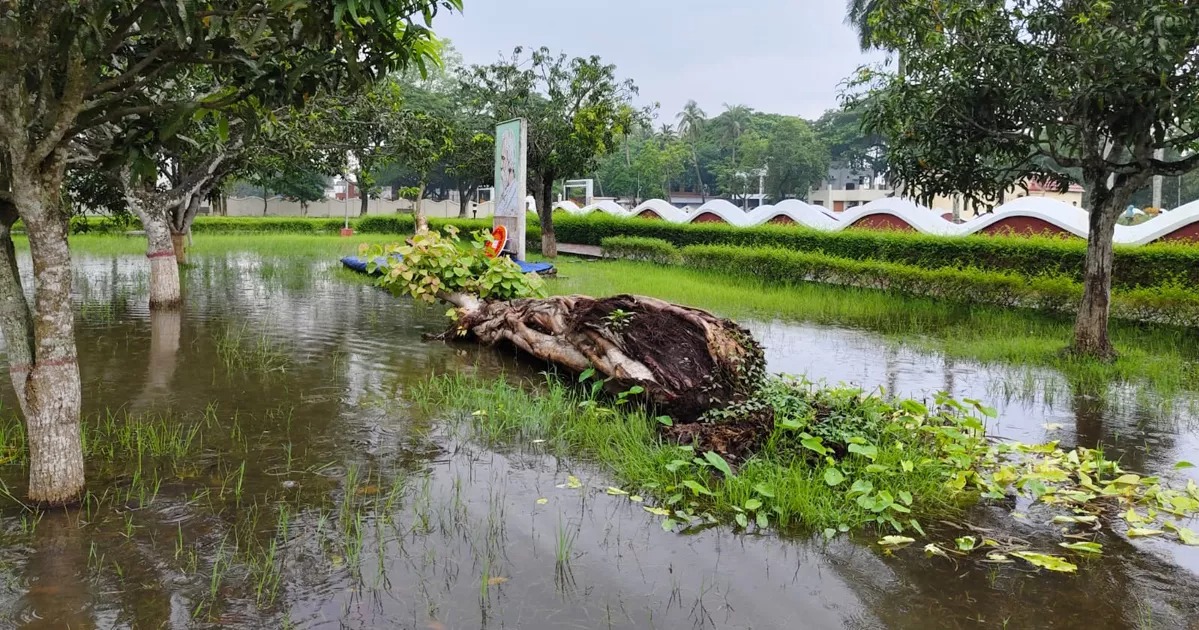
The scene on the ground is distressing. Stagnant water has gathered in front of the main entrance, around the open stage (Mukta Mancha), the mural area, the museum courtyard, and the sprawling flower and fruit gardens.

The flooding has effectively halted cultural activities; the open stage, once a hub for poetry recitations and social gatherings, remains inaccessible.
The gardens have also borne the brunt of the weather. Fruit and flower trees are leaning into the water, with some on the verge of being uprooted.
Visitors are now confined to the elevated walkways, unable to appreciate the full natural beauty of the estate.




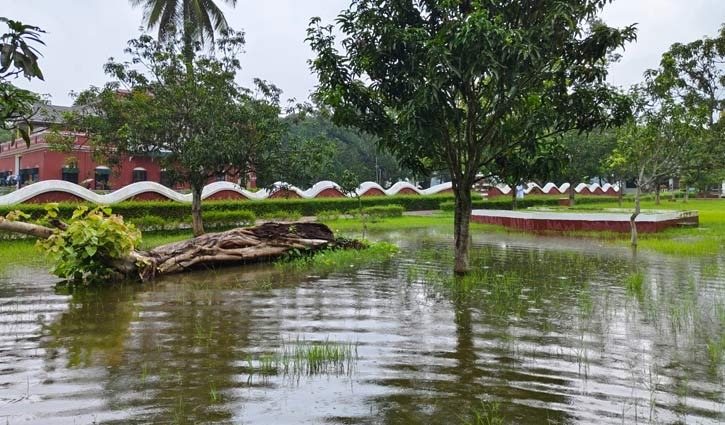
Visitor disappointment
The situation has left many tourists disheartened. Habib Khan, who travelled from Pangsha in Rajbari, shared his frustration, “It has been a long-held dream to visit the poet’s house. After coming all this way, I find the entire area underwater. There is not even a dry spot to take a photograph”.
Similarly, Nahid, a member of a 40-student study tour from Rajshahi, expressed his disappointment. “We had planned to recite poems on the open stage and take photos in the mango orchard. But it is all flooded. The authorities should arrange for water removal immediately,” he said.
Ishtiaq Ahmed, a private sector employee from Kushtia city who visited with his family and guests, noted that the situation was “embarrassing” and stressed the need for a “planned drainage system” at such a significant historical site.
Structural threats and drainage failure
The waterlogging is not just a nuisance for visitors; it is a threat to the heritage itself. Staff members report that the prolonged dampness is affecting both the interior and exterior of the museum.
Sakib Hossain, an employee at the Kuthibari, explained that a narrow drain alongside the road, which previously carried water away, has effectively “died,” leaving the rainwater with no outlet.
According to the Kuthibari authorities, the crisis is twofold. While the old drainage path to the Padma River has been lost to encroachment and pollution, the recent heavy rains have also filled the marshes (beels) behind the estate.
Consequently, instead of draining out, water from the overflowing beels is now flowing back into the Kuthibari premises.
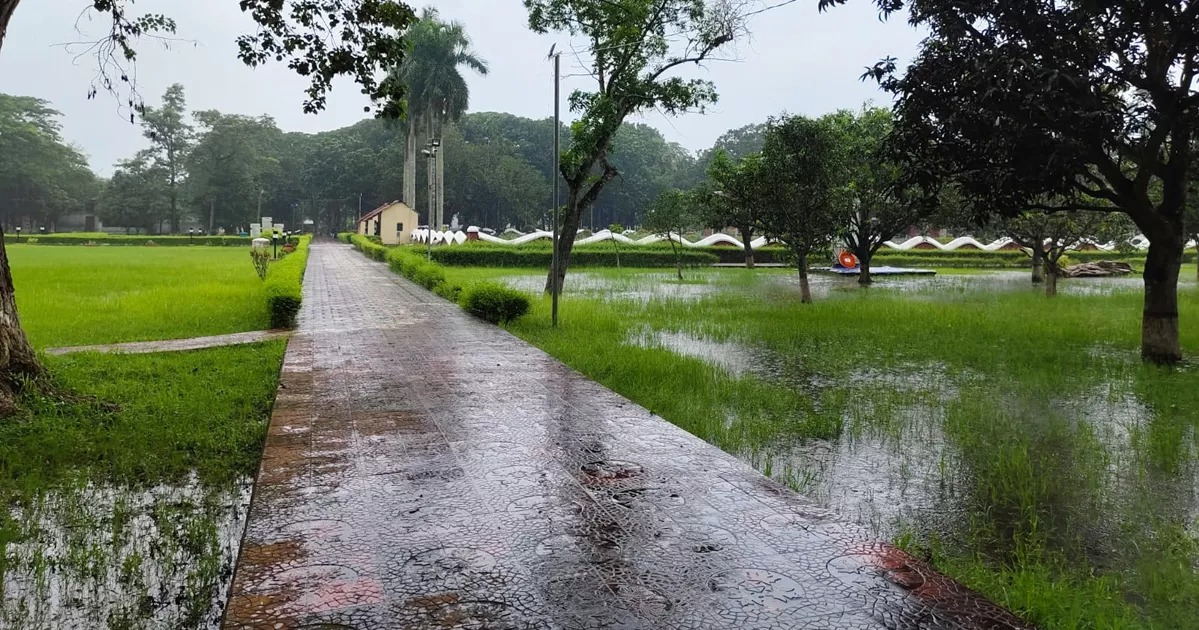
A call for a permanent solution
Al Amin, the Custodian of Shilaidaha Rabindra Kuthibari, confirmed that the lack of a dedicated drainage system is the root cause of the crisis.
“Previously, water would flow into the eastern beel. However, due to excessive rainfall this year, the situation has reversed—water from the beel is entering the Kuthibari,” he said.
He added that the local administration has been informed of the urgency. Without swift intervention, there are growing fears that the infrastructure and the invaluable archaeological artefacts housed within could suffer long-term damage.
For many, Shilaidaha is more than a tourist spot; it is a vital chapter of Bengali culture.
Visitors and locals alike are now calling for more than just a temporary fix, urging the government to implement a comprehensive, long-term drainage plan to preserve the sanctity of Tagore’s abode.