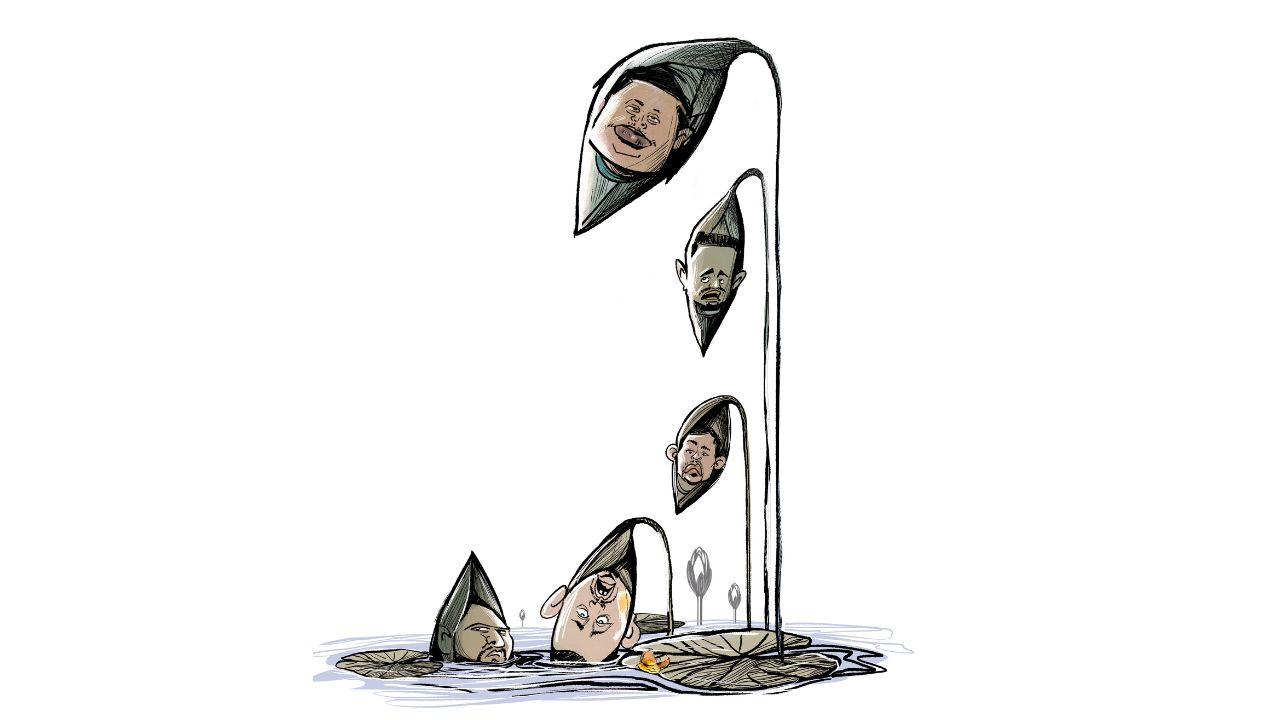
A network of more than 1,000 Facebook accounts has been carrying out coordinated review-attacks on journalists, newsrooms, political rivals and cultural institutions by repeatedly posting negative reviews to discredit critics and suppress reporting.
Dismislab, an independent, fact-checking and information research platform, analysed 62,529 review posts across 1,118 pages to understand how the network operates, who it targets and how the same scripted comments appear hundreds of times in short, synchronised bursts.
Between January and October 2025, the network targeted at least 721 pages, mainly news outlets, activists, political rivals and cultural organisations, accusing them of spreading “false information,” “terrorism” or “social harm.”
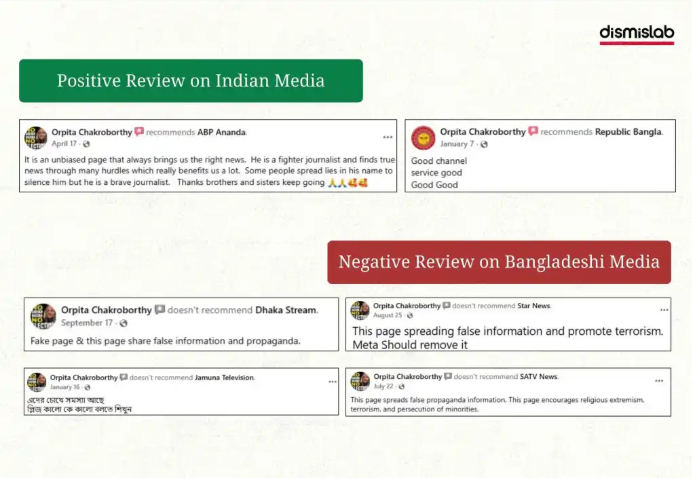
At the same time, the same accounts posted positive reviews on dozens of pro–Awami League (AL) pages, as well as on Indian media pages and the Facebook profile of a Bharatiya Janata Party politician.
Examples show the network reacting quickly to criticism. Dhaka Stream received review-bombing hours after publishing stories on former prime minister and AL president Sheikh Hasina.
Drik, the independent media organisation, was attacked after sharing images from its exhibition on the July–August uprising that toppled Hasina.
Dismislab reported that it came under attack immediately after reporting on the online harassment of Dr Tasnim Zara, a leader of the National Citizen Party. In all these cases, comments arrived in identical language within two-to-three-hour waves.
Analysts say such patterns distort public perception, creating what one editor described as “an online mob” where first impressions override facts.
Attack on Dismislab
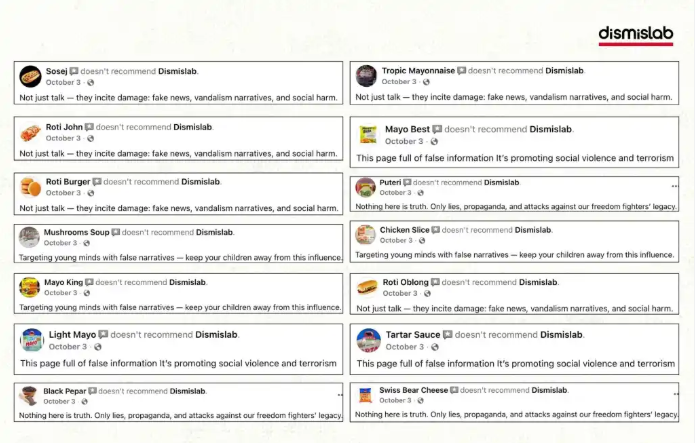
Review-bombing of Dismislab began on 2 October 2025, shortly after its report on the harassment of Dr Tasnim Zara. The first comment, posted by a profile later renamed, accused the platform of promoting “rumour and information-terrorism.”

Within minutes, other profiles repeated the same wording. Activity peaked on the morning of 3 October, when 48 reviews appeared between 7am and 9am, many accompanied by hashtags such as #StopPropaganda.
Over the three days, 60 profiles posted negative reviews. The comments turned out to be only 23 original scripts reused across accounts. Dismislab later found these same 23 texts appearing 1,473 times across 315 pages.
Investigators examined the 60 accounts involved. Some appeared to use personal identities, while others used political labels such as “BNP Mane Binodon” or “1971 to 2024: Rajakar-Lalbadar”. Nineteen accounts were named after foods—Roti Burger, Tropic Mayonnaise, Sosej and others—thirteen of which were created within two days. These pages alone produced more than 3,000 reviews using the same small pool of repeated texts.
Dismislab found that 36 of the 60 profiles also posted positive reviews on “Rog Porichorja Kendro”, a page presenting itself as satire but expressing support for the AL and mocking rival groups. An anniversary post on the page suggested that after 5 August 2024, its content shifted from humour to instructing followers how to “fight online with memes”.
Using the full dataset, researchers identified roughly 600 persistently active accounts. Expanding the threshold to include accounts posting more than five comments widened the estimated network to around 1,150.
When filtered for repeated messages appearing ten or more times, 1,019 accounts were found to have posted identical texts. The extended group posted more than 13,000 comments, 94% pushing pro-AL messages.


Around four in five were negative attacks on journalists, media outlets, activists and civil society groups. About 16% praised pages aligned with AL narratives.
One comment alone – “this page spreading false information and promote terrorism. meta should remove it” – appeared 930 times between March and October.
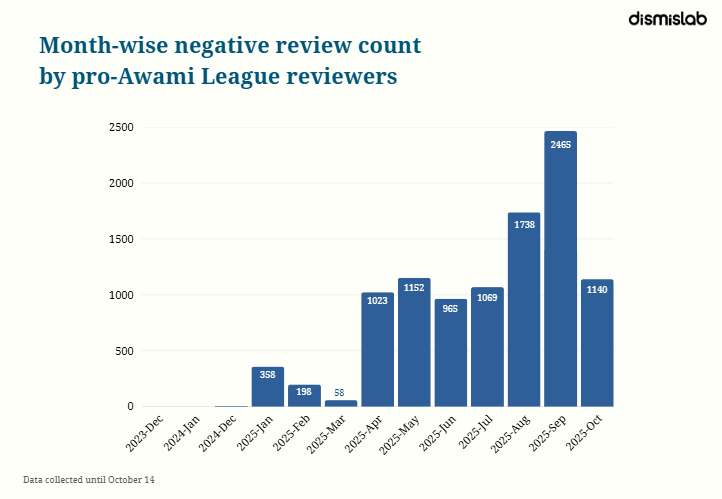
The earliest signs of the network appeared in January 2025, with 358 negative comments that month. Activity increased steadily, rising to around 2,465 in September. Several accounts became unavailable while this report was being prepared.
Targets across sectors
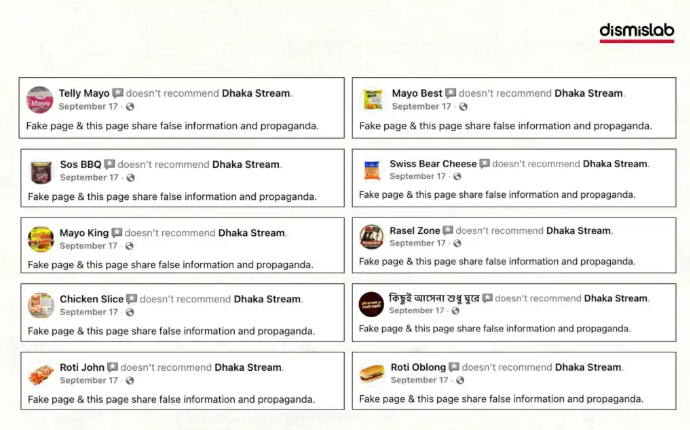
Dhaka Stream was hit shortly after publishing a report on land linked to Sheikh Hasina. Between 5:55pm and 6:36pm on 17 September, it received 30 identical reviews.
Its deputy manager of social media said colleagues’ personal photos and family information were also circulated, prompting the outlet to disable its review option.
Drik was targeted in April during its Press Photo Contest exhibition featuring images of the July–August uprising, and again in October after posting updates on managing director Shahidul Alam’s participation in the Gaza Freedom Flotilla.
Reviews arrived in clustered, near-identical form. Shahidul Alam, a long-time critic of Hasina, was arrested in 2018 for allegedly “spreading propaganda.”
News outlets Jamuna TV, Dainik Amar Desh, Star News and SA TV News were also targeted. Jamuna TV was accused of “promoting militants” and “3,000+ police killings,” a message repeated 30 times within 46 minutes on 3 February.
Prothom Alo’s lifestyle page Haal Fashion received 24 identical Bangla reviews in two hours on 2 October. Similar waves hit SA TV and Star TV in late July and late August.
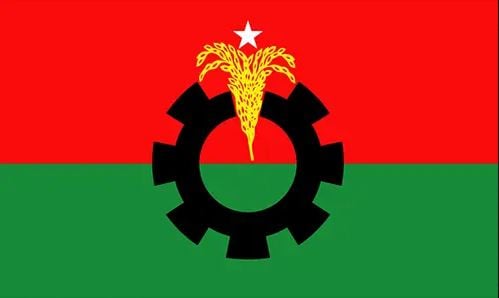
Political pages were also affected. BNP Media Cell received waves of negative reviews in January and August.
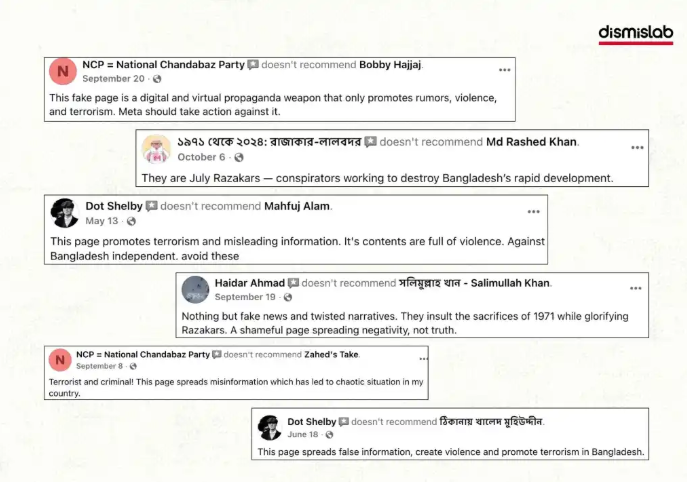
Pages linked to Jamaat-e-Islami, Chhatra Shibir, Rashtra Sangskar Andolon, Rashtrochinta Prokashoni and several political figures – including Bobby Hajjaj, Imran Imon, Rashed Khan, Faruk Hasan, Mahfuj Alam, Salimullah Khan, Mostofa Feroz, Zahed Ur Rahman and journalist Khaled Muhiuddin – appeared in the dataset.
State bodies including Bangladesh Shilpakala Academy, Press Institute of Bangladesh, Bangladesh Police and the Bangladesh Investment Development Authority were targeted, as were organisations connected to Chief Adviser Muhammad Yunus, including Grameen Foundation and enforced-disappearance victims’ association “Mayer Dak.” Bookshops and publishers, including Oitijjhya, Ahsan Publication, Rokomari and others, also featured.
The profiles involved posted negative and positive reviews depending on whether they aimed to discredit or elevate the page. The same profile that attacked Dhaka-based outlets posted praise for ABP Ananda, Republic Bangla and Zee 24 Ghanta. Several accounts also posted supportive reviews on the page of West Bengal BJP leader Rajat Mukherjee.
Mirror activity from opposition
A smaller opposition-aligned network was also detected. Dismislab found seven negative review scripts used 250 times across 33 pages by 24 profiles criticising the AL.
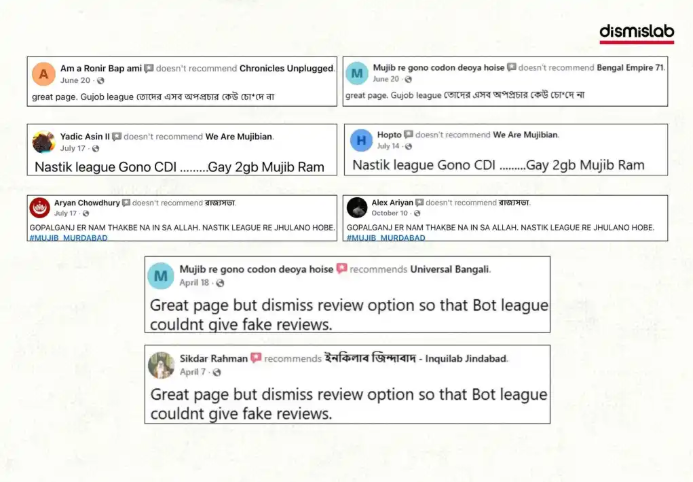
These profiles also posted positive reviews on sympathetic pages, urging them to disable review features to avoid “bot league” attacks.
On 17 July, 99 negative reviews hit 21 AL-supporting pages in one day. Another 60 similar reviews were posted on 20 June. This mirror network was smaller and less coordinated, but its presence was clear within the dataset.
Impact and platform gaps
Coordinated review-bombing can significantly distort how a page appears to ordinary Facebook users. Dozens of negative reviews arriving within hours lower a page’s rating and create an impression of widespread disapproval.
Several affected pages responded by disabling reviews altogether.
Fact-checking organisation FactWatch also reported similar attacks. Its founding editor, Suman Rahman of ULAB, said such waves create “an online mob” and influence first impressions, especially among users with limited media literacy.
Meta’s Community Feedback Policy forbids coordinated manipulation and misinformation in reviews. Its Coordinated Inauthentic Behaviour framework allows enforcement against networks using multiple accounts to mislead users.
However, many repetitive comments in this dataset remained visible, indicating gaps in detection and enforcement.
The Dismislab findings show that coordinated review-bombing has become a powerful tool for political influence on Facebook, with a large pro–Awami League network and a smaller opposition cluster using repeated, scripted reviews to distort page ratings and target critics.
The attacks spread across media, cultural institutions, political figures and state bodies, while platform gaps allow such organised manipulation and online harassment to persist.