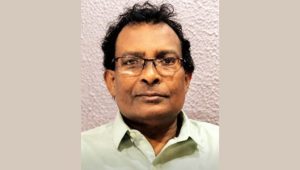
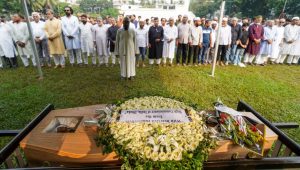
Ruling BNP has indicated that it does not intend to appoint a new president before the incumbent’s term expires. However, despite the party’s apparent preference for him to complete his tenure, President Mohammad Shahabuddin has not made a final decision about whether he would remain in office after the first sitting of the 13th Parliament.
“The decision rests with the party in power. If they want to keep me, I have not yet decided whether I will stay,” he told TIMES of Bangladesh, signalling that his political future hinges largely on the ruling party’s stance.
His remarks come amid intensifying debate ahead of parliament’s first session on 12 March — a sitting that could prove pivotal not only for the legislative agenda, but also for the presidency itself.
Senior policymakers within the BNP argue that constitutional continuity must be preserved. In their view, there is no justification for replacing a president whose term has not yet expired. They maintain that any move perceived as falling outside constitutional norms would risk sending an adverse political message at a sensitive moment.
Yet there is a competing view within the party. Some leaders believe that once the inaugural session concludes, Shahabuddin could be encouraged to step down voluntarily. Such a move, they argue, would allow a senior BNP figure to assume the presidency without triggering a constitutional confrontation.

Analysts suggest that the president’s fate now rests less on legal constraints and more on the strategic calculations of the BNP high command.
Possible successors
Should the post fall vacant, several heavyweight BNP leaders are being discussed as potential successors. Among them, Khandaker Mosharraf Hossain, the senior most member of the party’s standing committee, is said to be receiving particular attention.
Other names circulating include BNP Secretary General Mirza Fakhrul Islam Alamgir and senior leader Abdul Moyeen Khan.



Mirza Fakhrul has publicly questioned the timing of the discussion, noting that the president’s term has not yet expired. He has said there are “three or four” figures within the BNP capable of serving as president, while emphasising that all decisions must remain within constitutional bounds.
Legal questions and political Signals
The president’s authority to convene parliament and deliver the opening address has been challenged in the High Court through a writ petition filed by a lawyer. Meanwhile, MPs elected from Jamaat-e-Islami and NCP have signalled reluctance to participate in discussions following the president’s speech.
Despite these tensions, BNP says it remains committed to upholding constitutional norms and intends to conduct parliamentary proceedings according to established conventions.
On 12 March, President Shahabuddin is scheduled to deliver the inaugural address and administer the oath to the newly elected speaker and deputy speaker, as required by parliamentary procedure.
Speaker and deputy speaker dynamics
The opening session will also see the election of a speaker and deputy speaker. Names circulating for the speaker’s post include Abdul Moyeen Khan, senior lawyer Zainul Abedin, former education minister Osman Faruk and Liberation War Affairs Minister Hafiz Uddin Ahmed. Observers note that although Zainul Abedin is a first-time MP, his legal and constitutional expertise may strengthen his candidacy.
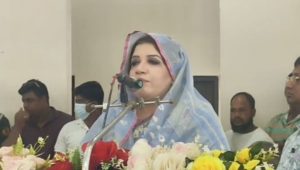
In line with Prime Minister Tarique Rahman’s 31-point commitment, the government has decided that the deputy speaker’s position will go to the opposition. Home Minister Salahuddin Ahmed has confirmed that names have been sought from Jamaat-e-Islami in an effort to build political consensus.
Two opposition MPs are under discussion: Najibur Rahman Momen of Pabna-1 and Rafiqul Islam Khan of Sirajganj-4.
A delicate balance
Political observers say BNP is attempting to strike a careful balance. On one hand, it seeks to project institutional stability and respect for constitutional process. On the other, it appears keen to retain flexibility should a leadership recalibration be deemed politically advantageous.
The president’s own remarks — that he has yet to decide whether he would remain even if asked — underscore the uncertainty surrounding the post.
The 12 March sitting is therefore more than a ceremonial opening. It may offer an early indication of how the new political order intends to reconcile constitutional formalities with the realities of partisan power.