The Parliament complex is poised for a day of ceremony and consequence. Under heavy security and amid mounting anticipation, the country prepares to witness the formal return of political authority as BNP Chairman Tarique Rahman takes oath as the country’s new prime minister.
By dusk, the Parliament complex is expected to transform into the stage for a new administration. The symbolism is unmistakable: after months of political transition, ballots have given way to office, and rhetoric to responsibility.
The day’s proceedings will unfold in careful constitutional sequence. In the morning, newly elected members will take their oath at the Parliament’s oath room. They will also be sworn in as members of the Constitutional Reform Council. The oath will be administered by Chief Election Commissioner AMM Nasir Uddin.
Later in the afternoon, President Mohammed Shahabuddin will administer the oath of office to the prime minister and members of the new cabinet at the South Plaza of the Parliament.
The Cabinet Division of the interim government and the Parliament Secretariat have completed all necessary preparations for the ceremonies. The Ministry of Home Affairs has instructed the police to ensure the highest level of security around the swearing-in venue and adjacent areas. Law enforcement agencies have taken extensive measures to coordinate security arrangements.
On Monday, Senior Secretary of the Ministry of Home Affairs Nasimul Ghani was appointed as the new cabinet secretary, according to a notification issued by the Ministry of Public Administration. Shortly after his appointment, he met Tarique Rahman at the BNP chairman’s office in Gulshan to discuss the swearing-in ceremony and related arrangements.

Speaking to journalists after the meeting, Nasimul Ghani described it as a courtesy call and confirmed that preparations for the oath ceremony were discussed in detail. Later, he told TIMES of Bangladesh that even he did not yet know the final size of the cabinet. When asked when prospective ministers would be contacted, he said calls could be made as early as Monday night or as late as Tuesday morning.
Following the swearing-in of MPs in the morning, BNP’s parliamentary party is scheduled to meet on the ninth floor of Parliament. The meeting, to be chaired by Tarique Rahman, will determine key parliamentary positions including leader of the house, deputy leader, chief whip and whips.
Under parliamentary convention, the speaker must be elected in the first session of Parliament. The speaker presides over the session, which cannot formally begin without the election. Sources indicate that discussions will also address the selection of the speaker and members of the speaker’s panel.
Speculation over the composition of the new cabinet has intensified across political circles and social media. Numerous lists naming potential ministers have circulated online, though senior BNP sources say none can yet be considered fully accurate.


Party insiders suggest that the new cabinet will be smaller than the BNP government formed in 2001, which had 60 members and faced criticism for its size. This time, the leadership is reportedly aiming for a more streamlined structure.
Initial indications suggest the cabinet could comprise between 32 and 40 members. Of these, 25 to 28 may be full ministers, while eight to 11 may serve as state ministers. Deputy ministers are also expected. Party sources say additional names could be added at the last moment, though as of late Monday night, the final list had not been confirmed.
Sources close to the party say Tarique Rahman intends to balance experience and youth in forming his cabinet. Senior leaders, younger figures, district-level politicians and technocrats are all under consideration.
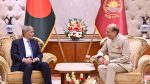
While much of the selection process is being overseen directly by Tarique Rahman, discussions have also involved BNP Secretary General Mirza Fakhrul Islam Alamgir and two members of the party’s Standing Committee. Several senior policymakers have reportedly been consulted, though none have agreed to speak publicly on the matter.
Tarique Rahman himself is expected to serve as both prime minister and leader of the house.
Among those under discussion for key ministries are Mirza Fakhrul Islam Alamgir, Standing Committee members Amir Khosru Mahmud Chowdhury and Salahuddin Ahmed. Other senior leaders reportedly being considered include Hafiz Uddin Ahmed and former education minister Osman Faruk.
There is also speculation that Mirza Fakhrul Islam Alamgir may initially be assigned a significant ministry and later elevated to the presidency, though this remains unconfirmed.
Other senior figures whose names have surfaced include Khandaker Mosharraf Hossain, Mirza Abbas, Gayeshwar Chandra Roy, Abdul Moyeen Khan, Iqbal Hasan Mahmud Tuku, AZM Zahid Hossain and others.
Under the technocrat quota, several BNP leaders are reportedly in consideration, including Nazrul Islam Khan, Selima Rahman, adviser to the chairman Md Enamul Haque, Senior Joint Secretary General Ruhul Kabir Rizvi, Joint Secretary General Humayun Kabir, Habib-un-Nabi Khan Sohel, media cell convener Maudud Hossain Almagir Pavel, adviser Mahdi Amin and Dhaka North BNP convener Aminul Haque.
If not included as technocrat ministers, some individuals may be appointed as advisers with ministerial status. Others could be assigned significant roles within the Prime Minister’s Office.
Among elected BNP MPs reportedly under consideration are Nitai Roy Chowdhury, Mizanur Rahman Minu, Shahid Uddin Chowdhury Annie, ABM Ashraf Uddin Nizan, Mohammad Naushad Jamir, Amanullah Aman, Habibur Rashid, Sheikh Rabiul Alam, Asadul Habib Dulu, Ruhul Quddus Talukder Dulu, Anindya Islam Amit, Rakibul Islam Bakul, Mohammad Ali Asgar Lobi, Abdul Wadud Bhuiya and Saching Prue Jerry.
Additional names circulating include Nurul Islam Moni, Altaf Hossain Chowdhury, Mujibur Rahman Sarwar, ABM Mosharraf Hossain, Zahir Uddin Swapan, Abdus Salam Pintu, Zainal Abedin, Kaiser Kamal, Fazlur Rahman, Kazi Shah Mofazzal Hossain Kaikobad, Shariful Alam, Mostafizur Rahman Babul, Afroza Khan Rita, Fazlul Haque Milon, Khairul Kabir Khokon, Shama Obaed, Shahidul Islam Babul, Mia Nuruddin Ahmed Apu, Khandaker Abdul Moktadir Chowdhury, ANM Ehsanul Haque Milon, Abdul Awal Mintoo, Barkatullah Bulu, Md Shahjahan, Mohammad Fakhrul Islam, Reza Kibria, Md Mosharraf Hossain and Sayeed Al Noman.
From allied parties, the names of Andalib Rahman Partho, Zonayed Saki and Nurul Haque Nur have also been mentioned as possible cabinet entrants.
Although defeated in the recent election, Mahmudur Rahman Manna and Saiful Haque—both associated with the anti-government movement—could be appointed as advisers under the prime minister’s special authority, according to party discussions.
As the nation prepares for the swearing-in ceremonies, anticipation extends beyond protocol. The size and composition of the cabinet are widely seen as indicators of the new administration’s governing style—whether it will prioritise consolidation or inclusivity, continuity or change.