The government’s case for privatising power distribution has come under scrutiny, with analyses showing that all six distribution companies already collect almost all billed revenue, challenging the argument that private operators are needed to improve collection.
The move has also drawn sharp criticism from energy experts and analysts, who warn that the move could raise costs, widen the sector’s deficit and eventually push up electricity tariffs for consumers.
Experts said privatisation may fail to make the six distribution companies more profitable, arguing that higher operational expenses could outweigh any efficiency gains.
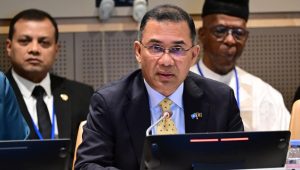
Power and Energy Minister Iqbal Hassan Mahmood announced the policy shift at an event in the capital on Wednesday, saying proposals had already been invited from private entrepreneurs to operate the six distribution companies.
He said private sector involvement would improve service quality, boost revenue collection and reduce the government’s financial burden.
However, an analysis by TIMES of Bangladesh of all six distribution companies’ 2024-25 annual reports show that collection performance is already close to full.
The Northern Electricity Supply Company (Nesco) reported an average bill collection rate of 99.02 per cent in Rajshahi and Rangpur, while West Zone Power Distribution Company Ltd recorded 101.10 per cent.

Dhaka Electric Supply Company Ltd (Desco) reported a 101.82 per cent collection ratio in its 2025 annual report.
The Bangladesh Rural Electrification Board (BREB) reported a 98.23 per cent collection rate, while Dhaka Power Distribution Company Ltd (DPDC) recorded 99.80 per cent.
The Bangladesh Power Development Board (BPDB) reported a 100.02 per cent collection ratio.
According to the BPDB’s annual report for 2024-25, its bill collection rate stood at 100.02 per cent. DPDC recorded a collection rate of 100.30 per cent, while both DESCO and WZPDCL reported 100.17 per cent. BREB’s collection rate stood at 95.63 per cent, and NESCO’s at 97.12 per cent.




The total bill collection percentage stood at 100.50 per cent, according to the report.
The figures raise questions over whether improving bill collection is the key challenge that privatisation is intended to address.
The minister said the government should not run retail businesses, arguing that it should focus on generating electricity and selling it wholesale while consumer-level distribution should be handled by private operators.
Pointing to regional examples, he said private participation would improve efficiency, enhance customer service and ease pressure on public finances.
However, energy analysts told TIMES that the move could introduce new costs rather than solve existing problems.
Shafiqul Alam, lead energy analyst at the Institute for Energy Economics and Financial Analysis, said privatisation would fundamentally change a company’s incentives, as private operators would naturally prioritise profitability.
“Compared with government companies, private power companies operate with higher management and operational costs. The key concern is whether privatisation will ultimately create additional costs,” he said.
He said Bangladesh should first ensure adequate electricity supply by addressing the primary energy crisis and the shortage of renewable energy capacity.
Alam said the BPDB currently buys electricity at a higher price and sells it to distribution companies at a lower rate, adding that this cost structure would require careful scrutiny if any distribution area is privatised.
He said privatisation could improve management and modestly increase revenue if it reduced distribution losses.
However, he warned that the move would also raise costs, and would only deliver net benefits if operational efficiency improved, bill collection increased and distribution losses declined.
Shamsul Alam, energy adviser to the Consumers Association of Bangladesh, compared the country’s power sector to a patient in an intensive care unit, saying the policy shift could increase financial risks.
“It will increase expenses and widen the deficit. The government may then have to adjust that deficit by increasing electricity prices at the consumer level,” he said.
He questioned the argument that private ownership would improve arrears collection, saying government institutions themselves were among the biggest defaulters.
“Various government institutions have the highest outstanding bills. The government itself cannot buy electricity and pay bills. There is no reason to believe that privatisation will increase arrears collection and solve the problem,” he said.
Alam said bill collection was being used as a justification for privatisation, while the real issue was the government’s institutional capacity.
“If there are weaknesses in efficiency and capacity, and there are, they reflect weaknesses in the government’s own system. Is it logical to hand over public institutions simply because of a lack of efficiency and capacity, while imposing additional financial burdens on people?” he said.