Growing dominance of State Minister for Chittagong Hill Tracts Affairs Mir Mohammad Helal Uddin over the running of the ministry and the formation of Parbatya Zila Parishads led to the resignation of minister Dipen Dewan.
Although Dewan cited physical illness in his resignation letter as the reason for stepping down on Monday, multiple sources in the ruling BNP confirmed that the real cause was his loss of authority as a minister.
“He is suffering from some physical complications, but that did not bar him from either contesting the election or becoming a minister. He has been carrying out both ministerial and party activities smoothly,” a lawmaker from the hill districts who is very close to Dewan told TIMES of Bangladesh when asked about Dewan’s resignation.
According to BNP leaders in the Chittagong Hill Tracts (CHT), disagreements between Dewan and Helal began following the formation of the cabinet led by Prime Minister Tarique Rahman about three and a half months ago. The disagreement turned into a feud within a month and gradually intensified.
One of the reasons behind the feud was when Helal reportedly asked Chittagong Hill Tracts Affairs Secretary Mizanur Rahman, a month after taking office, not to forward the ministry’s files to the minister without his approval.
The secretary denied having received any such instructions from the state minister, but said files are sent to the minister through the state minister, which is the usual norm.
As per the Rules of Business, the minister is the chief executive of the ministry and does not require the approval of the state minister for making decisions.

A former law secretary told TIMES of Bangladesh that the secretary of a ministry usually first forwards files to the minister through the state minister. However, a minister can make decisions independently.
“The minister, upon consultation with the prime minister, assigns some specific tasks to the state minister,” said the former secretary, requesting anonymity.
For the Ministry of Chittagong Hill Tracts Affairs, the usual practice could not be exercised as Dewan wanted to run the ministry independently while Helal allegedly interfered using his influence.
An unhappy Dewan, also a lawmaker from Rangamati and a central BNP leader, took the issue to the prime minister, informing him that he was uncomfortable working with the state minister. The prime minister asked him to take the state minister into confidence and work together, a decision that frustrated Dewan, according to a source in the ministry.



Another reason was the formation of three Parbatya Zila Parishads and the appointment of administrators. After taking office, the government constituted all zila parishads across the country by appointing administrators, except in the hill districts.
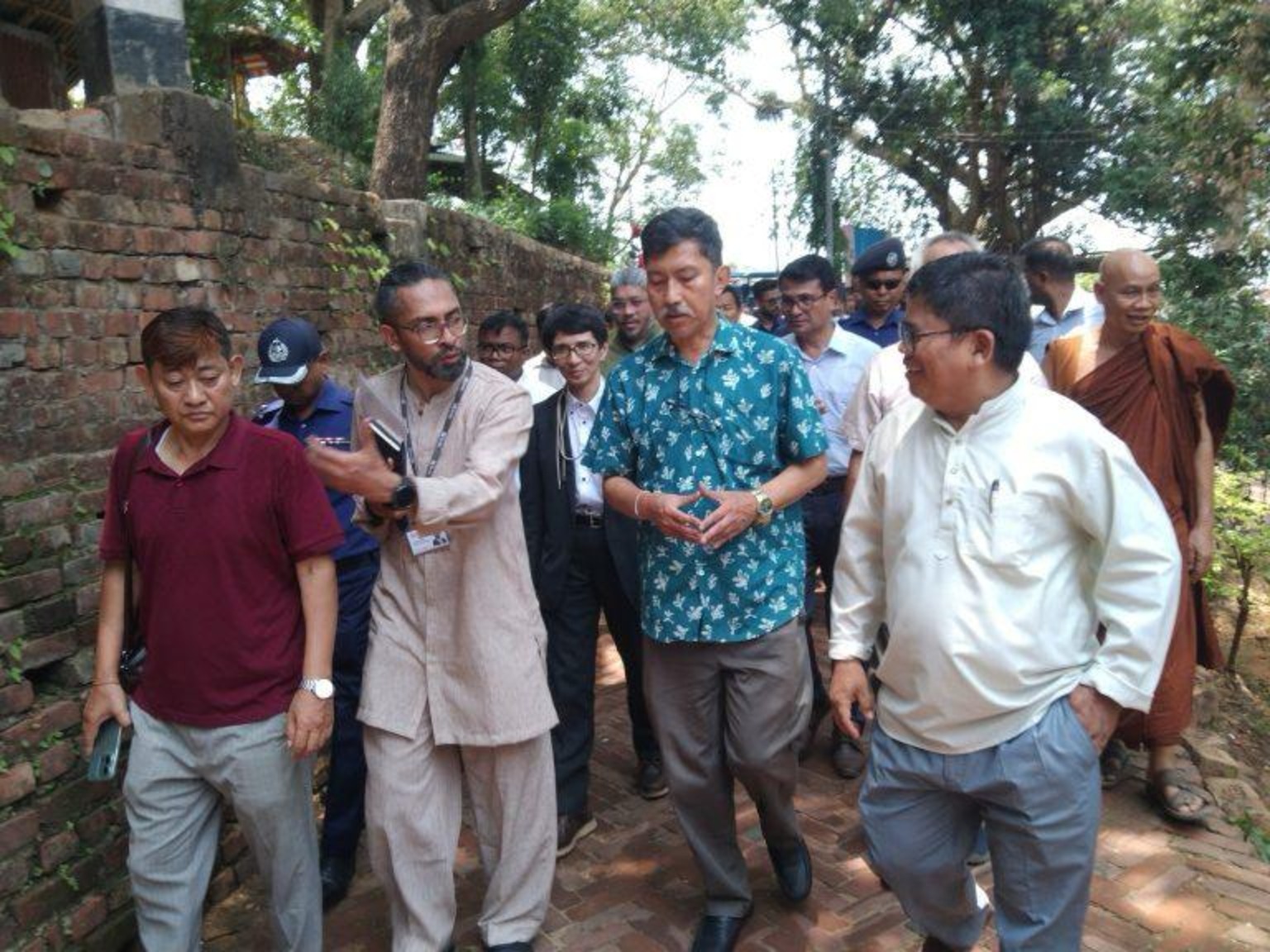
The minister inaugurated a Japanese language course at Monoghar Temporary Hall on 16 May where party leaders from the three hill districts were present. At the event, Dewan announced that the Parbatya Zila Parishads would be reconstituted before Eid-ul-Adha.
Accordingly, the minister, along with other lawmakers from the CHT, agreed on appointing two persons as administrators of the Bandarban and Khagrachhari zila parishads. They also discussed who would become chairman of the Rangamati Zila Parishad, but could not reach a consensus.
Helal, a lawmaker from Chattogram-5 constituency and son of BNP leader Mir Nasir Uddin, reportedly had no objection to the move.
However, several local BNP leaders said Dewan wanted his brother-in-law, Manosh Mukur, to become chairman of the Rangamati Zila Parishad, which Helal strictly opposed, further worsening relations between them.
Dewan was deeply disappointed over not being able to run the ministry smoothly and his failure to constitute the three parishads before Eid. Known as an honest politician, he felt humiliated and decided to step down from the ministerial post to maintain his dignity.
According to PMO sources, Dewan recently met the prime minister to inform him about his decision and both agreed.
What came as a surprise was that Dewan did not submit his resignation himself. Instead, he sent the letter through one of his aides, according to Prime Minister’s Additional Press Secretary Atiqur Rahman Ruman.
A rivalry between the two also developed over the allocation of khas land and distribution of other resources under the Ministry of Chittagong Hill Tracts Affairs. A group of influential people known as loyalists of the state minister allegedly caused trouble in carrying out ministry activities. Dewan informed the party high command about the interference but received no response.
An allegation was also made against Dewan that he took decisions bypassing the state minister. According to an aide to Helal, the state minister complained about the matter to the prime minister last month.
Dewan did not want to comment on his resignation, while Helal denied any feud with Dewan, insisting that the resignation was solely due to health concerns.
Dewan’s sudden resignation barely a little over three months after the formation of the Tarique-led government came as a major surprise and sparked discussions among politicians and people across the country.
The Ministry of Chittagong Hill Tracts Affairs began its journey on 15 July 1998 after the signing of the CHT Peace Agreement a year earlier. Under the agreement, there is a mandatory provision that the minister of the ministry must be appointed from among the hill people.
After Dewan’s resignation, the ministry will remain under the prime minister until a new minister from the indigenous community is appointed in accordance with the peace deal.
Judge-turned politician
Sixty-three-year-old Dewan contested the 13th parliamentary election as the BNP candidate from the Rangamati constituency in the Chattogram Hill Tracts. He won with the largest vote margin among all elected lawmakers. Dewan was appointed a minister for the first time, while Helal became the state minister.
Dewan joined the BNP in 2005 after resigning from his position as a joint district judge. He became president of the Rangamati district BNP in 2010. Since 2016, he has served as the joint religious affairs secretary of the BNP’s central committee.
Dewan’s father, Subimal Dewan, was an adviser on tribal affairs to late President Ziaur Rahman, the father of Prime Minister Tarique Rahman.