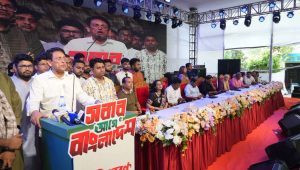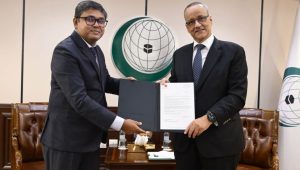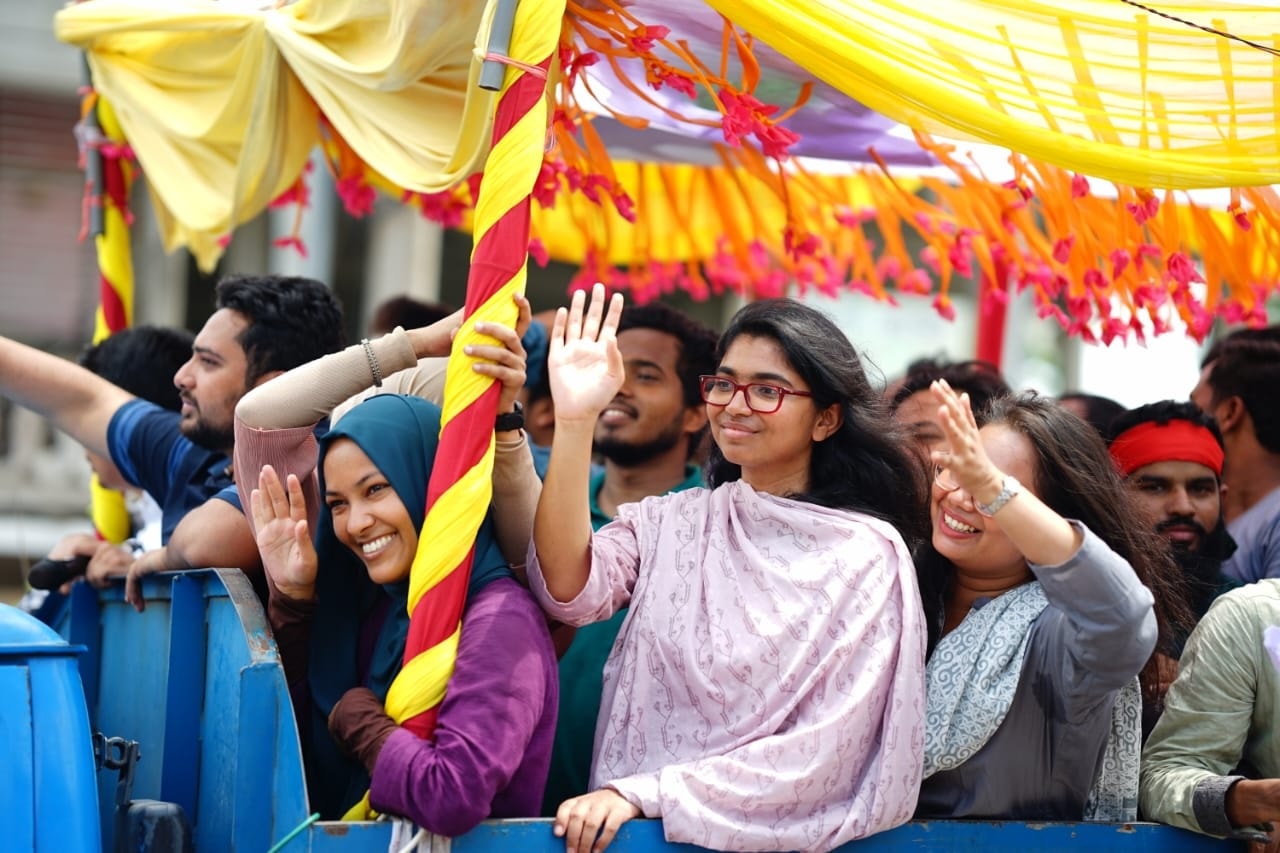

The Centre for Governance Studies (CGS), in partnership with the Embassy of the Kingdom of the Netherlands, hosted a roundtable dialogue titled “Inclusive Politics: Women and Youth’s Pathways to Leadership” on Thursday, 25 September 2025, at the Bangladesh Institute of International and Strategic Studies (BIISS) Auditorium.
The dialogue brought together senior political leaders, academics, and civil society actors to address barriers to youth and women’s participation in Bangladeshi politics and explore pathways for building a more inclusive democracy, according to a press release.
The session was presided over by President of CGS Zillur Rahman and attended by two distinguished guests of honour: Ambassador of the Kingdom of the Netherlands to Bangladesh His Excellency Joris van Bommel and Chairman, Election Reform Commission, Interim Government of Bangladesh Badiul Alam Majumdar.
Other distinguished participants included: Advocate Fahima Nasrin Munni, Assistant Secretary, International Affairs, BNP; Advocate Subikunnahar Munni, Incharge, Bangladesh Lawyers’ Council, Jamaat-e-Islami (Women’s Wing); Sheikh Fajlul Karim Maruf, Central Dawa and Publicity Secretary, Islami Andolan Bangladesh; Barrister Nasreen Sultana Mily, Joint General Secretary, AB Party; Khaled Saifullah, Joint Convener, NCP; Advocate Subrata Chowdhury, Acting President, Gonoforum; Barrister Shameem Haider Patwary, Secretary General, Jatiya Party; Md Rashed Khan, General Secretary, Gono Odhikar Parishad; Nazmul Haque Prodhan, General Secretary, Bangladesh Samajtantric Dal (Bangladesh JaSaD); Zahir Uddin Swapon, Advisor to the Chairperson, BNP; Dr. Tania Haque, Professor, Department of Women and Gender Studies, University of Dhaka; Barrister Shihab Uddin Khan, Advocate, Supreme Court of Bangladesh; Barrister Rashna Imam, Advocate, Supreme Court of Bangladesh; Hema Chakma, Executive Member, DUCSU; Ambassador Nasim Firdaus, Advisor, Centre for Governance Studies (CGS), Founder and President, Bangladesh Alliance for Women Leadership (BDAWL); Parvez Karim Abbasi, Executive Director, CGS (moderator); Mominul Amin, Secretary General, NDM.
The roundtable, organised under CGS’s broader project “Women and Youth Engagement in Politics in a Post-Uprising Bangladesh”, created an open platform for leaders across the political spectrum to share perspectives and voluntary commitments. The dialogue culminated in the signing of the non-binding “Declaration on Building an Inclusive State”, where participants endorsed shared principles and personal pledges to support greater inclusion of women and youth in political leadership.
Aside from the representative from NCP, all other political parties and civil society representatives signed the declaration.
Parvez Karim Abbasi, the moderator of the dialogue, highlighted that in Bangladesh, more than half of the population consists of women and youth. He noted that it is often said women are held back because of religion, but this is a misconception. In fact, all religions emphasise the establishment of women’s rights. The real challenge lies in identifying the social barriers that exist and finding solutions to overcome them.

In his opening speech, Zillur Rahman stated that although women and youth played a central role during the movement, some even being recognised as its immediate beneficiaries, many, including those who bravely stood in front of police tanks, now feel disappointed by the outcome.
He emphasised that Bangladesh’s greatest strength is its youth, yet one year after the change, the overall situation is discouraging. Women’s participation in political parties remains low, tolerance has sharply declined, and women and youth are absent from decision-making processes. “We have drafted this declaration before you,” he said, “but its success ultimately depends on the political parties.”
His Excellency Joris van Bommel stressed two key words: “inclusivity” and “dialogue.” He explained that true inclusivity requires understanding why youth are not fully engaged in political processes and addressing the bottlenecks that hinder their involvement.
He also raised the issue of women’s participation, noting that harassment of women in politics is disproportionately higher than that of men. Marginalised groups also face similar barriers, he said, underscoring that inclusivity must go hand in hand with continuous dialogue.
Badiul Alam Majumdar shared his long experience working with youth and women. He pointed out that structural and social barriers prevent women from reaching positions of representation. “If a woman suffers from malnutrition, her child will too, and society as a whole remains malnourished,” he said. He highlighted the significance of observing Daughter’s Day on September 30, now recognized by the United Nations following their initiative. He called for greater investment in women, advocating for 100 parliamentary seats reserved for women under a rotational system, which he described as the most effective approach.



Advocate Fahima Nasrin Munni remarked that the youth made extraordinary sacrifices in July. She called for an end to discrimination against women and youth, stressing that women entering politics are often unfairly questioned about their capabilities. Changing this perspective will take time, she said, but it is essential to begin treating women as equal human beings deserving of respect.
Advocate Sabikunnahar Munni argued that women’s participation is not equivalent to empowerment. True empowerment, she said, lies in the dignity, rights, and respect women enjoy in society. Reflecting on her own doubts about youth, she admitted she was surprised to see young people take the lead in removing an autocrat. Women also played a critical role in the July movement, yet their participation has not translated into genuine influence in policymaking. She stressed the need to bring women into decision-making processes and foster tolerance of differing opinions.
Sheikh Fajlul Karim Maruf noted that politics in Bangladesh is deeply corrupted. “Should we bring women and youth into this space only to corrupt them as well?” he asked. He emphasised that politics must be transformed into a system of nurture and care, as prescribed in Islam, which strictly prohibits defamation of women. Only then, he argued, can women participate in politics freely.
Barrister Nasreen Sultana Mily highlighted the derogatory language often used against female politicians, citing Tasnim Jara as an example. She called for safe political spaces for women, particularly from the government. Women, she said, are frequent victims of cyberbullying, and despite existing laws, enforcement remains weak.
Women are excluded from nominations, lack access to financial resources like black money, and face systemic barriers such as inadequate childcare facilities. She criticised the Consensus Commission for deciding on women’s reserved or direct seats without any female representatives.
Khaled Saifullah observed that democracy is about every voice being heard, yet women are often silenced because they are not placed in positions where their voices can matter. Youth, too, are being marginalised. “It was the youth who removed the autocrat,” he said, “but now they are told to step aside.” He warned against smear campaigns that belittle young people.
Advocate Subrata Chowdhury reminded the audience that women and youth have always been central to social movements in Bangladesh. He advocated for 100 women to be elected through direct elections, noting that women already run households and should therefore play an equal role in state affairs. He criticised the Consensus Commission as a “men’s club” discussing women without their participation, which has caused frustration among conscious women.
Barrister Shameem Haider Patwary acknowledged that women are significantly underrepresented. Out of 300 parliamentary seats, very few are directly contested by women or youth. He argued that all seats should be contested directly, with 100 allocated for women voters, both male and female.
Leadership positions like Speaker and Deputy Speaker, he added, should be shared between men and women. He also pointed out the unfair burden placed on youth after the revolution, where they were given great responsibility but also blamed for failures.
Md Rashed Khan criticised the government for failing to create an inclusive system. He stressed that the July movement would not have succeeded without women, yet they were sidelined afterwards. Political parties, he said, continue to exclude youth, even though it was the youth who drove the movement.
Nazmul Haque Prodhan argued that Bangladesh has yet to move beyond the politics of vengeance. He said inclusive politics requires a new mindset, one that integrates issues like elections, women’s rights, and youth rights into national life. Only then, he argued, can Bangladesh move toward its goals.
Zahir Uddin Swapon reflected on the long history of discussions around inclusive politics. He urged people to move beyond judgmental attitudes toward youth and instead create a balance between youthful energy and wisdom. Inclusiveness, he said, must extend beyond token quotas or sympathy, it requires genuine empowerment of women and minorities.
Dr Tania Haque spoke about the deeply entrenched negative perceptions of women in politics, where “good women” are often told politics is not for them. She warned of the growing influence of digital patriarchy online and called for reforms in education and training, including gender training for members of Parliament.
Barrister Shihab Uddin Khan recalled the sacrifices of women and youth both in 1971 and during the July movement, stressing that progress is impossible without women as key stakeholders. He criticised tokenism in reserved seats, arguing that competent women are often overlooked. The political awakening of women since July, he said, should not be wasted.
Barrister Rashna Imam emphasised that women and youth played transformative roles in the July movement, yet were sidelined afterward. She argued that token reserved seats do not reflect true empowerment, as families still hesitate to invest in daughters and laws meant to protect women remain unenforced.i
Hema Chakma questioned whether inclusive politics is truly being practiced. She highlighted incidents where communal labels are attached to violence, the killing of indigenous people after the July movement, and the harassment women face in Ducsu politics and online. She expressed deep disappointment at the erosion of tolerance in society.
Ambassador Nasim Firdaus called for reserved seats for women and urged political parties to take responsibility for training and including marginalised women. “Men tend to think of themselves first,” she noted, “while women are often made secondary.” She emphasised that youth must also receive leadership training early in life.0
Mominul Amin observed that young candidates are often dismissed as inexperienced, even when men. He pointed out that youth were excluded from the climate budget and criticised the lack of initiatives to prepare them as changemakers.