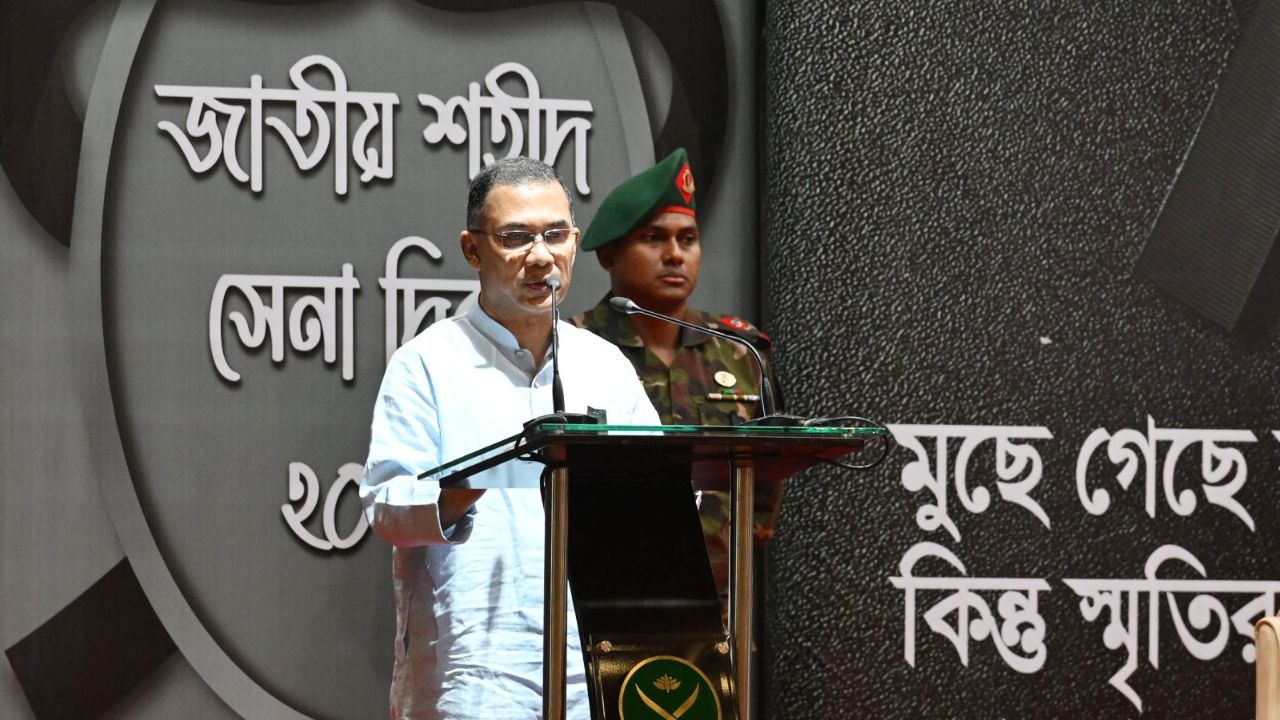

The government will move to grant state recognition to those killed in the Pilkhana carnage, Prime Minister Tarique Rahman said on Wednesday, marking the 17th anniversary of the massacre in which 74 people, including 57 army officers, were killed.
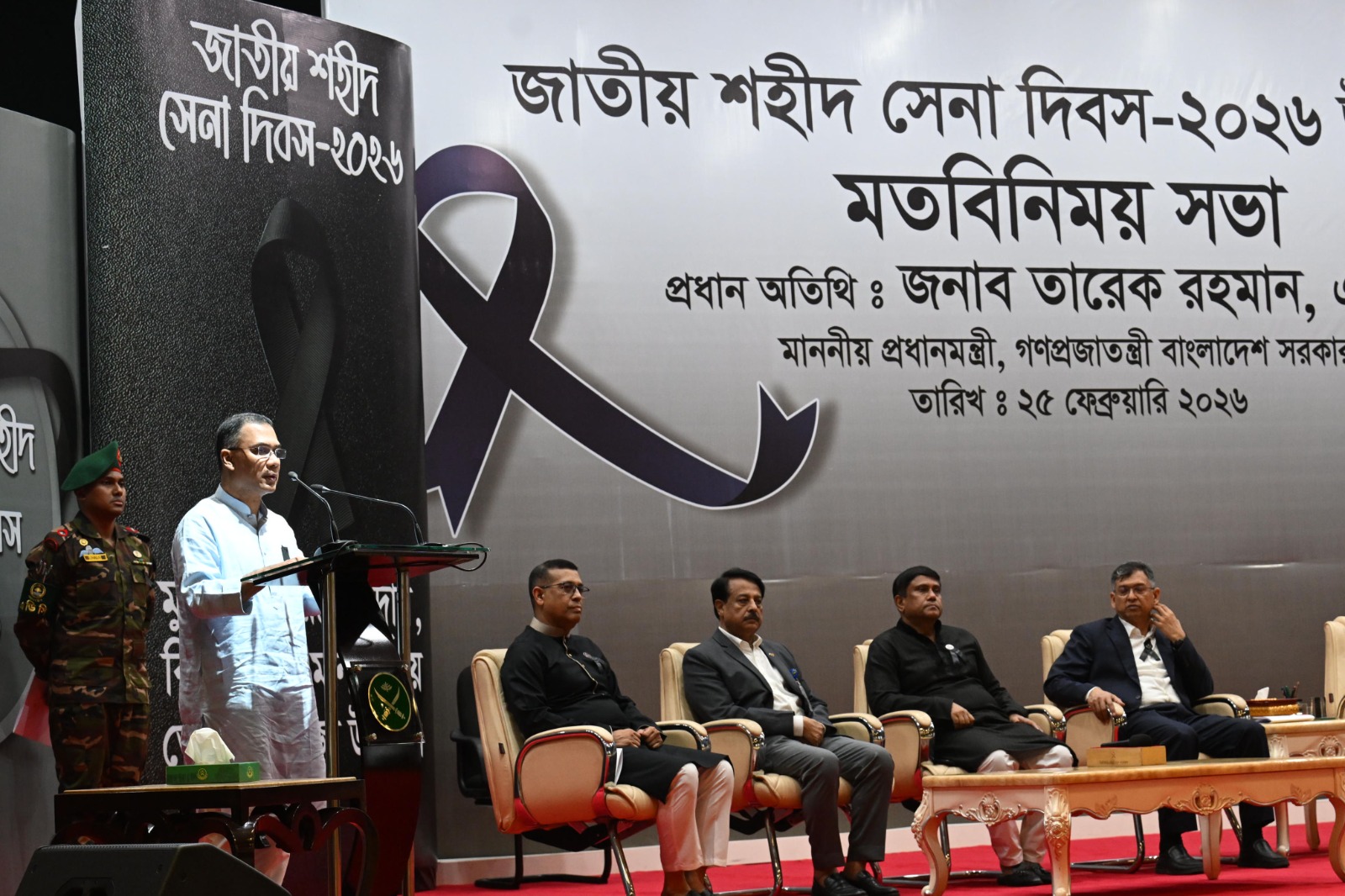
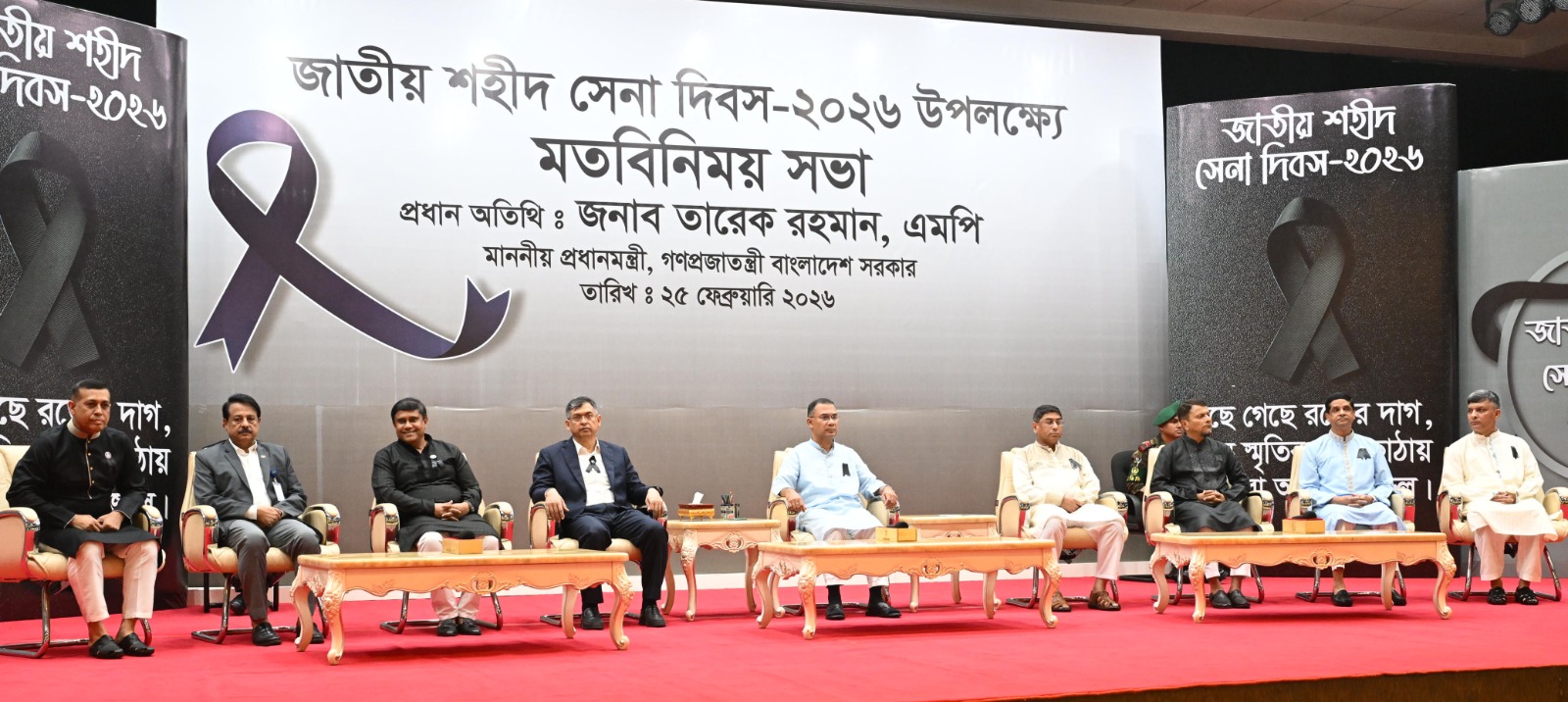
Future generations would not forgive the nation if the tragedy was not preserved with due honour, he told a memorial event at Dhaka Cantonment.
The prime minister said the government would consult the army and the bereaved families to ensure the memory of the victims “remains immortal”.
Reflecting on the events of February 2009, he described the killings as a “deep wound” in the nation’s history that continues to cause pain.
The prime minister further characterised the 2009 killings as an attempt to “undermine our sovereignty.”
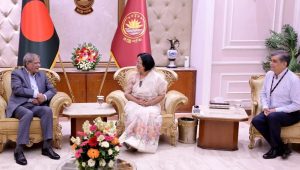
Earlier in the morning, President Mohammed Shahabuddin and the prime minister paid tributes at Banani Military Cemetery, where many of the slain officers are buried. The ceremony was attended by the chiefs of the army, navy and air force.
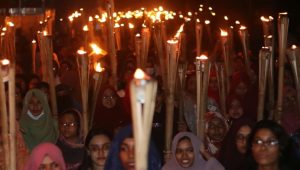
Special prayers were also held at important sites and places of worship across the country.

Army Chief General Waker-Uz-Zaman said the killings had been carried out by members of the then BDR, not by army personnel.
“This brutality was not committed by any member of the army. It was entirely perpetrated by members of the then BDR. There is no ‘if’ or ‘but’ about it. Judicial proceedings have been ongoing for 16 to 17 years, and many have been convicted and are serving prison terms. This process should not be disrupted,” he said.
On 25 and 26 February 2009, a mutiny erupted at the headquarters of the then Bangladesh Rifles in Pilkhana, Dhaka, during an annual gathering. What began as an uprising quickly escalated into one of the deadliest episodes in the country’s history.
Among the dead were the Bangladesh Rifles Director General, Major General Shakil Ahmed, along with 56 other army officers, and civilians including women and children. Seventeen years later, the memory of the killings still casts a long shadow.




In a message issued on Tuesday, a day after being sworn in as prime minister, Tarique Rahman described 25 February – the day of the Pilkhana killings – as “National Martyred Army Day”.
No new probe commission: Home Minister
Meanwhile, speaking after laying wreaths at the graves of the fallen officers, Home Minister Salahuddin Ahmed said no new investigation commission would be formed into the killings.
“The government assumed office only recently with a public mandate. There will be no fresh investigation commission into this incident, as an independent national commission was previously formed comprising competent and qualified individuals,” he said.
He added that the commission’s report included around 70 recommendations, many of which are being implemented.
“Some of the cases are now before the Appellate Division, and the judicial process will be completed. The remaining recommendations will also be implemented in phases,” he said.
In 2024, the Ministry of Home Affairs formed a seven-member committee to review the findings of the 2009 commission that investigated the BDR mutiny, amid sustained criticism of the mass trial concluded in 2013. The panel was asked to determine whether key evidence had been overlooked in the earlier report, including the possibility of political influence.
Jamaat-e-Islami Ameer and Leader of the Opposition in Parliament Shafiqur Rahman also paid his respects at the cemetery, laying flowers and offering prayers at the graves.
He described the killings of 25 February 2009 as a “deep conspiracy” aimed at weakening the country’s military strength, saying the full truth had yet to be revealed.
“The Pilkhana massacre was a day of profound conspiracy against the nation. Those who were killed had been posted there in a planned manner – some transferred a month earlier, others three months before. Those transfers were part of the plan. Yet even after so many years, the real perpetrators have not been fully exposed before the nation,” he said.
Updates of cases
Two separate cases were filed on 28 February 2009 over the Pilkhana carnage – one under murder charges and the other under the Explosives Act.
In the murder case, 850 people were named as accused, making it the largest criminal case in the country’s history in terms of the number of defendants. On 5 November 2013, the trial court sentenced 152 people to death, 160 to life imprisonment and 256 to varying jail terms.
As death sentences require confirmation by the High Court, a special three-judge bench delivered its verdict on 26 and 27 November 2017 after hearing the death references and appeals.
In the full written judgement published in January 2020, the High Court upheld death sentences for 139 people, sentenced 185 to life imprisonment and 228 to varying terms. A total of 283 accused were acquitted. Before the High Court verdict, 15 accused had died; the number has since risen to 61.
Following the High Court ruling, 73 appeals and petitions for leave to appeal were filed on behalf of 226 convicts. The state also filed 20 petitions for leave to appeal concerning 83 individuals who had been acquitted or given reduced sentences. These applications are now awaiting hearings in the Appellate Division.
The state submitted its petitions in 2020, while defence appeals and petitions were filed in 2021 and 2022. The matter was placed before the Chamber Court of the Appellate Division on 12 November 2023 and was referred the same day to the regular bench.
It was later listed on 24 January 2024. On Tuesday, the case appeared as item 669 on the Appellate Division’s cause list.
Meanwhile, proceedings in the case filed under the Explosives Act are still under way at the trial court, where witness testimonies continue to be recorded.