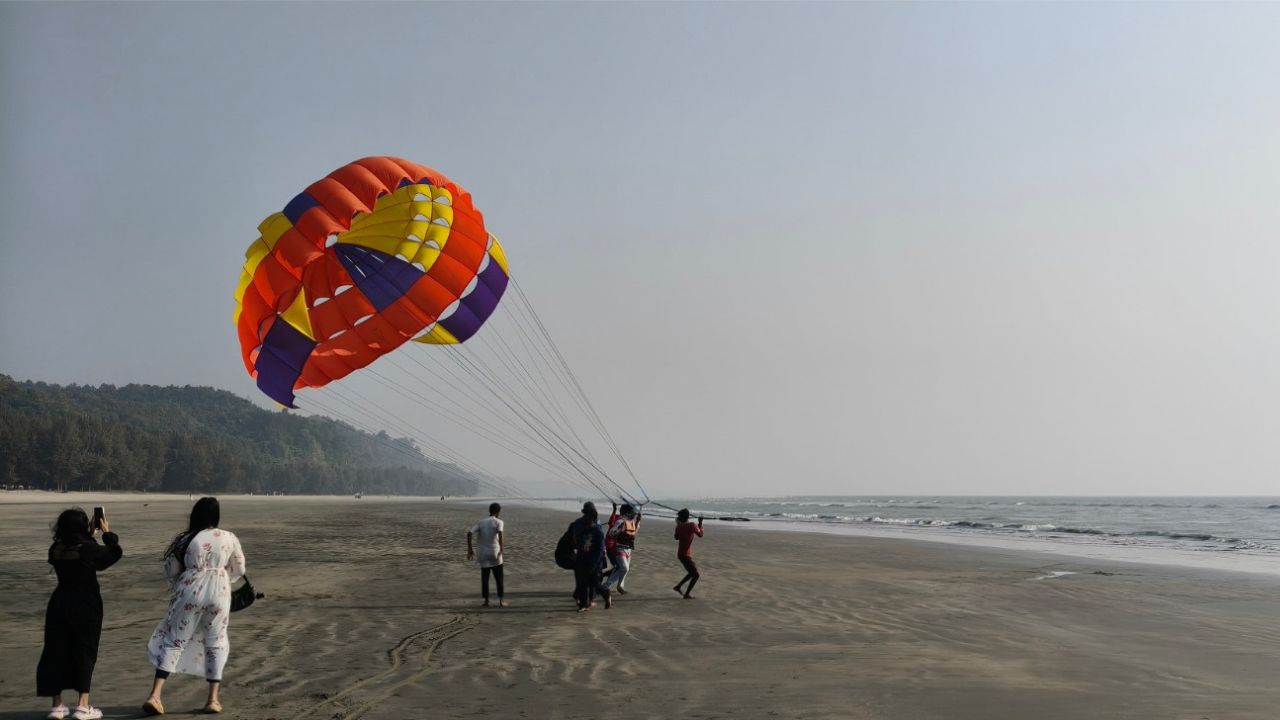



Parasailing has rapidly transformed Cox’s Bazar from a largely traditional beach destination into a growing centre for adventure tourism, with brightly coloured parachutes now a familiar sight over the Bay of Bengal. The sport has become popular with both domestic and foreign tourists, offering a rare aerial view of the coastline, but a series of incidents has raised questions about safety and regulation.
Parasailing involves participants being harnessed to a parachute and towed behind a speedboat, lifting them high above the sea. Operators market the activity as both thrilling and serene, combining adventure with panoramic views of the ocean, beach and nearby hills. For many visitors, it has become a highlight of a trip to Cox’s Bazar.
However, concerns have intensified following recent accidents. In late 2025, a parasailing mishap near Dariya Nagar drew public attention after a tourist lost control and became entangled in a Jhau tree. Although no serious injuries were reported, the incident prompted the district administration to suspend parasailing operations in the intertidal zones of the beach adjacent to the Marine Drive highway. Authorities also warned operators of legal action if safety directives were ignored.

The move followed an earlier incident in 2024, when a female tourist was injured during a parasailing flight. That case led Cox’s Bazar court to seek explanations from the Fire Service and Civil Defence regarding safety arrangements and compliance with required equipment standards.



Despite these setbacks, parasailing continues to draw crowds. Visitors often describe the experience as exhilarating but intimidating. Ishita, a tourist from Chattogram who recently tried parasailing, said she enjoyed the flight but felt frightened, particularly when her feet skimmed the seawater, making her fear she might fall in. Her husband, Moin Uddin, who watched from the beach, said he enjoyed seeing his wife fulfil a long-held wish.
Operators say the activity remains an important part of Cox’s Bazar’s tourism economy. Faridul Alam, owner of Fly Air Sea Sports, said there are currently five active parasailing points across the district, indicating steady demand despite periodic restrictions.
Cox’s Bazar is not alone in facing such challenges. Other regional tourist hubs, including Pattaya in Thailand and Da Nang in Vietnam, have also reported parasailing accidents in recent years, prompting tighter regulation, inspections and enforcement by local authorities.
The future of parasailing in Cox’s Bazar now hinges on safety oversight. Officials and operators alike acknowledge that clearer rules, better training and stricter monitoring will be necessary if the activity is to continue without further incidents. While parasailing still offers economic potential and tourist appeal, balancing that growth with effective safety controls will determine whether the sport can sustain its place in Cox’s Bazar’s expanding adventure tourism sector.