


In 2016, Indian Prime Minister Narendra Modi committed himself to diplomatically isolating Pakistan. Back then, the goal seemed feasible. The country experienced problems like economic instability, political turmoil, and declining international reputation. Many people viewed its role on the global stage as dwindling, whereas India’s was rising rapidly. A decade or so down the line, however, the geopolitical map looks quite different. Contrary to Modi’s predictions, Pakistan seems to be a state that is hard to overlook.
Such a turnaround has nothing to do with the economic successes or political stability of Pakistan, as they still face difficulties and polarisation domestically. In the modern age of great power competition and regional conflicts, relevance depends on a different set of factors. Such factors as geopolitical location and diplomatic usefulness are more important than ever before. As such, Pakistan has proved to be strategically relevant again.
It has been a significant transformation in Pakistan’s case between 2016 and today. Ten years ago, international debates concerned the nation on topics such as the level of terrorism in the region, political instability and economic weakness. Nowadays, the emphasis tends to be on Pakistan’s important geopolitical position, its cooperation with China, the nation’s return into the circle of countries associated with the US, and its special status in Middle Eastern politics. One reason for Pakistan becoming even more influential in the international arena is the transformation of international politics. At the end of the Cold War, when America had a dominant influence, and the world was much more stable, the modern world is shifting toward a new phase, more multipolar and characterised by rising tensions between nations.
However, perhaps no other relationship is more crucial to Pakistan’s return to the centre of the strategic scene than the relationship with China. For decades, both nations shared a strong relationship both diplomatically and militarily. However, the strategic importance of this relationship was elevated further with the development of the China-Pakistan Economic Corridor. While the emphasis of much discussion tends to be focused on infrastructural development, roads and energy resources, there is far more to the strategic importance of this relationship.

Amidst the growing tension and competition between China and the United States, Pakistan’s importance to China has grown another notch as they have long remained steadfast allies. The way Pakistan’s foreign policy has been able to build closer links with China, while maintaining a dialogue with the US, is impressive. Predictions arose that Pakistan would lose a lot of significance to America after they (the US) withdrew from Afghanistan. However, that was not the case, and rather a pragmatic approach seems to be the new way. There is still a certain acknowledgment that the situation in South Asia cannot be understood unless Pakistan plays an important role, despite America slightly changing their attitude towards Pakistan.
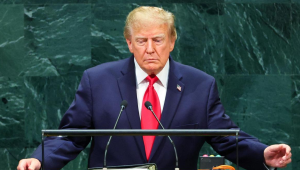
Recent meetings of the current Pakistani leadership with President Donald Trump have once again highlighted that the nation continues to hold strategic importance for America. The United States has not stopped considering Pakistan diplomatically, even though there is a rise in US partnership with India. However, the military still wields significant power regarding national security and foreign policy. The continued involvement of Pakistan’s military apparatus in national matters has been a feature of Pakistan’s foreign relations for decades, as different political governments have come and gone, as well as coalition governments.



The recent global prominence of Pakistan’s Army Chief, General Asim Munir, is proof positive of this trend. The fact of the matter is that there have been some very positive aspects of allowing such an influential institution as Pakistan’s military to play a role in the country’s decision-making.
For decades, Pakistan has maintained close security relationships with Gulf monarchies, particularly Saudi Arabia. Economic assistance, labour migration, defence cooperation, and political coordination have created deep links between Islamabad and the Arab Gulf states. Meanwhile, Pakistan has generally sought to avoid becoming fully aligned with any single regional bloc. Despite occasional tensions, it has preserved channels of communication with neighbouring Iran while resisting pressure to adopt a more confrontational posture. This balancing strategy may prove increasingly valuable amid continuing instability surrounding Iran.
Although Pakistan is unlikely to emerge as a primary mediator in major regional conflicts, it occupies a unique diplomatic position. It shares a border with Iran, maintains close ties with Gulf powers, enjoys a strategic partnership with China and continues to engage the United States. In an increasingly polarised international environment, the ability to communicate with competing actors can itself become a source of influence.
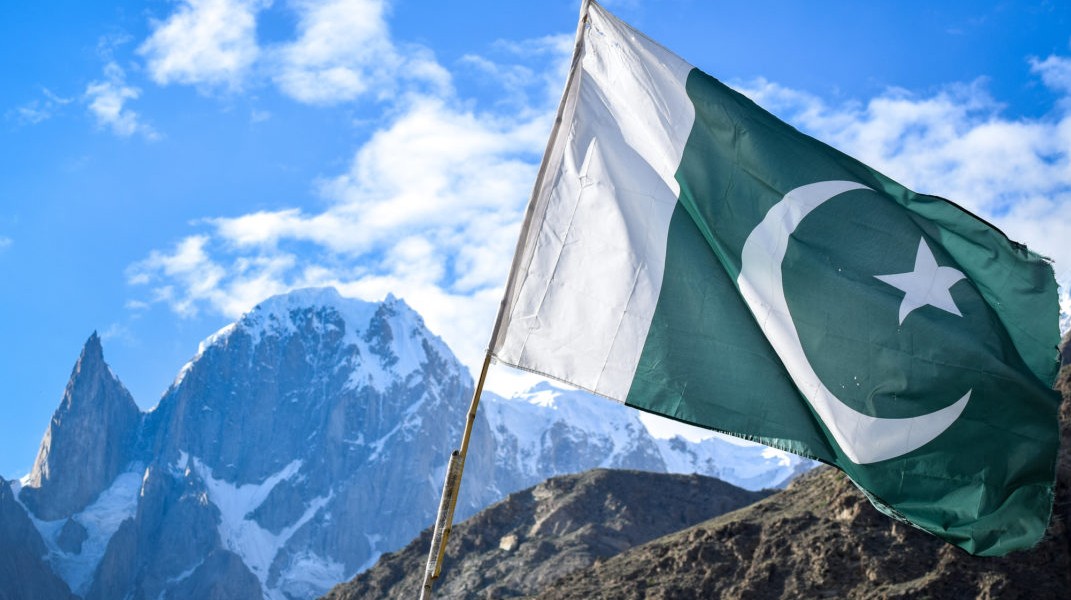
Pakistan occupies one of the world’s most consequential geopolitical locations. Potential trade and energy routes linking Central Asia with global markets lie in the north, the Middle East’s regional importance of political development in influencing global security and economics to the west, India in its east, and a stretch of maritime route connecting Asia, Africa, and Europe in its south. For much of modern history, geography has shaped Pakistan’s strategic significance. Geopolitical relevance does not automatically resolve domestic problems. The country continues to face substantial economic challenges, including debt pressures and inflationary concerns. Political divisions remain deep, and debates over democratic governance persist. Security challenges have not disappeared, and long-term stability remains dependent on effective institutional development.
History offers numerous examples of countries whose strategic importance failed to translate into sustainable national progress. Pakistan’s current position therefore presents both an opportunity and a test. Numerous examples of countries whose strategic importance failed to translate into sustainable national progress can be seen in history. Pakistan’s present situation presents an opportunity and a test. Although the country has successfully regained international relevance, it will require far more than favourable geography or diplomatic flexibility to convert that relevance into long-term economic growth and political stability.
Pakistan’s geopolitical comeback is ultimately one of the more intriguing developments in contemporary international affairs. The more significant question is whether Islamabad can convert its renewed strategic importance into long-term national strength. Its geopolitical comeback is already evident. Whether it becomes a lasting transformation remains the defining challenge of the years ahead.
The views expressed in this article are solely those of the author
The writer is an Undergraduate Student, International Relations, University of Dhaka