Bangladeshi businesses are facing delays and higher costs as Pakistani goods now reach the country through alternative routes, nearly doubling delivery times since the suspension of direct maritime trade, industry sources said.
Although a historic direct shipping link between Bangladesh and Pakistan launched in November 2024, the route has been inactive for six months amid geopolitical tensions and disruptions in global shipping networks.
Cargo from Karachi, which previously reached Chattogram in around 12 days under the direct service, now takes 20 to 25 days via Colombo, Sri Lanka, with transport costs rising 15 to 20 per cent, according to the Bangladesh representative of Dubai-based Feeder Lines DMCC – Regency Lines Limited Senior Executive Director Anis Ud Dowla.
“Cargo movement has not stopped, but shipments are now being routed through alternative ports,” he said.

No decision has been made regarding the resumption of direct services. The disruption has hit Bangladesh’s ready-made garment (RMG) sector, which relies heavily on Pakistani raw materials. National Board of Revenue (NBR) data show about 70 per cent of imports from Pakistan consist of raw materials for garments and finished leather products.
Other major imports include sodium carbonate, dolomite, limestone, magnesium carbonate, broken glass, automobile parts, yarn, fabrics, clinker, fruits, onions, dried fruits, and women’s apparel. Bangladesh exports raw jute, pharmaceuticals, hydrogen peroxide, tea, and ready-made garments to Pakistan.
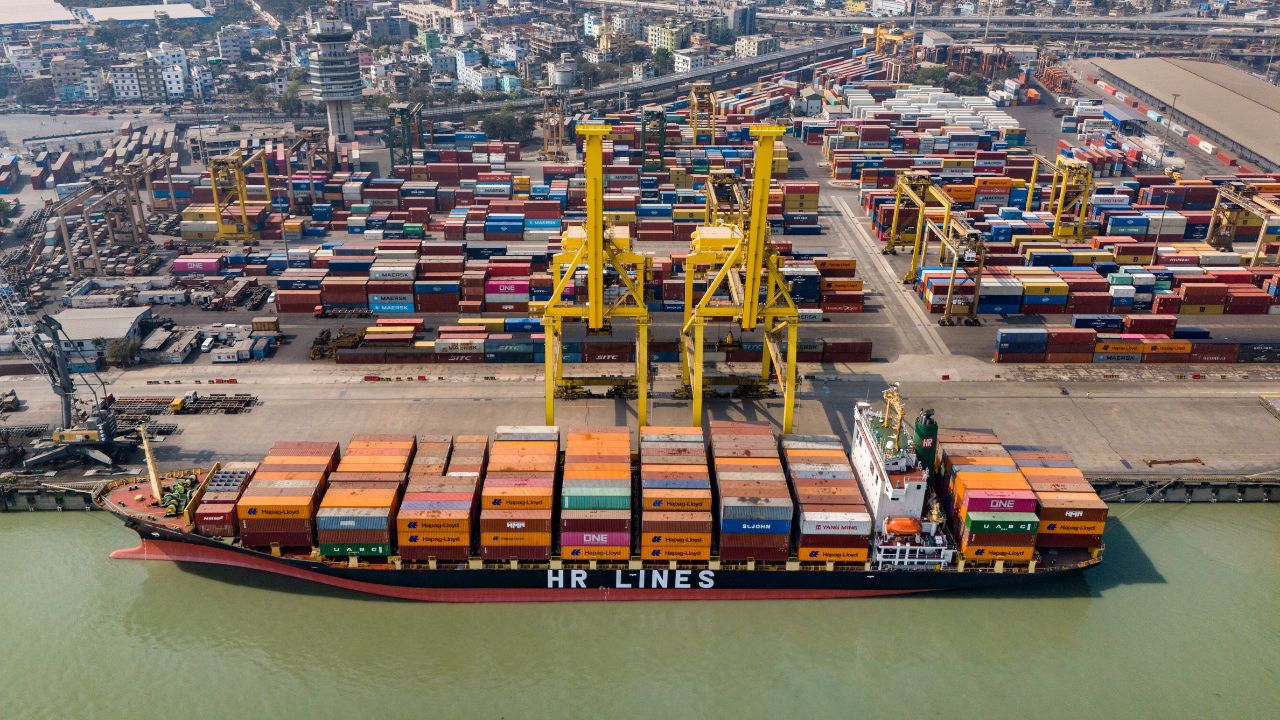



The direct route was enabled after NBR lifted its requirement for 100 per cent physical inspection of Pakistani imports on 29 September 2024. The first direct container vessel from Pakistan arrived at Chattogram Port on 11 November 2024, with Feeder Lines DMCC initially deploying one vessel and later adding a second due to rising cargo volumes.
The service operated regularly until the end of 2025. Analysis of imports through Chattogram Port, Mongla Port, and airports over the past five years shows divergent trends between import volume and value.
In 2021, Bangladesh imported 193.39 million kg of goods from Pakistan, valued at Tk7,077 crore. Imports fell 44.65 per cent to 107 million kg in 2022, though value rose 20.11 per cent to Tk8,501 crore.
In 2023, volume increased 74.16 per cent to 186 million kg, while value fell 7.46 per cent to Tk7,866 crore. Imports peaked in 2024 at 205 million kg, valued at Tk10,005 crore.
In 2025, volume dropped 65.59 per cent to 70.63 million kg, but value rose slightly to Tk10,018.71 crore, highlighting a growing share of higher-value products. As of 24 May 2026, Bangladesh had imported 310.7 million kg of goods from Pakistan worth around Tk4,103 crore.
President of the Chattogram Chamber of Commerce and Industry and Chairman of Seacom Group Mohammed Amirul Haque emphasised reducing logistics costs to expand trade.
“Direct shipping services reduce import and export expenses significantly. However, trade volume must also be considered when evaluating commercial viability,” he said. With direct maritime connectivity still uncertain, businesses continue to rely on longer and costlier alternative routes, putting pressure on supply chains despite steady growth in bilateral trade value.