Abu Taher
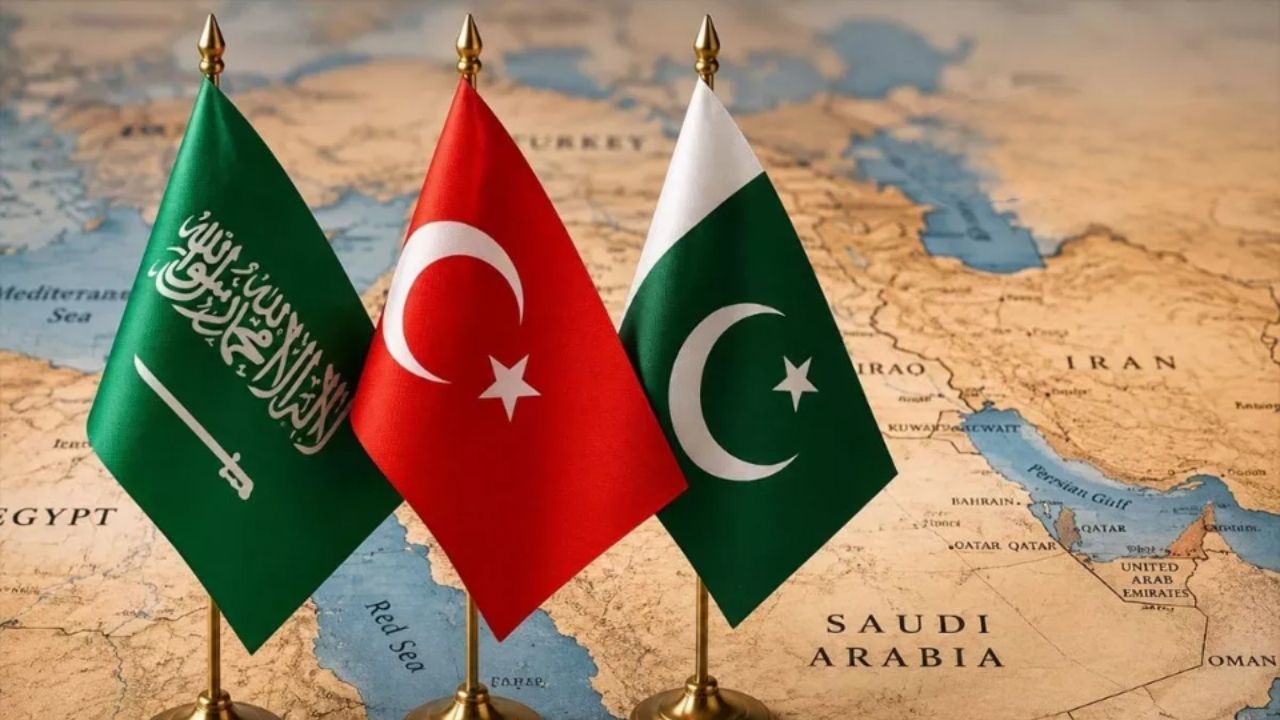
Last September Pakistan and Saudi Arabia signed the Strategic Mutual Defence Agreement (SMDA), that considers any aggression against either country as an aggression against both echoing the NATO’s Article 5 language that says, “The Parties agree that an armed attack against one or more of them in Europe or North America shall be considered an attack against them all and consequently they agree that, if such an armed attack occurs, each of them, in exercise of the right of individual or collective self-defences recognised by Article 51 of the Charter of the United Nations, will assist the Party or Parties so attacked by taking forthwith, individually and in concert with the other Parties, such action as it deems necessary, including the use of armed force, to restore and maintain the security of the North Atlantic area”.
The SMDA is signalling the same to strengthen deterrence amid rising tensions in the Middle East since the beginning of Israel-Gaza war. For Saudi Arabia, the agreement provides a formalised security partnership that reassures domestic and regional audiences of its ability to deter aggression, particularly in a volatile Gulf environment. For Pakistan, the pact offers strategic, political, and economic benefits, including a stronger footprint in the Middle East.

Pakistan and Saudi Arabia came into the pact that has the similar spirit of NATO with a view to strengthening security defence and forging collective effort to fortify their military defence. Many geopolitical analysts think that two countries under this pact, would take joint military exercises and help to build strong defensive bases in their lands. It is very imperative that like-minded countries may join or culminate such defence pact within themselves in future for regional stability and peace. In recent times nations living outside America’s axis, are giving more concentration on their neighbours for trade specially after Trump’s tariff war began earlier this year. Their economic ties and relationships renewed enhance trust and fraternity. China and the Association of Southeast Asian Nations (ASEAN) have upgraded their free trade agreement, Pakistan is recalibrating its economic ties with China and Russia, India is perusing strong economic ties with Russia, etc. Many believe that such regional connectivity and coherence would foster military alliance between the countries in future.
On September 9, 2025, Israeli jets struck Doha, killing five Hamas leaders, underscoring the risk of Israeli operations spilling over into neighbouring states. Across the Gulf, states had to rethink their security and peace initiatives and they are recalibrating their defence strategies as the Arab League convened an emergency summit immediately after Israeli attacks. Egypt reportedly called for forming a NATO-style Arab defence force.




Earlier, Saudi leaders were trying to formalise defence ties with the US for their protection from any external threats. However, several US decisions, including the 2021 withdrawal of missile defences, and the end of support for Saudi operations in Yemen weakened Riyadh’s trust in U.S. military shield and protection. Such strategic shift of US, and the Kingdom’s mistrust led the latter one to mould alternative security ties with other countries like Pakistan- with whom KSA has long concrete relations and understanding with regard to regional securities and peace initiatives. With this, the defence partnership between Saudi Arabia and Pakistan, which has been in existence for more than half a century, has reached a new peak through SMDA.
The defence pact is also an expression of Pakistan’s gratitude to Saudi Arabia for its steadfast support in difficult times; whether through soft loans, deferred oil payments, or sustained humanitarian and political assistance. In this context, the strategic mutual defence pact can be seen as a continuation as well as a renewal of the pact.
SMDA will play a key role in ensuring credible defence as well as building a sustainable security framework for the future. The evolving regional security environment and global geopolitical challenges require Riyadh and Islamabad to strengthen their defence coordination. Joint exercises, advanced training, and joint production in the defence industry can lay a solid foundation for the next phase, which is consistent with Saudi Arabia’s Vision 2030 goal of building self-reliance. At the same time, it also relies on the expertise of Pakistan’s experienced military.
Apart from Saudi Arabia, Pakistan has also strengthened political, security, and economic relations with Turkey and Azerbaijan. Military collaboration is a significant aspect of the trilateral partnership, with joint exercises occurring in recent years. In 2021, the “Three Brothers” military exercises were held in Baku. In early 2025, Azerbaijan finalised a deal worth billions of dollars to acquire JF-17 Block III fighter jets, simulators, and training from Pakistan. The jets were integrated into Azerbaijan’s air force by September 2025. In February 2025, during a visit by Turkish President Erdoğan, Pakistan signed 24 new agreements focusing on defence, trade, and investment. A potential deal for Pakistan to acquire Türkiye’s fifth-generation KAAN fighter jets is under discussion.
Collectively, these developments have strengthened the case for a binding defence pact, making Pakistan’s position more important in this subcontinent and geo-political scenario.
The writer is a journalist and communications professional