Workers remain the backbone of economic growth, but rapid changes in technology, business models and global production systems are creating new challenges for Bangladesh’s labour market, requiring stronger skills development, social protection and institutional readiness, labour experts said.
Artificial intelligence, automation, digitalisation, climate change, demographic shifts and changing global value chains are transforming workplaces worldwide by altering employment relationships, increasing demand for new skills and creating new forms of labour market vulnerability.
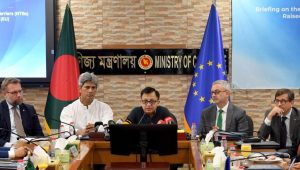
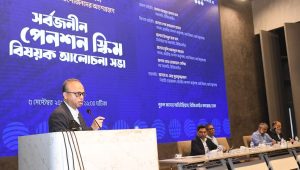
The concerns were raised at an international symposium titled “The Future of Work: Decent Work and Social Justice for All”, organised by Bangladesh Institute of Labour Studies (BILS) at Sonargaon Hotel in Dhaka on Friday.

BILS said technological transformation could create opportunities for innovation, productivity growth and economic expansion, but the benefits would depend on whether countries can ensure workers are prepared for changing job requirements and protected from rising inequalities.
The organisation said millions of workers globally continue to face insecure employment, informality, inadequate occupational safety and health protection, limited access to social security and widening income gaps.


It said economic transformation must therefore be accompanied by policies that strengthen labour market resilience, protect workers’ rights and promote social justice.
For Bangladesh, the challenge is to maintain competitiveness while ensuring that growth remains inclusive, participants said.
They stressed that the country’s ability to sustain economic expansion will depend on how effectively labour market institutions, enterprises and workers adapt to ongoing changes.
The symposium highlighted the need for broader social protection coverage, including healthcare access, employment injury protection, maternity benefits, unemployment support, disability benefits and old-age income security, to help workers manage labour market transitions with dignity.
BILS said Bangladesh has made progress in strengthening its social protection system, but significant coverage gaps remain among workers in the informal economy, agriculture, construction, transport, domestic work, fisheries, home-based work, small enterprises and the rapidly expanding platform economy.
Prime Minister’s Adviser on Finance and Planning Rashed Al Mahmud Titumir said Bangladesh must build an economy where workers’ rights are ensured and development remains democratic, humane and welfare-oriented.
He said transforming the country’s fragile economy into a stronger and more sustainable one requires a development approach that places people at the centre while ensuring economic opportunities reach broader sections of society.
International Labour Organization Bangladesh Country Director Max Tunon said labour market transitions require policies that protect workers while enabling economies to adapt to technological and structural changes.
Bangladesh Employers’ Federation Additional Secretary General Md Saidul Islam, Ministry of Labour Additional Secretary Md Abdur Rahim, Member of Parliament and Central Coordinator of Jatiyatabadi Sramik Dal Advocate Shamsur Rahman Shimul Biswas, and National Advocacy Alliance for Workers’ Rights Senior Joint Convener Mesbahuddin Ahmed attended the symposium.
The event brought together representatives from government agencies, employers’ organisations, workers’ groups, international development partners, research institutions and civil society.
BILS Chairman Md Mujibur Rahman Bhuiyan chaired the event, while BILS Executive Director Syed Sultan Uddin Ahmed delivered the welcome address.
The discussion comes as Bangladesh seeks to strengthen its economic competitiveness while navigating a changing world of work.
Participants said the country’s ability to convert technological change into higher productivity and better livelihoods will depend on preparing workers, expanding protection systems and ensuring that no major segment of the workforce is left behind.