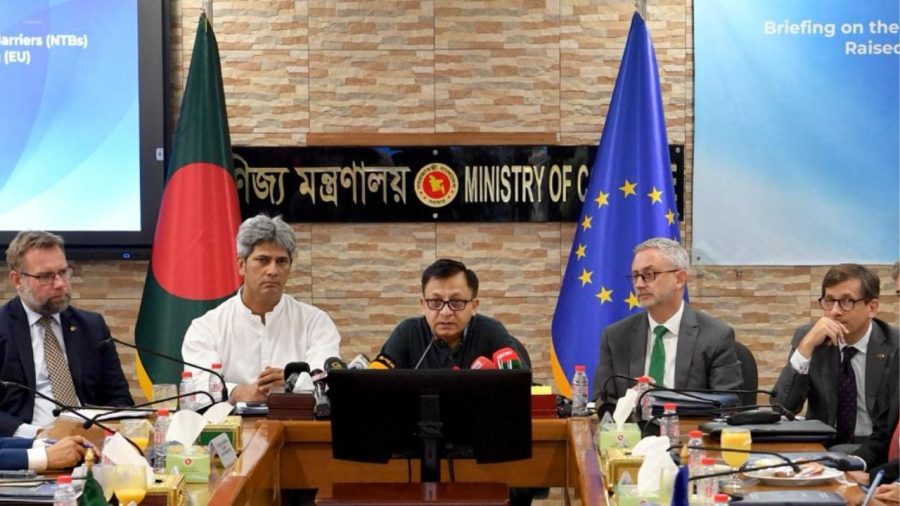

Bangladesh has made significant progress in strengthening and simplifying its trade relationship with the European Union (EU) by successfully resolving 48 out of 61 non-tariff barriers identified by the bloc.
The remaining issues are currently undergoing rapid resolution processes. Simultaneously, preparatory discussions are set to commence for a formal Free Trade Agreement (FTA) and an Investment Protection Agreement with the EU, which represents Bangladesh’s largest export market.
This progress was disclosed by Commerce Minister Khandakar Abdul Muktadir during a joint press briefing held in the conference room of the Ministry of Commerce on Sunday.
The briefing was attended by EU Ambassador and Head of Delegation to Bangladesh Michael Miller, Finance and Planning Adviser Rashed Al Mahmud Titumir, State Minister for Foreign Affairs Shama Obaid Islam; and State Minister for Planning Jonaid Abdur Rahim Saki, alongside senior officials from the commerce and foreign ministries.

According to the commerce minister, a delegation led by the EU ambassador raised specific trade obstacles in March, shortly after the minister took office. These challenges were quickly addressed through coordinated efforts involving the National Board of Revenue (NBR) and the ministries of agriculture, fisheries and livestock, and shipping.
Among the prominent issues that have been successfully resolved are:
- The resolution of licensing renewal complexities for 100 per cent foreign-owned logistics companies.
- An increase in the annual limit for importing commercial samples, raising it from $10,000 to $20,000.
- The elimination of customs valuation issues and the establishment of rational pricing for scanning smart cards, which are crucial for ensuring the traceability of export products.
Miller said the European Commission has responded positively to the formal proposal from the government regarding FTA and Investment Protection Agreement. Joint technical discussions are expected to begin as early as this week, subject to necessary approvals from EU member states.


He emphasised that a transparent, stable, and competitive business environment is vital for deepening bilateral economic cooperation. Miller highlighted that maintaining transparency and fair competition in public procurement processes would mutually benefit both Bangladesh and the EU.
Additionally, he expressed optimism regarding the swift progress of discussions to purchase Airbus aircraft, aimed at enhancing aviation and trade cooperation between the two sides.
LDC graduation and support requested
Addressing Bangladesh’s transition from the Least Developed Country (LDC) category, the commerce minister noted that the initiative to defer the graduation timeline by three years has received positive recommendations from the UN Committee for Development Policy (CDP) and the Economic and Social Council (ECOSOC).
This proposal will be presented for a final decision during the upcoming 81st session of the United Nations General Assembly, where strong backing from the EU will play a critical role.
When questioned about importing goods from the United States, the commerce minister clarified that Bangladesh’s import decisions are consistently based on national interest, economic rationality, and public necessity.
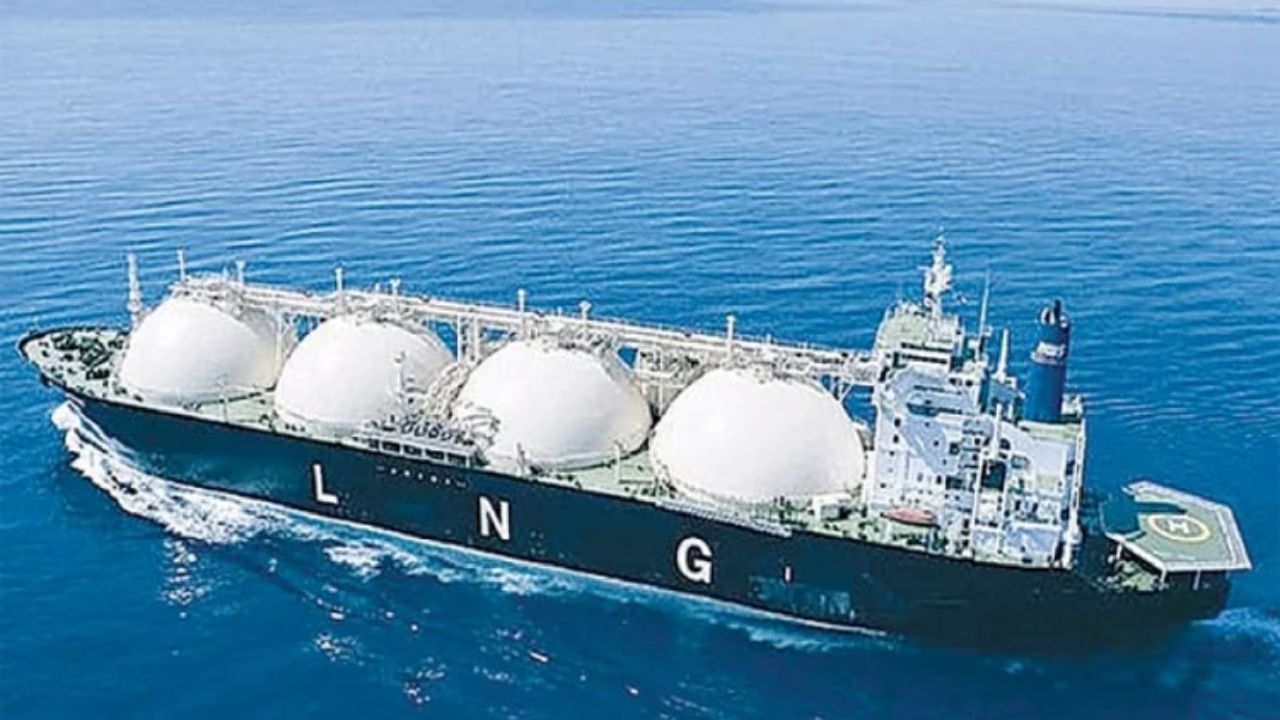
Decisions regarding the procurement of liquefied natural gas (LNG) and food grains are approved by the government purchase committee after thorough analyses of competitive pricing, quality, and wastage rates.
He reiterated that Bangladesh’s trade policies are not guided by the influence of any single nation but are anchored solely in the country’s economic interests and public welfare.
Economic analysts believe that initiating FTA negotiations with the EU will open new horizons for Bangladesh’s export sectors, particularly ready-made garments (RMG), pharmaceuticals, agro-processed goods, and other potential industries.
The removal of non-tariff barriers is also anticipated to pave the way for increased bilateral investment and technological collaboration. Today’s achievements represent a major milestone in transitioning the long-standing commercial ties between Bangladesh and the EU into a more sustainable and mutually profitable partnership.