


Bangladesh is often described through the language of potential. We are told that the country possesses a young population, strategic geography, entrepreneurial energy, resilient citizens and an economy that has achieved remarkable progress despite formidable challenges. These observations are valid. Yet potential, however abundant, is not a substitute for direction. A nation may possess human resources, geographical advantages and economic opportunities, but without a coherent national vision, strong institutions and a culture of accountability, progress can become fragmented, unequal and ultimately unsustainable. This is perhaps the central dilemma confronting Bangladesh today: the country is not without capacity; it is increasingly without clarity.
The problem is deeper than political instability or economic uncertainty. Immediate political interests repeatedly overshadow long-term national priorities, institutional reform is postponed in favour of short-term expediency, and public debate is dominated by personalities rather than policies. We have become accustomed to debating who should govern, without adequately discussing how the country should be governed. That distinction is fundamental.
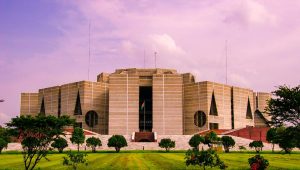
Bangladesh has yet to establish this institutional balance, because political competition has too often been framed as winner-takes-all, where electoral victory is not just seen as a mandate to govern, but also an opportunity to reorganise institutions, shift power balances, and reshape the political landscape. As a result, the state itself is vulnerable to politicisation, and public confidence is eroded as people believe that justice will depend less on law and more on identity and patronage. A government may change, but a republic must endure, and so Bangladesh must build a national consensus on the autonomy of its institutions, so that no political party has permanent sway over the administration, law-enforcement agencies, and public institutions. The state belongs to all citizens, and not just to those who happen to be in government.
A government may change, but a republic must endure. Bangladesh therefore requires a national consensus on the independence and neutrality of its core institutions. No political party should treat the administration, law-enforcement agencies or public institutions as instruments of permanent political advantage. The state must belong to all citizens, not merely to those who temporarily control the government.

Bangladesh has undertaken major infrastructure projects and achieved significant economic growth. Roads, bridges, expressways, ports and power facilities are essential foundations of development. Yet infrastructure must remain a means, not an end. A bridge connects places; it does not automatically create productivity. A highway reduces travel time; it does not necessarily generate innovation. A modern port facilitates trade; it does not determine what a nation will manufacture, export or contribute to the global economy. The more important question is whether Bangladesh possesses a coherent development philosophy for the coming decades.
Bangladesh cannot rely indefinitely on low-cost labour, a narrow export base and the assumption that economic growth will automatically solve structural problems. The next stage of development must be based on productivity, knowledge, technology, innovation and institutional competence.
Economic growth is meaningless if the institutions that enable it are opaque, unaccountable, and weak. The banking sector is a useful illustration of this principle, because a weak financial system can undermine decades of development, when political connections lead to large defaults that remain unpaid, or where lax lending practices are selectively prosecuted, or where the banking system fails to reflect the needs of ordinary Bangladeshis in its lending practices. The banking system does not serve just the super-rich, but also ordinary citizens, businesses, and institutions, and so Bangladesh must have a financial system that is based on credit-worthiness, professional lending practices, and national priorities, rather than political allegiances or favouritism.




Bangladesh has expanded access to education, but access is not the same as quality. Too many students continue to experience an education system dominated by examinations, memorisation and certificates. They are often assessed according to their ability to reproduce information rather than analyse problems, challenge assumptions or develop original solutions. The modern economy increasingly rewards creativity, technological competence, critical thinking and adaptability. Bangladesh cannot prepare its young population for the future through an educational model designed primarily for the past. Universities must become centres of research and innovation rather than institutions focused mainly on producing graduates. Academic freedom must be protected. Research must be connected to national development. Industry and universities must collaborate. Technical and vocational education must receive greater dignity and investment.
Education in Bangladesh has expanded tremendously, but access is not the same as quality, and too many students continue to struggle in an examination-driven, rote-learning, and certificate-oriented system that measures their ability to regurgitate information, rather than to analyse, critique, and innovate. The modern economy increasingly rewards creativity, technological competence, critical thinking, and adaptability, and so Bangladesh cannot educate its young people for the 20th century using a 21st century economy. Bangladesh must make its universities research-intensive and dynamic, rather than just repositories of degrees, and must promote academic freedom, research, and industrial collaboration.
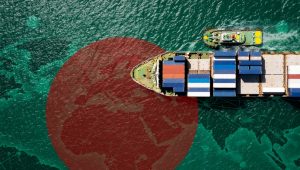
Bangladesh occupies a strategically important position between South and Southeast Asia and possesses significant opportunities in maritime trade, regional connectivity and the Bay of Bengal. However, geography creates opportunity only when supported by strategic competence. The country should cooperate widely while avoiding excessive dependence on any single power. Foreign policy should not be shaped by emotion or political symbolism. It should be guided by economic interests, national security, trade opportunities and long-term strategic considerations.
The central challenge is whether Bangladesh can transform development into a durable national system – one that does not depend on the political identity of the government, the influence of powerful individuals or temporary economic conditions. The country needs national renewal based on several principles: credible elections and peaceful political transitions; independent institutions accountable to the Constitution rather than political parties; an economy based on productivity, innovation and diversified exports; a banking system governed by professional discipline; an education system that promotes research and critical thinking; decentralised governance that empowers local communities; and a foreign policy guided by strategic national interests.
These reforms require courage because they challenge established interests. Yet without structural reform, Bangladesh may continue to experience recurring cycles of political conflict, institutional weakness and economic uncertainty.
Bangladesh is a country with tremendous potential that is underutilised because of its institutional incapacities. Its people are hardworking, its entrepreneurs are resilient, its youths are energetic, and its location is strategic, but national potential will rarely compensate for institutional weaknesses for long. The world is changing, and artificial intelligence, automation, climate change, geopolitics, and technology will transform economies and societies, and countries that fail to be prepared will become importers of technologies, rather than innovators and creators.
Bangladesh must decide whether it wants to merely react to events, or whether it wants to be able to shape them, and until we answer this question with intellectual honesty, political courage, and institutional strength, we may continue to be in the position of going forward, but not knowing if we are actually moving or just spinning our wheels.
The views expressed in this article are solely those of the author
The writer is a columnist and political analyst