


Following the July unrest, Bangladesh has entered a new political era full of hopes and aspirations. People want a political system that will ensure accountability, responsiveness to the people’s needs, and a less divisive approach that has at its core the national interest. There is a desire to establish a more inclusive political culture based on consultation, consensus and mutual understanding. This vision is not only the prerogative of the ruling party but also of the opposition as well as ordinary citizens. Ordinary citizens want political change to take place so that the country’s democratic institutions and systems can provide them with economic relief, social justice, and dignity. Political change is a priority because people want to see improvements in their own lives as well as the overall improvement of the country’s public life.
The government bears primary responsibility for delivering these improvements, but the opposition also has an essential role. Despite their different priorities and political positions, both share a fundamental duty to safeguard Bangladesh’s long-term interests.
Every government needs reasonable time to understand complex challenges and translate its policies into tangible results. Deep-rooted economic and institutional problems cannot be resolved overnight. Nevertheless, public patience depends largely on everyday realities, including rising prices, energy costs, employment opportunities, healthcare, education, and the overall cost of living. The government must demonstrate that it understands these pressures and is taking practical steps to address them. The government should prioritise improving market management, strengthening supply chains, reducing unnecessary expenditure, increasing energy-sector efficiency, and protecting vulnerable households.
Democracy gives an elected government the mandate to implement its policies and fulfill its mandate. It cannot be expected to accept every opposition proposal nor must every decision secure unanimous agreement. But majority rule should never be an excuse to dismiss alternative viewpoints. A sound proposal is no less valid because it comes from an opposition party, no more invalid because it comes from those in power.
On matters such as economic recovery, employment, energy security, institutional reform, and public administration, consultation can improve decisions, identify weaknesses, and build wider public support. Consultation means exercising authority responsibly. The government should create meaningful opportunities for opposition parties, constitutional experts, civil society, and relevant professionals to contribute to national policymaking. Such engagement would help replace unnecessary confrontation with constructive democratic competition.

A key issue in the Bangladeshi political debate concerns the interpretation and implementation of the referendum on reforms associated with the July National Charter. The disputes on its translation into constitutional and institutional changes could become a lasting political mistrust. However, respect to the referendum and discussing how to best implement its outcome are not contradictory aims. It is a matter of how to honour the people’s expressed preferences, but also address legitimate legal, constitutional and practical questions through a credible process.
A structured, time-bound dialogue involving government and opposition representatives, constitutional experts, and other relevant stakeholders could help establish priorities, clarify disputed issues, and develop a realistic implementation framework. The objective should not be an unconditional victory for either side. It should be a solution that commands the widest possible democratic acceptance and strengthens public confidence in the reform process. Although both sides have responsibilities, the government has a particular opportunity to lead. Holding executive authority gives it greater capacity to convene discussions, establish consultation mechanisms, and create an environment conducive to political understanding.
Therefore, the government must take the initiative to engage with the opposition by calling upon them or requesting their suggestions to involve selected representatives from various fields in the advisory and reform processes. At the same time, the opposition should take the government’s initiative to negotiate seriously. It is essential to distinguish between questions of principle and matters of policy. In my opinion, political confrontation does not undermine the authority of the government, but on the contrary, it demonstrates a responsible attitude towards the people entrusted to their care.




Political consensus is not a guarantee of effective governance. Bangladesh also requires competent leadership, professional public administration and institutions that can act in a manner that is fair to all political parties. Decisions should be made based on merit, integrity, relevant experience and ability to deliver. There must be accountability, transparency and measurable outcomes as the criteria for measuring performance. This will have implications for economic management, education, health, energy, security and matters relating to investment.
Stronger institutions also reduce the risks associated with political transitions. A professional administration, an independent and impartial justice system, effective regulatory bodies, and respect for democratic rights help ensure that governance does not depend solely on individual leaders. Ultimately, citizens judge government by whether they can afford necessities, access essential services, find employment, express their opinions freely, and receive fair treatment under the law. Improving these everyday realities must remain a national priority.
A constructive opposition is indispensable to democracy. It scrutinises government decisions, raises public concerns, presents alternative policies, and holds those in power accountable. Peaceful political activity, lawful protest, and public criticism are legitimate democratic rights. However, opposition politics becomes more effective when criticism is accompanied by credible solutions. Proposals addressing inflation, unemployment, institutional weaknesses, and constitutional reform can contribute directly to national progress.
Political leaders must also exercise restraint in their rhetoric and avoid turning every disagreement into hostility. The purpose of political competition is not to eliminate opponents but to offer better ideas, improve governance, and serve the public. Government and opposition may disagree strongly on particular issues, yet they should cooperate wherever their interests converge. National welfare must remain more important than partisan advantage.
Democracy depends on constitutional processes, fundamental rights, credible institutions, accountability, political participation, and the peaceful resolution of disputes. When political actors begin treating every disagreement as an existential struggle, the entire democratic system is placed at risk. The consequences of prolonged instability would be borne not by one party alone, but by ordinary citizens, workers, businesses, students, and future generations.
Bangladesh belongs to its people, and not to any particular group or political party. Governments are formed and dissolved, political parties rise and fall, political platforms are created and disbanded – but the well-being of the country as a whole must remain a priority. It is time for dialogue to become the new status quo, and not just an occasional tool to address political deadlocks. The issue of the referendum must be approached in a way that balances the will of the people with the forces of compromise, using a reliable and fair procedure that meets the requirements of the constitution.
The true measure of democratic success is not whether one political party defeats another in every dispute, but whether Bangladesh becomes more stable, its institutions more effective, its economy more resilient, and the lives of its people more secure and dignified.
Let the government and opposition move forward with mutual respect, a willingness to listen, and a shared commitment to the national interest. Let political competition coexist with cooperation, and let constitutional disagreements be resolved through reasoned discussion rather than prolonged confrontation. Above all, let us ensure that the vehicle of democracy does not go off track again.
The views expressed in this article are solely those of the author
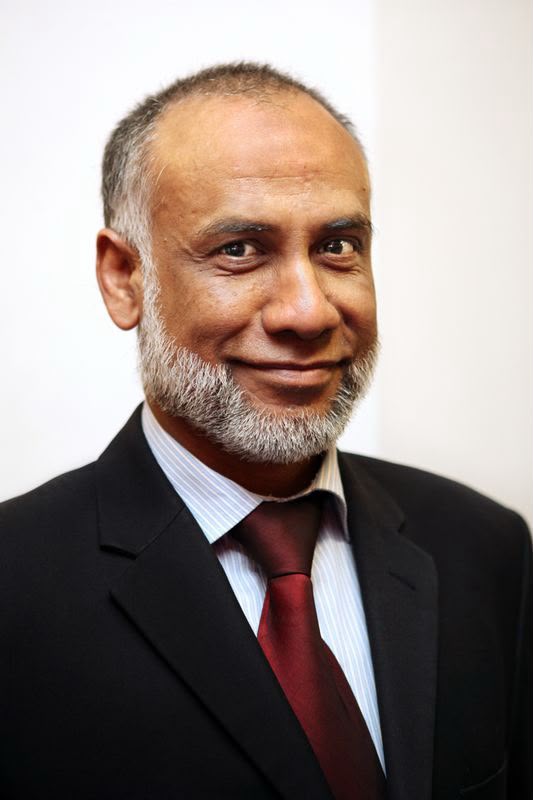
The writer is the Former Mayor of Tower Hamlets | Retired Solicitor, Supreme Court of England | Researcher, Writer & Author