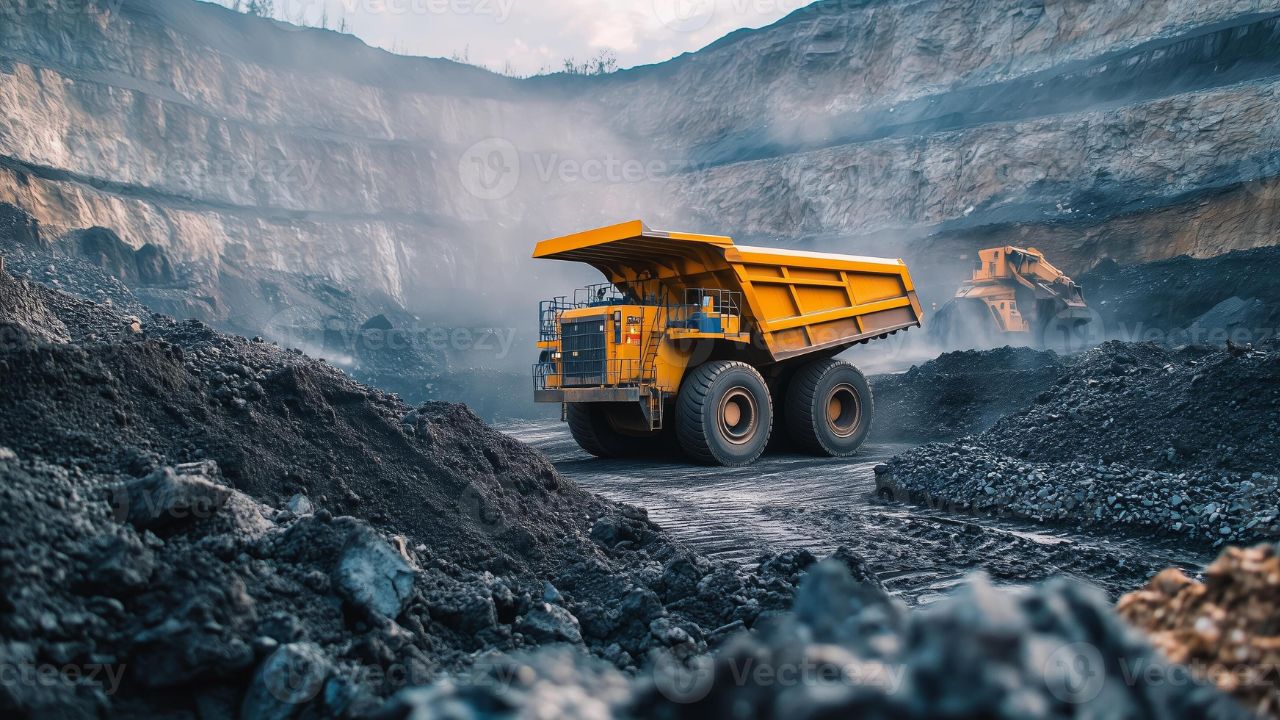



Tensions are rising in Dinajpur’s Phulbari after the BNP government indicated plans to extract coal through open-pit mining, reviving a debate settled by a two-decade-old agreement.
Protests have already erupted, with local residents warning of resistance if the government moves ahead with the plan.
The Democratic Rights Committee has announced a “campaign journey” from Dhaka to Phulbari on 24 August and a mass rally on 26 August. On Wednesday night, Gonosamhati Andolan held a protest procession and rally at Nimtola Mor against the proposal.
The current movement is being led by the National Committee to Protect Oil, Gas, Mineral Resources, Power and Ports, the same platform that signed a 2006 agreement with the government following the Phulbari movement.
Syed Saiful Islam Jewel, convener of the committee’s Phulbari unit, told TIMES of Bangladesh, “We lost three people in the 2006 mass uprising and more than 200 others were injured. This time too, the finance minister’s remarks on open-pit coal mining have been rejected with disgust by the people of Phulbari. If the government still moves ahead, there will be protests and resistance. We will not easily leave our homes.”
On 16 August, Finance Minister Amir Khosru Mahmud Chowdhury outlined the government’s plan to extract coal through open-pit mining at a meeting organised by the American Chamber of Commerce in Bangladesh (AmCham) in Dhaka.
“Unfortunately, we are now moving towards coal extraction. We have to proceed with open-pit coal mining in Phulbari and other areas because we have no other alternatives,” he said.

Bangladesh relies heavily on natural gas for electricity generation, but supply shortages have forced many gas-based power plants to shut down. Coal now accounts for a significant share of electricity generation despite environmental concerns.
The country’s annual coal demand is estimated at 18 million to 20 million tonnes. Domestic production from Barapukuria is around 750,000 tonnes, with the remainder met through imports.
The government believes producing around 15 million tonnes of coal annually through open-pit mining could reduce dependence on imports.
Bangladesh has five coalfields, with estimated reserves of 5,450 million tonnes at Jamalganj, 685 million tonnes at Khalashpir, 706 million tonnes at Dighipara, 410 million tonnes at Barapukuria and 572 million tonnes at Phulbari.
The finance minister has spoken not only about Phulbari but also about adopting open-pit mining across the country’s coalfields, a method that remains highly controversial.



Professor Anu Muhammad, a member of the Democratic Rights Committee, told TIMES, “Twenty years ago, the then government of prime minister Khaleda Zia decided that Bangladesh would not allow open-pit mining and that public consent would be required for any such initiative.
“Twenty years later, an attempt to violate that agreement while her son is leading the government is both surprising and concerning. A strong resistance will be built against it.”
Calling it a dangerous attempt to breach the agreement, he said, “Several government expert committees have already warned that open-pit mining would disrupt water resources, destroy triple-crop agricultural land and displace millions of people. Therefore, this method cannot be accepted under any circumstances.”
Opposition to open-pit mining
Retired University of Dhaka geology professor Badrul Imam strongly opposes the method.
“Bangladesh is a flat agricultural country with extremely high population density. Open-pit mining cannot be an option in such a country. The damage here will be enormous,” he told TIMES.
He said open-pit mining would cause displacement, damage underground water reservoirs and create major soil instability risks.
“Those who advocate open-pit mining do not understand the ground reality. They do not consider the massive damage people will suffer as the main issue,” he said.
Saiful Islam Jewel said, “Coal is a project for 20 to 30 years. But this land will provide crops forever, and ponds will provide fish forever.”
“They want to destroy our lives, culture and clean water and push us into an uncertain future. Can the value of this life ever be equal to the value of coal resources?” he said.
The 2006 Phulbari movement
The previous BNP government had also attempted to introduce open-pit coal mining in Phulbari through UK-based Asia Energy.
In 2006, locals and various political, social and professional organisations launched a movement against the plan.
On 26 August that year, three people were killed and more than 200 injured when the then Bangladesh Rifles (BDR) and police opened fire on a procession heading towards Asia Energy’s office.
On 30 August, the BNP-led four-party alliance government signed a six-point agreement with protesters.
The agreement, signed by Mizanur Rahman Minu on behalf of the government and Professor Anu Muhammad for the protesters, stated that no coal mining project using open-pit or open-cut methods would be implemented anywhere in Bangladesh, including Phulbari. It also called for Asia Energy’s removal from the country.
Saiful Islam Jewel said, “Many parts of that agreement have still not been implemented. We are raising demands over this.”
He questioned why the finance minister raised the issue of open-pit mining.
“Energy issues should be discussed by the energy minister or the prime minister. We have not heard anything from them. We want an explanation from the government,” he said.