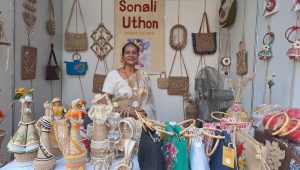
The digital marketplace is steadily reshaping consumer habits in Bangladesh, with Dhaka division standing out as the country’s frontrunner in online shopping.
A recent survey shows that more than one in five internet users in Dhaka are now purchasing goods and services online, while Barishal lags behind with the lowest participation.
Fashion dominates the virtual carts, as clothing, footwear and sporting goods account for the lion’s share of purchases. Groceries and food items are also gaining traction, alongside medicine, cosmetics, household essentials and electronics, reflecting the widening scope of e-commerce in everyday life.
Despite the growing variety of products, shoppers remain firmly attached to traditional payment habits. Cash on delivery continues to reign supreme, while mobile money platforms such as bKash and Nagad are carving out a modest but rising share.
Debit and credit cards, along with internet banking, still play only a minor role in the online transaction landscape.
The findings highlight Dhaka’s lead in embracing digital commerce, underscoring both the promise and the challenges of Bangladesh’s evolving consumer economy.
The survey, dubbed as “ICT Access and Use by Households and Individuals Survey 2024-25” carried out by Bangladesh Bureau of Statistics (BBS) showed that a total of 14.4 per cent of individuals in Bangladesh used the internet to purchase goods or services online, with Dhaka division recording the highest participation rate at 21.3 per cent and Barishal the lowest at 8.7 per cent, according to a survey report.

Clothing, footwear and sporting goods were the most purchased online items at 70.3 per cent followed by food or groceries at 34.6 per cent, medicine 21.0 per cent, cosmetics 17.9 per cent, household goods including furniture and appliances 10.9 per cent and IT or electronics products 8.7 per cent.
Cash on delivery remained the dominant payment method, used by 86.8 per cent of online shoppers. Mobile money services such as bKash and Nagad accounted for 13.9 per cent, while debit or credit cards accounted for 3.1 per cent and internet banking 1.1 per cent.
According to the statistics of Bangladesh Telecommunication Regulatory Commission (BTRC), mobile phone connections in the country currently stood at 18.60 crore while internet subscribers reached 12.96 crore.
It showed that online shopping is more prevalent among males at 17.5 per cent than females at 11.4 per cent, while urban residents at 20.0 per cent are nearly twice as likely to shop online as rural residents at 11.8 per cent.




Among divisions, Chattogram recorded 16.2 per cent participation in online shopping followed by Khulna 14.2 per cent, Rajshahi 11.7 per cent, Sylhet 10.9 per cent, Mymensingh 9.3 per cent and Rangpur 9.2 per cent.
The age group of 25-34 years emerged as the most active online shopping demographic with 24.7 per cent participation, followed by 15-24 years at 19.4 per cent, while individuals aged 65 years and above recorded the lowest participation at 2.6 per cent.
The survey found that tertiary education holders are the most active online shoppers with 41.4 per cent participation compared to 19.5 per cent among secondary education holders, 8.3 per cent among primary education holders and 3.7 per cent among individuals with no education.
By labour force status, unemployed individuals recorded the highest online shopping rate at 23.9 per cent followed by employed individuals at 18.9 per cent and persons outside the labour force at 10.5 per cent.
According to the survey, 11.4 per cent of online shoppers reported facing problems while purchasing online. The rate was nearly identical for males at 11.4 per cent and females at 11.5 per cent, while rural residents at 11.6 per cent slightly exceeded urban residents at 11.3 per cent.
Among divisions, Rangpur and Chattogram recorded the highest problem rates at 17.2 per cent each, while Dhaka recorded the lowest at 6.8 per cent.
Individuals aged 65 years and above faced the highest rate of online shopping problems at 16.6 per cent. The rate stood at 12.3 per cent for the 35-44 years age group, 12.1 per cent for the 45-54 years age group and 10.9 per cent for the 15-24 years age group.
By education attainment, individuals with primary education recorded the highest problem rate at 15.5 per cent, while those with no education recorded the lowest at 8.8 per cent. The rate among tertiary education holders was 10.8 per cent.
The survey showed that clothing, footwear and sporting goods were the most purchased online items at 70.3 per cent followed by food or groceries at 34.6 per cent, medicine 21.0 per cent, cosmetics 17.9 per cent, household goods including furniture and appliances 10.9 per cent and IT or electronics products 8.7 per cent.
Among females, 75.3 per cent purchased clothing, footwear and sporting goods online compared to 66.8 per cent males. Food or groceries were purchased online by 36.3 per cent males and 32.2 per cent females, while medicine was purchased by 24.3 per cent males and 16.2 per cent females.
Cash on delivery remained the dominant payment method, used by 86.8 per cent of online shoppers. Mobile money services such as bKash and Nagad accounted for 13.9 per cent, while debit or credit cards accounted for 3.1 per cent and internet banking 1.1 per cent.
The report identified receiving goods or services not delivered as ordered as the most frequent problem faced by online consumers, cited by 50.7 per cent respondents. The rate was 49.3 per cent among males and 52.6 per cent among females.
Poor product quality was reported by 44.8 per cent respondents including 44.7 per cent males and 45.0 per cent females, while delayed delivery was reported by 19.3 per cent respondents, including 20.3 per cent males and 17.8 per cent females. Higher prices than quoted were reported by 9.7 per cent respondents.
Poor quality complaints were more common in urban areas at 48.0 per cent compared to 40.7 per cent in rural areas, while complaints regarding wrong goods delivered were nearly identical in urban and rural areas at 50.6 per cent and 50.7 per cent respectively.
Regarding delivery methods, 55.6 per cent respondents received goods or services through collection points or post offices, while 30.6 per cent received home delivery through commercial or postal services.
The survey found that 75.8 per cent of individuals who did not purchase goods or services online preferred shopping in person to see or touch products. Another 35.8 per cent reported having no need for online shopping, while 12.0 per cent cited lack of skills or knowledge and 3.3 per cent expressed privacy or security concerns.