I often pass by the university library on my way to class. The building remains impressive, its glass doors polished, its shelves carefully arranged. Yet inside something essential is missing. The seats are mostly empty. The energy that once defined student life, the curiosity that pulled us toward books has faded.
As a faculty member, this absence troubles me more than any visible crisis. It signals a deeper problem unfolding silently across Bangladesh.
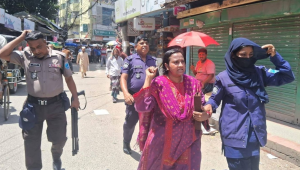
We are living through a time when culture is retreating from public life, and into that retreat step rigid ideas. The clash between culture and fundamentalism in today’s Bangladesh has become loud and even violent. Previously, it has been subtle.
It begins with simple cases, when students stop reading, when they stop engaging with history beyond exam notes, when museums feel irrelevant and cultural content become unfamiliar. When the cultural root of a county weakens, it indicates our dark future, which is without depth our future is falling apart.
It was not too ago, though our student days were different. We read books not merely to pass exams, but to understand the world. Novels, poetry, and political essays shaped how we spoke and how we disagreed.

We attended stage dramas that brought history alive, especially the Liberation War, not as a chapter to memorize, but as a living moral struggle. Cultural engagement created a shared consciousness. Even when we were divided politically, we argued from a place of emotional investment.
Today’s students are intelligent and “Trendy enough.” But many lack that strong cultural grounding. Ask them about the Liberation War, and the responses are often mechanical. Few have read firsthand accounts or literature rooted in that period.




Museums feel distant, libraries optional, films unnecessary. Their world is fast, digital, and crowded with information, yet strikingly thin in understanding. This is not their failure alone, it is the outcome of an education system that increasingly prioritizes credentials over curiosity.
What worries me most is the absence of cultural and political consciousness. When students do not learn to question through literature, history, or art, they look for certainty elsewhere. Fundamentalism, whether religious, ideological, or social offers easy answers in a confusing world.
It thrives where critical thinking is weak, and where young people are never taught how to doubt responsibly. Many of today’s youngsters are also noticeably disengaged from politics, not because they are indifferent, but because politics appears either dangerous or meaningless to them.
In our time, political awareness was closely tied to cultural activity. Reading, film, and discussion groups shaped our sense of responsibility. Today, politics is often reduced to online outrage or total withdrawal. Neither encourages thoughtful participation. Universities should be spaces where culture and critical thought intersect.
Instead, many campuses now feel transactional, focused on grades, and job markets. Libraries exist, but they are underused. Cultural programs are organized but poorly attended. History is taught but stripped of ethical inquiry. When education loses its human dimension, students stop seeing themselves as part of a larger story.
This cultural thinning has serious consequences. A society without readers is easier to manipulate. A generation unfamiliar with its artistic and historical inheritance struggles to defend pluralism. When young people do not encounter multiple perspectives through books and art, intolerance becomes easier, dialogue harder.
This is not a call to return to the past or to dismiss the present. Every generation must find its own language and tools. But the foundations of cultural engagement, like debate, historical awareness, artistic expression are not outdated. They are essential.
As a teacher, I still believe in my students. When given the right texts, the right questions, they respond with insight and passion. But belief alone is not enough. If we allow culture to continue fading from our institutions, we should not be surprised when loud certainties replace thoughtful inquiry.
The future of Bangladesh does not depend only on economic growth or technological advancement. It depends on whether we can raise a generation that thinks critically and understands where it comes from. Empty libraries are not neutral spaces. They are warnings.
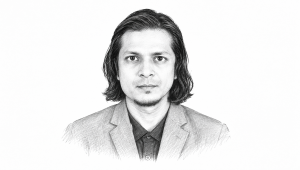
The author is an assistant professor of Mass Communication and Journalism at Bangladesh University of Professionals (BUP).