


Mania Akter Sadia paid around Tk700 in electricity bills last month for her modest one-room home, despite operating only a small collection of essential items: a light, a refrigerator, a laptop, a mobile phone, and a ceiling fan.
Baffled by her mounting utility costs, she explained that the fan is the only appliance running continuously throughout the day while she studies or cooks.
Her household’s financial frustration mirrors a much broader national crisis, as Bangladesh’s power system faces immense operational and financial strain.
This pressure reached a breaking point during recent summer heatwaves, when fuel shortages, inadequate gas supplies, and technical disruptions at coal-fired power plants triggered severe generation shortfalls.
In April, the Power Division reported that projected national electricity demand had soared to nearly 17,000 megawatts (MW) against a constrained generation capacity of roughly 14,000MW, leaving a crippling 3,000MW deficit.
Although early May rainfall provided brief respite, conditions deteriorated rapidly again in June, highlighting the urgent need to manage household energy consumption more effectively.

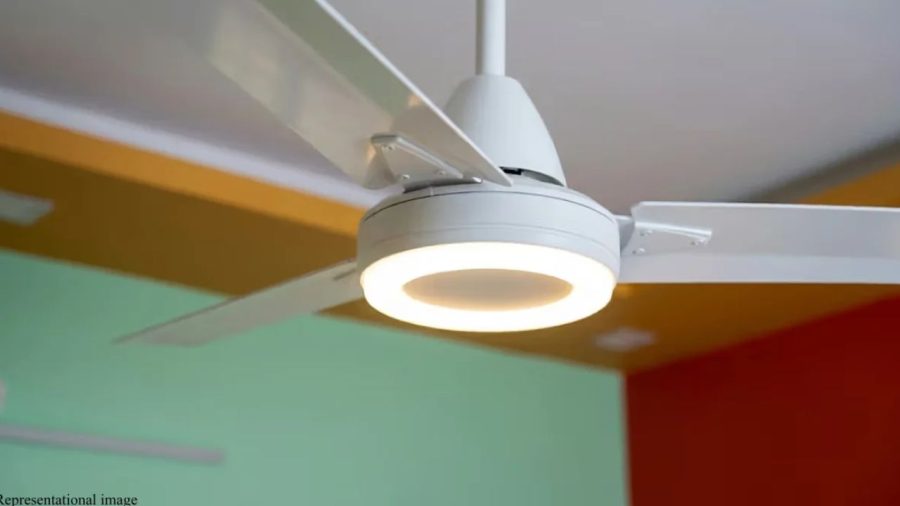
Against this turbulent backdrop, a landmark study by the Institute for Energy Economics and Financial Analysis (IEEFA) has identified a highly effective, yet largely overlooked, demand-side solution: a nationwide transition to energy-efficient ceiling fans.
Conventional fans, which currently dominate Bangladeshi households, consume roughly 70 watts of electricity per unit.
By contrast, modern Brushless Direct Current (BLDC) models require only 35 watts to provide the same cooling output.
Despite this stark difference in efficiency, the study found that energy-efficient BLDC fans account for a mere 1.4% of all household fans in Bangladesh, leaving conventional, power-hungry models to make up the remaining 98.6%.




Collectively, these inefficient household fans impose a colossal burden on the national grid, accounting for between 3,362MW and 5,212MW of total power demand and consuming an estimated 13,916 gigawatt-hours (GWh) of electricity annually.
The economic and infrastructural benefits of replacing these outdated appliances are staggering.
According to the IEEFA report, transitioning to 35-watt BLDC fans would slash summer peak electricity demand by up to 2,590MW and save 6,913 GWh of electricity every year.
For consumers and the state alike, this translates to annual financial savings of approximately Tk8,987 crore.
Crucially, shedding this immense peak load would also allow the Bangladeshi government to bypass the construction of expensive new power infrastructure, potentially avoiding more than $4 billion in future capital investments for coal-fired power plants.
However, achieving this transition requires overcoming significant consumer barriers.
A comprehensive survey of 435 households across 26 districts revealed that families typically operate between 1.4 and 2.3 fans daily for up to 12.5 hours. Yet, market awareness remains severely limited.

Around 75% of surveyed households did not know where to purchase energy-efficient fans, and another 6% were completely unaware that such technology existed.
Furthermore, retail pricing presents a formidable obstacle. While a standard conventional fan costs around Tk2,000, a BLDC equivalent is priced between Tk5,000 and Tk6,300.
For households earning up to Tk25,000 a month, recovering this premium upfront investment through lower monthly energy bills could take between 7.7 and 9.6 years, deterring immediate adoption.
Despite these hurdles, the appetite for change is remarkably high, with 96.1% of respondents expressing a willingness to upgrade once informed of the long-term economic benefits.
To bridge the affordability gap, the IEEFA strongly recommends launching a government-backed bulk procurement programme, which is estimated to drive down retail prices by up to 25%.
Additionally, carbon-reduction revenues could be deployed to subsidise purchases for low-income households.
The report also urges the Sustainable and Renewable Energy Development Authority (SREDA) to implement stringent efficiency standards and mandatory product labelling, whilst advocating for the creation of a dedicated state energy service company to coordinate the replacement scheme, guarantee product quality, and monitor the nation’s transition toward sustainable household cooling.