


Jewel Rana, 19, was still relatively stable when he sought hospital treatment for a fever. But within days, his condition deteriorated rapidly, and he died despite being transferred to intensive care.
Jewel was diagnosed with dengue at a private diagnostic centre in Sarishabari, Jamalpur, when his platelet count stood at 150,000.
Around 10pm, his condition worsened, prompting his family to take him to Jamalpur General Hospital.
A repeat test the following morning showed that his platelet count had plunged to 15,000.
Around 10am, a doctor reviewed the results during a ward round and advised the family to transfer him to Mymensingh Medical College Hospital.
Jewel was admitted to the intensive care unit (ICU) immediately after arriving there. His platelet count was initially 18,000 and later rose to 30,000, but it began falling again the following day.
Placed on life support as his condition deteriorated, Jewel eventually died.
Jewel’s maternal grandfather, Abdus Salam, told TIMES that ICU nurses had said none of the medicines were working while antibiotics were complicating his treatment.

Jewel was the youngest of 14 people who died of dengue in the past 48 hours.
According to a government report, all 14 deaths were attributed to dengue shock syndrome, a potentially fatal complication that can cause a patient’s condition to deteriorate rapidly.
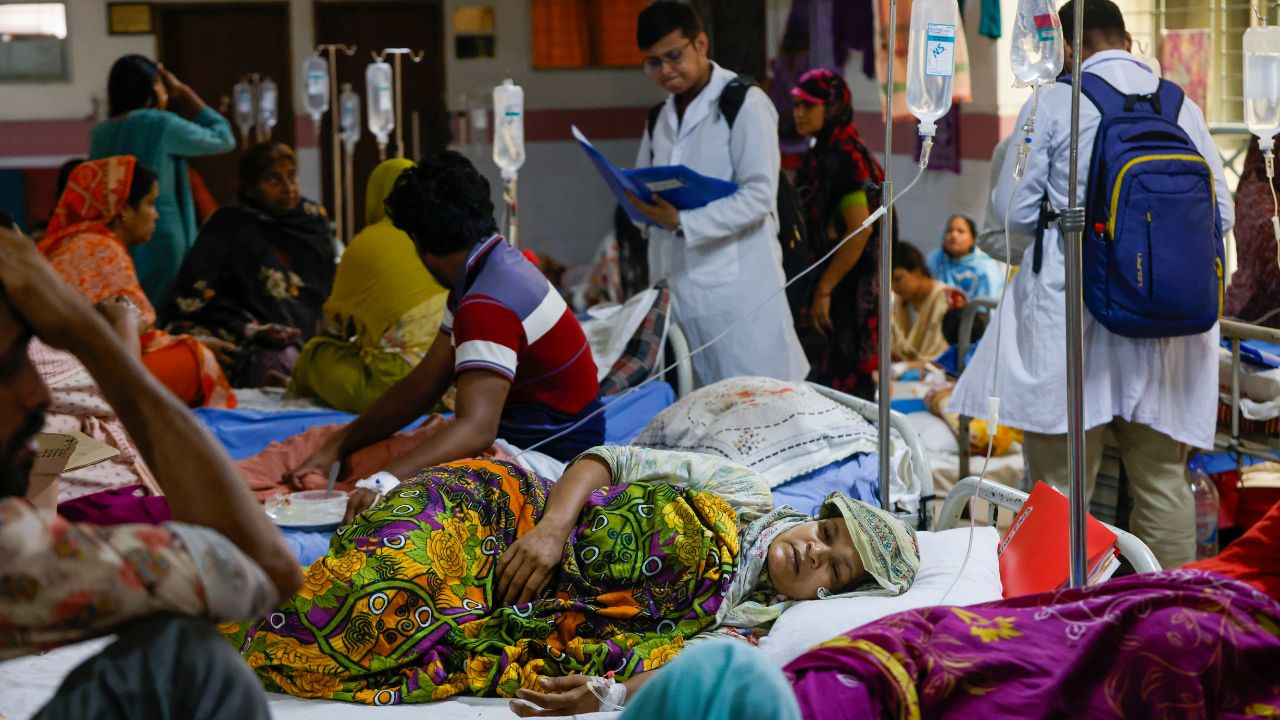
The deaths have raised concerns about access to timely intensive care, particularly outside major cities, where patients requiring urgent treatment need to be transferred to larger hospitals.
Runa Begum, who died on the same day, was among those whose family reported delays in accessing intensive care.
She was admitted to Chapainawabganj Sadar Hospital at around 10pm on Thursday but, her conditions worsening, transferred to Rajshahi Medical College Hospital around 1:30am.



Intern doctors admitted her, but a transfer to the ICU could not be arranged despite her critical condition.
Her son, Nafiz, told TIMES that, after taking his mother to Rajshahi Medical College, he had requested intensive care but due to the absence of senior doctors (due to it being Friday), interns were not authorised to take the decision.
“My mother died in the early hours of the morning while we were waiting for a senior doctor,” he said.
Another patient, Nur Ayesha, 62, also died while waiting for an ICU bed.
Her son, Rafiqul Kader, said he admitted her to Chattogram Medical College Hospital on Friday after her condition deteriorated.
“When my mother’s condition worsened further on Saturday, the hospital told us that there were no available beds at the ICU. They asked us to leave her name and a contact number, but my mother died before a bed was available.”
Majid Bepari, 50, initially received treatment for a fever in Madaripur before being transferred to Sir Salimullah Medical College and Mitford Hospital in Dhaka.
He was admitted to intensive care but died after 10 days.
The 14 deaths in two days have highlighted not only the severity of dengue but also the limitations in the treatment of critically ill patients.
Questions have arisen particularly over whether district hospitals have adequate ICU facilities, high-flow oxygen support and arrangements for close monitoring of patients with dengue shock syndrome.
Dengue shock syndrome is among the most serious complications of the disease and occurs when fluid leaks from blood vessels, accumulating in the abdomen or chest.

As the volume of fluid within blood vessels decreases, blood pressure falls, reducing the supply of blood and oxygen to vital organs, including the heart, kidneys and brain.
Patients may experience a sudden drop in blood pressure and a rapid, weak pulse.
Without prompt treatment and close monitoring, their condition can deteriorate quickly.
Pointing to a surge of patients with shock syndrome this year, Dhaka Medical College Hospital physician, Dr Shah Md Galib Alam said, “The need for ICU care has also increased. Often, when ICU beds are unavailable, we have to manage patients in general wards using high-flow oxygen. However, treatment becomes complicated for patients who arrive late. In many cases, it is not possible to save them.”
Public health expert Md Mushtaq Hossain said many patients with dengue shock syndrome could be saved if district hospitals were equipped to provide at least high-flow oxygen support.
He said the conditions of such patients can deteriorate suddenly, leaving doctors very little time to intervene.
“If essential services are available at nearby medical facilities, patients won’t have to rush to Dhaka for treatment and prompt care can be ensured locally,” he added.
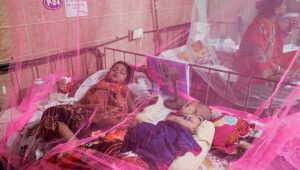
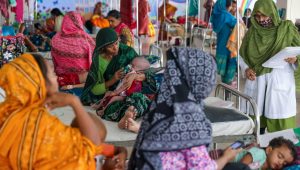
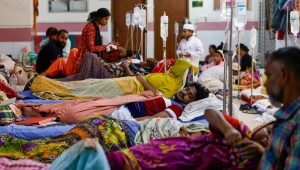
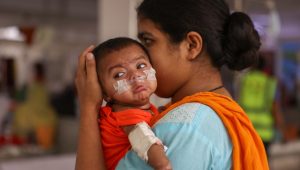
Meanwhile, dengue infections and deaths continue to rise across the country.
In the past 24 hours, 1,970 patients were admitted to hospitals with dengue, taking the year’s death toll to 433.
Total hospital admissions have exceeded 138,899, while 6,017 patients are currently receiving treatment in hospitals across the country.