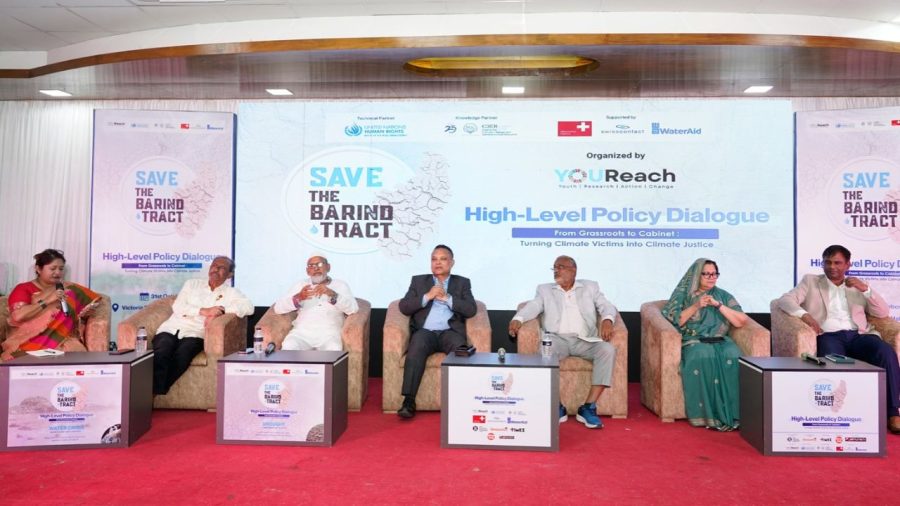



The High-Level Policy Dialogue titled “Save the Barind Tract” was held on Saturday, 31 October 2026, at the Victoria Convention Hall in Terokhadia, Rajshahi. The event was organised by YOUReach in collaboration with the GO4IMPACT project of WaterAid and its Consortium (Swisscontact and the Embassy of Switzerland in Bangladesh), with technical support from the UN Office of the High Commissioner for Human Rights (OHCHR) and knowledge contribution from the Centre for Climate Change and Environmental Research (C3ER), BRAC University.
The dialogue brought together policymakers, lawmakers, researchers, environmental experts, and development practitioners to formulate solutions for the mounting climate and water vulnerabilities in the Barind region. Special Assistant to the Prime Minister on Health Affairs Dr SM Ziauddin Haider attended as the chief guest.
The programme was addressed at the outset by Rajshahi City Corporation Administrator Md Mahfuzur Rahman Riton, while Professor Dr Murshida Ferdous and Md Atikur Rahman moderated the event. Director of the Institute of Environmental Science at the University of Rajshahi Professor Md Golam Mostafa delivered the keynote presentation.
The dialogue comprised a panel discussion and roundtable session addressing eight core thematic areas: agriculture, gender, water scarcity, indigenous communities, health, livelihoods and the economy, drought, and extreme weather.


Dr SM Ziauddin Haider
Special Assistant to the Prime Minister on Health Affairs
“Climate change is increasingly threatening public health by raising the risks of heatstroke, dehydration, kidney disease, and heart disease. It is also adversely affecting maternal and child nutrition, reproductive health, and the physical and mental development of children. Addressing these challenges requires planned tree plantation, green belt development, restoration of dried-up canals, wetlands, and river channels, as well as coordinated water conservation initiatives. The government’s plan to plant 250 million trees over the next five years should receive particular attention in the Barind region. The proposed Teesta Barrage project could also bring significant benefits to the region by addressing its growing water challenges. At the same time, stronger dengue prevention measures must be ensured. Regular cleaning, effective waste management, and coordinated environmental initiatives are essential to protecting public health, restoring ecological balance, and building a healthier, safer, and more climate-resilient Barind region for future generations.”
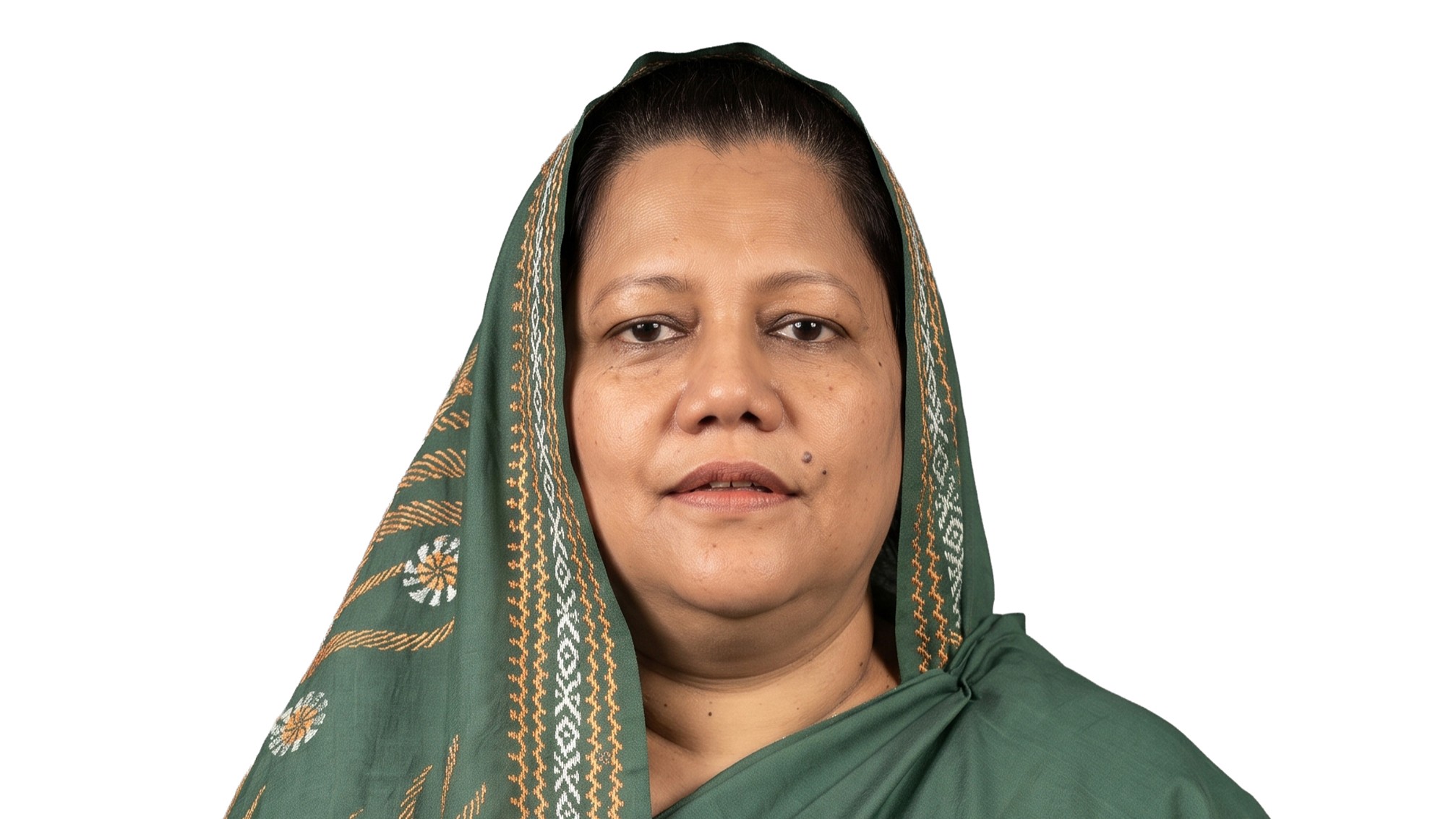
Mahmuda Habiba
Member of Parliament, Women’s Reserved Seat–13




“The climate crisis in the Barind region is not merely a women’s issue; it is a broader crisis affecting human resources and public health. Women, men, and children will remain vulnerable unless climate risks are reduced. River barriers along the Farakka, Teesta, and Mahananda rivers, together with unplanned groundwater extraction, contribute to the region’s water crisis. We need research-based data on water scarcity in every upazila of Rajshahi, Naogaon, and Chapainawabganj, with problems categorised by evidence to develop targeted solutions. Promoting less water-intensive crops, introducing agricultural technologies, restoring canals, and conserving water bodies are essential to reducing groundwater dependence and expanding surface-water use. Policies must regulate groundwater extraction, with public participation in implementation. The government, communities, policymakers, and researchers must work together to ensure climate resilience and safe water access. Coordinated action across ministries responsible for agriculture, water resources, environment, and disaster management is necessary. I will support presenting findings and recommendations in Parliament to advance policy interventions.”
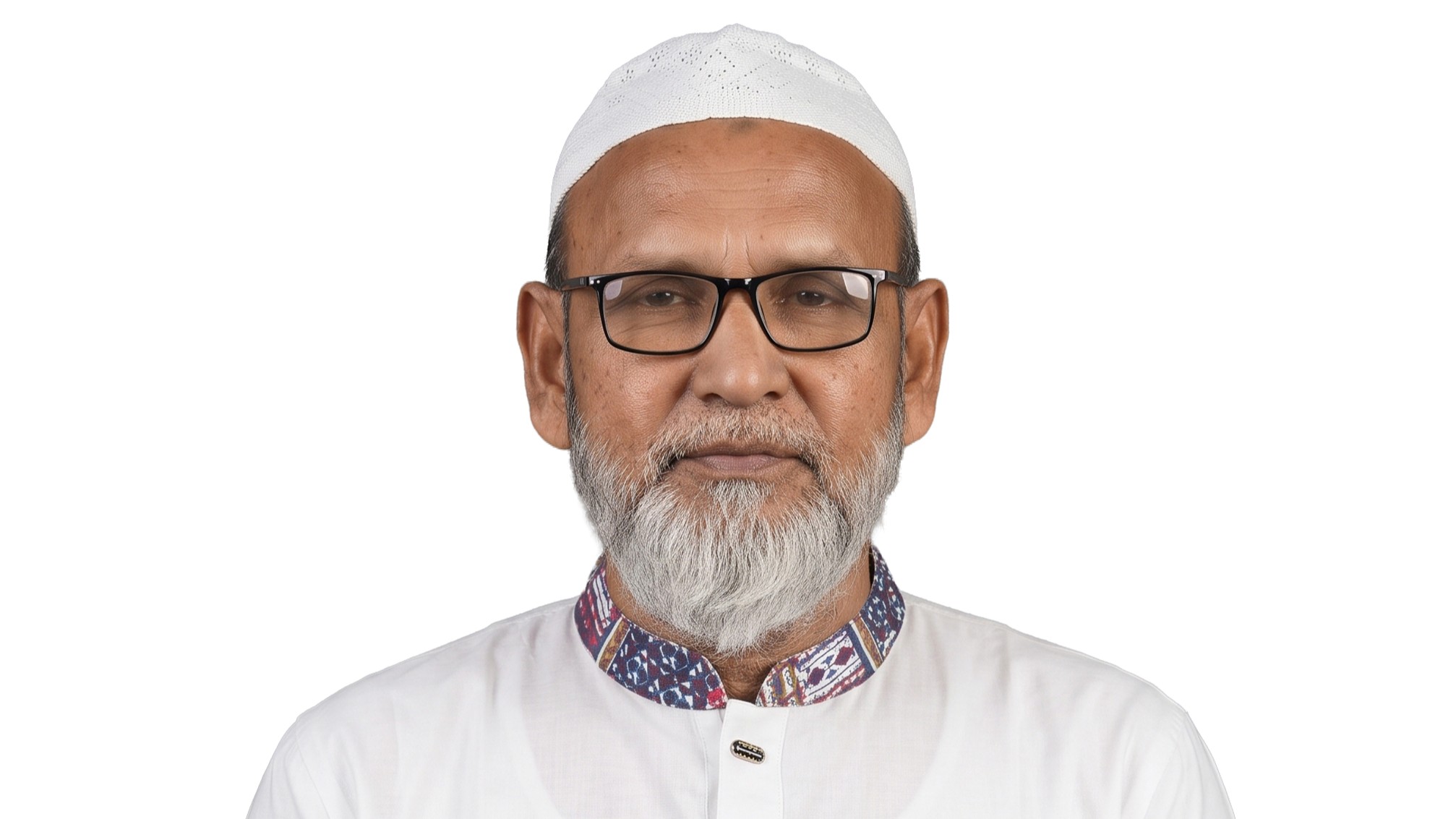
Mostafizur Rahman
Member of Parliament, Naogaon-1
“Excessive groundwater extraction has become a major challenge in the Barind region after decades of irrigation-led agricultural expansion. Growing dependence on groundwater for agriculture has placed increasing pressure on the region’s limited water resources, making coordinated water management essential. We need a common policy framework that brings relevant government agencies together and aligns their efforts. The Barind Multipurpose Development Authority could play a stronger coordinating role in supporting an integrated approach to water management. Greater emphasis must also be placed on rainwater harvesting to capture and conserve water. The excavation and restoration of ponds and canals should be prioritised to improve local water storage and availability. Farmers must have better access to irrigation water so that agricultural activities can continue without adding unsustainable pressure on groundwater resources. These measures should be pursued through coordinated planning and implementation, considering both present agricultural needs and the region’s long-term water security.”

Mehedi Hassan Hridoy
Founder & Executive Director, YOUReach
“Bangladesh has six climate-vulnerable zones, among which the Barind Tract is one of the most distinctive due to its unique climatic characteristics and environmental challenges. While the Haor and coastal regions have dedicated climate policies, the Barind region still lacks a separate policy framework that addresses its specific vulnerabilities and needs. Given its geographical, environmental, and socioeconomic realities, formulating a dedicated climate policy for the Barind region is essential. Through this High-Level Policy Dialogue, we have brought together policymakers, lawmakers, researchers, experts, and community representatives to identify the region’s challenges and develop practical recommendations. I strongly believe that the eight key recommendations emerging from this dialogue will receive due attention and be presented in Parliament for consideration and necessary policy interventions. Our goal is to ensure that the voices and demands of Barind communities reach the national policymaking level and contribute to a dedicated policy framework that promotes climate justice, sustainable water management, and long-term climate resilience for the region.”

Recommendations
Participants at the dialogue outlined eight core commitments and formal recommendations focusing on sustainable groundwater management, transparent irrigation, waterbody restoration, climate-resilient agriculture, public health protection, inclusion of marginalised communities, inter-agency coordination, and permanent budgetary allocation.
- Enforceable groundwater abstraction and emergency triggers: Establish legal limits on groundwater extraction accompanied by defined emergency triggers to halt critical aquifer depletion.
- Fair, transparent, and accountable irrigation management: Implement equitable, transparent, and accountable irrigation management systems for all local farmers.
- Surface water restoration and protection of public ponds: Prioritise the excavation, restoration, and preservation of government-owned ponds, dried-up canals, wetlands, and river channels to increase surface water storage and diminish reliance on groundwater.
- Climate-smart agriculture, crop diversification and tenant autonomy: Promote less water-intensive crops, introduce agricultural technologies, and protect tenant autonomy through crop diversification strategies.
- Institutionalisation of a Barind heat-health action framework: Establish a structured heat-health action framework to protect public health against climate-induced hazards like heatstroke, dehydration, and cardiovascular conditions.
- Targeted protection for women and marginalised groups: Ensure explicit protection and socioeconomic inclusion for women, indigenous groups, and vulnerable communities experiencing climate stresses.
- Multi-agency institutional coordination and permanent climate finance: Strengthen inter-agency coordination across agriculture, water, environment, and disaster management ministries while instituting permanent climate finance mechanisms and a dedicated Barind climate policy framework.
- Participatory monitoring, evaluation and community data systems: Build evidence-based upazila-level community data systems and participatory monitoring mechanisms to track local water scarcity and evaluate policy implementation.
Call for urgent, synchronised action
Declaring the eight key recommendations from the High-Level Policy Dialogue, YOUReach Adviser Dr Parvaz Azharul Haque called for urgent and synchronised action to address the environmental crisis in the Barind region. He stressed the necessity of defining limits on groundwater extraction, ensuring equitable and accountable water distribution, restoring public ponds and water bodies, and expanding surface water utilisation to relieve pressure on underground reserves.
The event brought together an influential gathering of policymakers, academics, and development leaders, including MP Nazrul Islam Mondal (Rajshahi-5), BMDA Executive Director Zahangir Alom Khan, BFIDC Chairman Mohammad Mosaddek Hossain Bulbul, C3ER Assistant Director Mosa Roufa Khanam, as well as Professor Kazi Robiul Alam and Radia Awal Trisha from the Department of Anthropology at the University of Rajshahi.
The dialogue concluded with a unified commitment to transform these eight recommendations into actionable policies, ensuring the demands of Barind communities reach Parliament and inform a dedicated climate policy framework for a resilient and sustainable future.