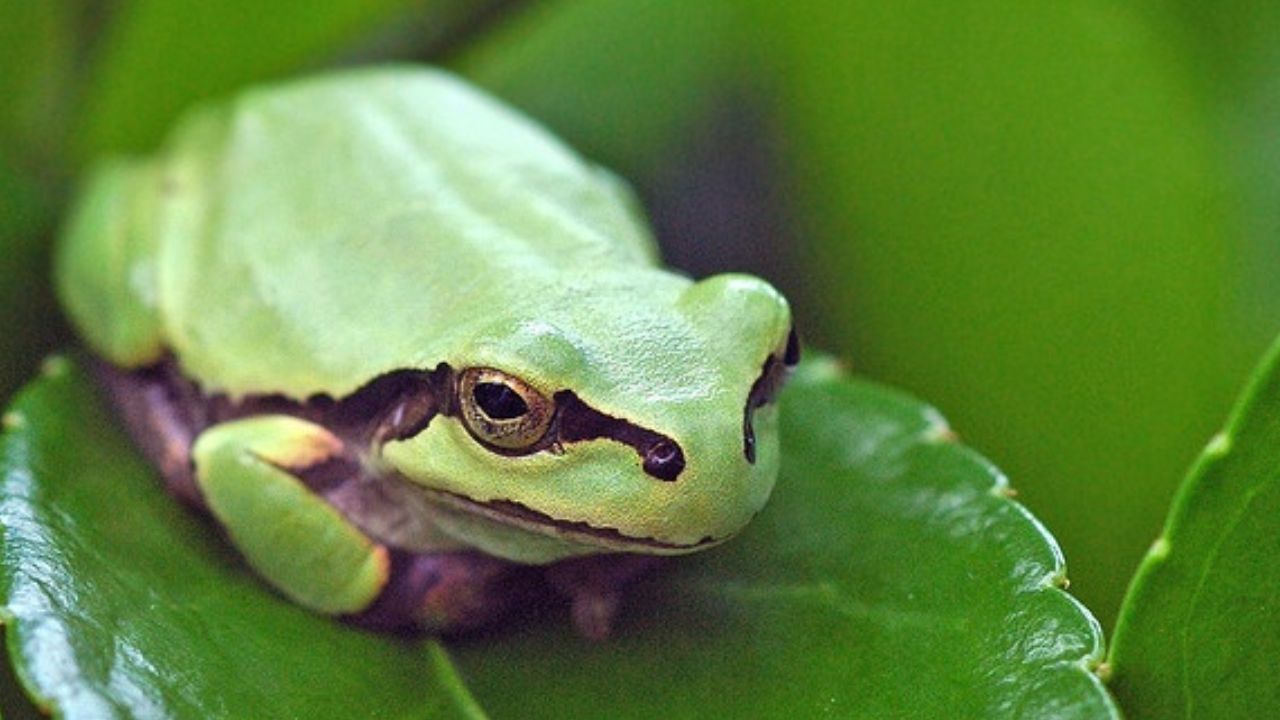

The bacteria found in the enteric tract of the Japanese tree frogs show notable potential in the treatment of colorectal cancer, according to a new study.
Experts at the Japan Advanced Institute of Science and Technology (JAIST) have found that the bacterium Ewingella americana may be more effective than standard treatments.
Scientists have long studied the connection between gut bacteria and cancer, but most efforts so far have centered on the microbiome modulation or fecal microbiota transplantation.
Published in the journal Gut Microbes, the study reports that scientists seperated, cultured, and injected particular bacterial strains with the aim of attacking tumors.
After examining the intestines of Japanese tree frogs, fire belly newts, and grass lizards, scientists identified and extracted nine bacterial strains that showed antitumor activity; of which E americana was the most effective.

Experiments in mice showed that one IV treatment with E americana wiped out tumors, resulting in a complete response in every case.
These remarkable results significantly surpass the effectiveness of conventional cancer treatments, including chemotherapy and immunotherapy.
Colorectal cancer affects around 150,000 Americans every year, developing when cells in the colon or rectum start growing abnormally.



Although colorectal cancer has conventionally been associated with older adults, cases among younger people have risen sharply. In 2019, 20 per cent of diagnoses occurred in individuals under 55, up from 11 per cent in 1995.
Because younger people are also being diagnosed, the US Preventive Services Task Force updated its screening guidelines in 2021, recommending that adults at average risk start colorectal cancer screenings at 45 instead of 50.
According to the researchers, E americana is effective in two ways: it destroys cancer cells directly and stimulates the immune system to remove damaged or cancerous cells through apoptosis, all without triggering inflammation.
Additionally, E americana targets tumors without affecting other organs.
E americana shows an excellent safety profile, in contrast to the side effects of chemotherapy. The bacteria disappear after 24 hours from the bloodstream, and inflammation returns to normal within 72 hours.
The study authors note that untapped biodiversity offers a rich source for developing new medical technologies and could lead to innovative treatments for patients with hard-to-treat cancers.
The team emphasises that further research is required to evaluate the bacteria’s effectiveness against other cancers, such as breast and pancreatic cancer.
The team plans to develop safer, more effective ways to deliver the bacteria, including splitting doses and injecting directly into tumors.
The team also plans to investigate if E americana can be safely used alongside conventional cancer therapies.
Without significant action, early-onset colorectal cancer could be the top cause of cancer deaths in adults aged 20 to 49 by 2030.