At the edge of the Madhumati River, where the sun melts into gold at dusk, the air hums with an ancient secret. Here lies Noder Chand Ghat, where legend blends with mud and mist, and villagers still whisper of a man who learned magic, defied fate, and became a crocodile.
Some say the river itself remembers his sorrow, and if you listen closely, you can hear his cries mingling with the lapping waters — a story of love, loss, and cursed sorcery that has endured centuries.
Centuries may have passed, but the tale of Noder Chand — the man who learned sorcery and became a crocodile — lives on in songs, poems, and stories shared from village to village. Folk artists still sing:
“Noder Chand Kamakhyāy gelo,
Jādubidya shikhé elo
Prāṇ gelo tār, nārīr mantranāy.
(Hāy go) Prāṇ gelo tār nārīr mantranāy.”
Which means “Noder Chand went to Kamakhya, learnt sorcery, lost his life, in the spell of a woman. Alas! Lost in a woman’s charm.”
Countless Jatra pala, folk songs, dramas, and even Bengali films have drawn inspiration from the legend. Modern YouTubers continue to explore it, yet villagers and visitors debate endlessly — did Noder Chand truly become a crocodile, or is it just a story?

The ghat is more than a riverbank. It is a symbol of one man’s life, a tragic legend, cursed magic, and love that could not endure. Across the river, in Boyalmari Upazila, Faridpur, a mouza, a market, and several schools — Noder Chand Mauza, Noder Chand Bazaar, Noder Chand Secondary School, and Noder Chand Primary School — silently bear his name.
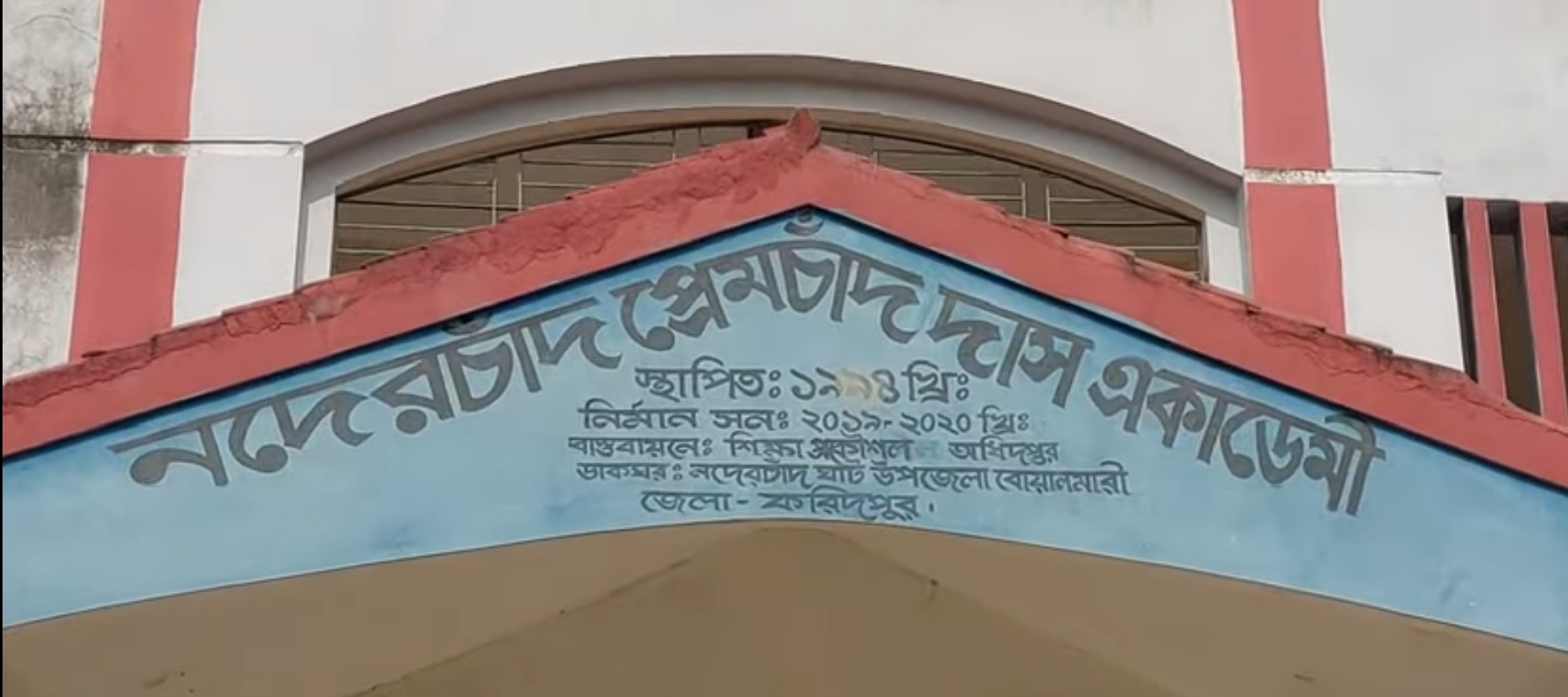
According to local elders, including Gadadhar Biswas, Moslem Sheikh, Nitai Pad Singh Ray, and Maju Bibi, the story begins centuries ago in Panchuria village.
Noder Chand was born into a humble family. His father, Gadadhar, never returned from a fishing trip on the Padma River, leaving his mother to struggle for survival while carrying her unborn child. That child grew into Noder Chand, restless and drawn to the river’s unpredictable pull.




Despite his mother’s insistence that he stay grounded, tend fields, and build a household, Noder Chand’s spirit could not be tethered. One night, he vanished without a word and disappeared for ten years. His mother aged, her hair silvered, her eyes heavy with longing.
Eventually, he returned. His mother, now frail but determined, married him to Sarala, a gentle village girl, also sometimes called Taramoni. For a time, love and domestic life seemed to anchor him, flowing like a calm river. But the pull of magic, learned in Kamakhya, Assam, was irresistible.
One night, Noder Chand confided to Sarala that he had learned sorcery from a mysterious woman. The magic allowed him to transform into a crocodile. Curious, Sarala asked him to demonstrate. That night, he recited spells into two vessels of water — one to turn him into a crocodile, the other to restore his human form.
He plunged into the first pot and became a crocodile. Startled, Sarala accidentally knocked the second vessel, restoring him to human form. Chaos followed. Noder Chand rolled across the courtyard, silently crying at his wife. For three days, he wandered in crocodile form before finally plunging into the Madhumati River, leaving a mother and wife consumed by grief.
As a final attempt, a master of magic from Kamrukh was summoned. Arriving at the riverbank, he called, “Noder Chand!” The crocodile surfaced, carrying a hilsa fish in its mouth. The master declared he could not be restored to human form, for he had eaten from the river.
At his mother’s call, Noder Chand would visit the ghat daily, eat the food she prepared, and return to the river.
But one day, a group of merchants travelling along the river saw the massive crocodile and killed it. Villagers, believing it was Noder Chand, performed his last rites according to Hindu customs.
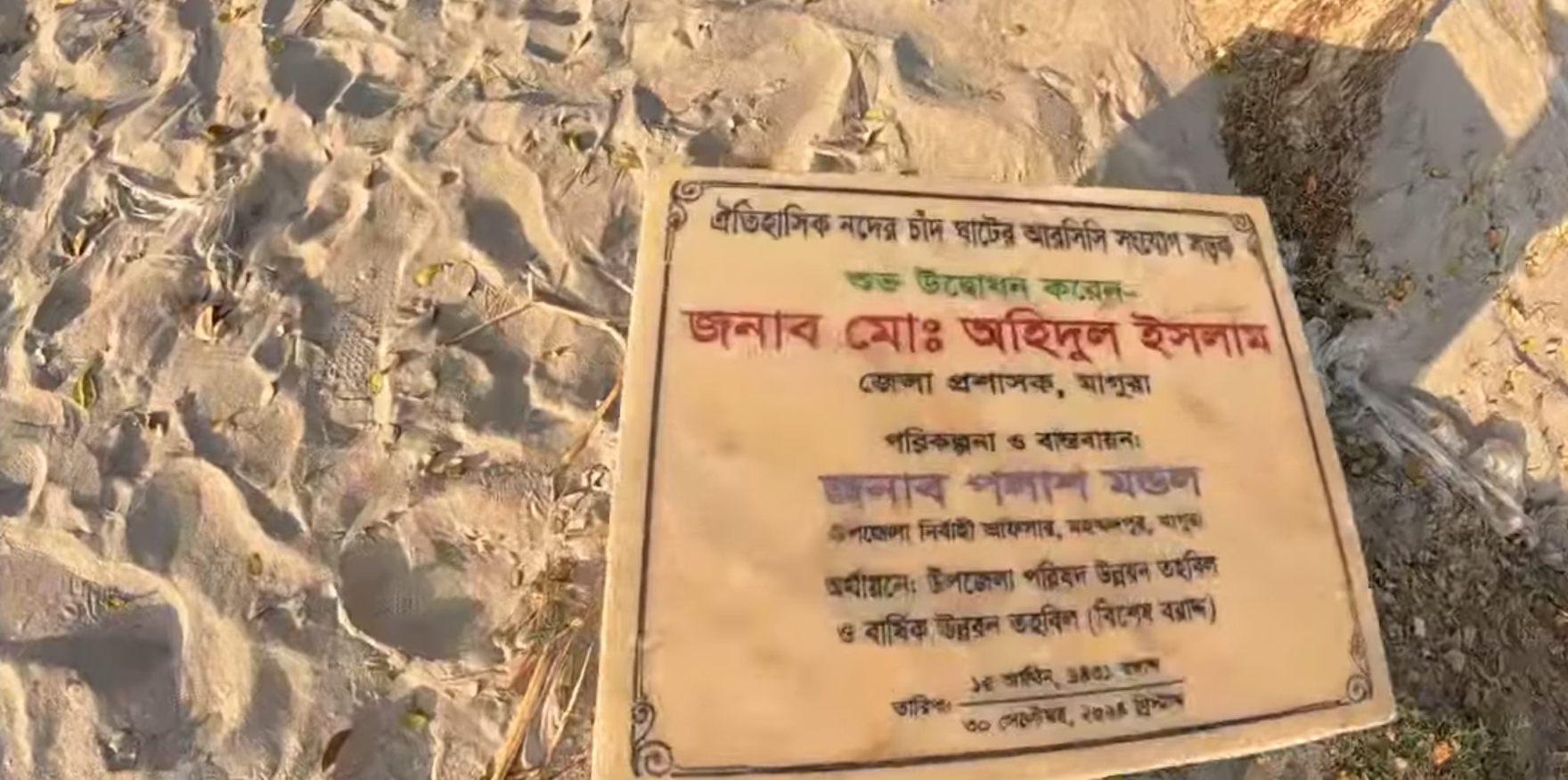
Today, Noder Chand Ghat stands as a silent witness. The Magura District Council has begun building a memorial and concrete ghat, though work remains half-finished. Panchuria village, the market, and the schools all bear witness to the legend.
Tourists continue to visit, drawn by history, folklore, and mystery. Local journalists and visitors, including Milon Das and Raisul Islam from Nalchity, Jhalakathi, said seeing the sites in person brought the story alive. With proper facilities, they added, the ghat could become a popular destination for picnics and excursions.
Local youth Jalal Uddin noted that after the Padma Bridge opened, Dhaka is only two to two and a half hours away. That is why, Mohammadpur Upazila Parishad has launched programmes to develop the ghāt as a tourism centre. A crocodile-shaped gate is under construction, though limited funds have delayed its completion. Authorities hope the ghāt will soon attract regular visitors.
Tourists can also explore nearby heritage sites, including Sitaram Raja Palace, Ghop Baor, and Guli Char.
Standing on Noder Chand Ghāt, one can almost hear the river echoing his story — a tale of love, magic, and tragic fate that refuses to fade. Noder Chand’s legend lives on, retold through songs, poems, and the restless waves of the Madhumati River.