National Citizens’ Party (NCP) has strongly condemned and expressed deep outrage over the interim government’s decision to cancel the expanded “Essential Drugs List-2026” and “Drug Price Determination Method-2026.”
In a press statement issued by Sadia Farzana Dina, a member of NCP’s Office Cell, the party’s convenor and member secretary warned that they would launch a massive united public movement if the “anti-people” decision is not immediately rescinded.
The leaders pointed out that before the July mass uprising, the country’s essential drugs list comprised a nominal 117 medicines, of which nearly 40 per cent were clinically ineffective.
The interim government had updated and expanded the list to 295 medicines under strict government price controls, meeting primary healthcare needs of approximately 80 per cent of the population.

Under the previous policy, pharmaceutical companies were mandated to allocate at least 25 per cent of their annual sales to the production and supply of essential drugs, with suspension of new drug approvals as a penalty for non-compliance.
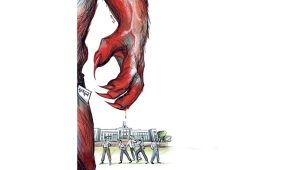
NCP alleged that the government has scrapped this public-oriented policy to safeguard interests of a few companies wishing to make up to 33 per cent higher mark-up profits on commercial generic drugs, thereby shrinking the list back to 117 and handing price-setting power back to “pharma mafias”.



The party criticised the government for using the excuse of a free-market economy to leave pricing of life-saving medicines unregulated.
According to NCP, 95 per cent of out-of-pocket health expenditure in Bangladesh is spent on purchasing medicine.
Reverting to a 1994 circular replaces a modern system with a 32-year-old obsolete framework, undermining the historic public-friendly national drug policy of 1982.


NCP warned that the resulting price hikes would leave millions of patients suffering from chronic illnesses such as diabetes, hypertension, heart disease, cancer, asthma, and kidney diseases – unable to afford treatment, potentially leading to a premature death crisis.
The party demanded immediate reinstatement of 2026 list, direct government gazette control to enforce maximum retail prices for 295 essential medicines, and a scientific national drug policy.
They threatened countrywide agitation alongside doctors, healthcare workers, and patients if the demands are not met.