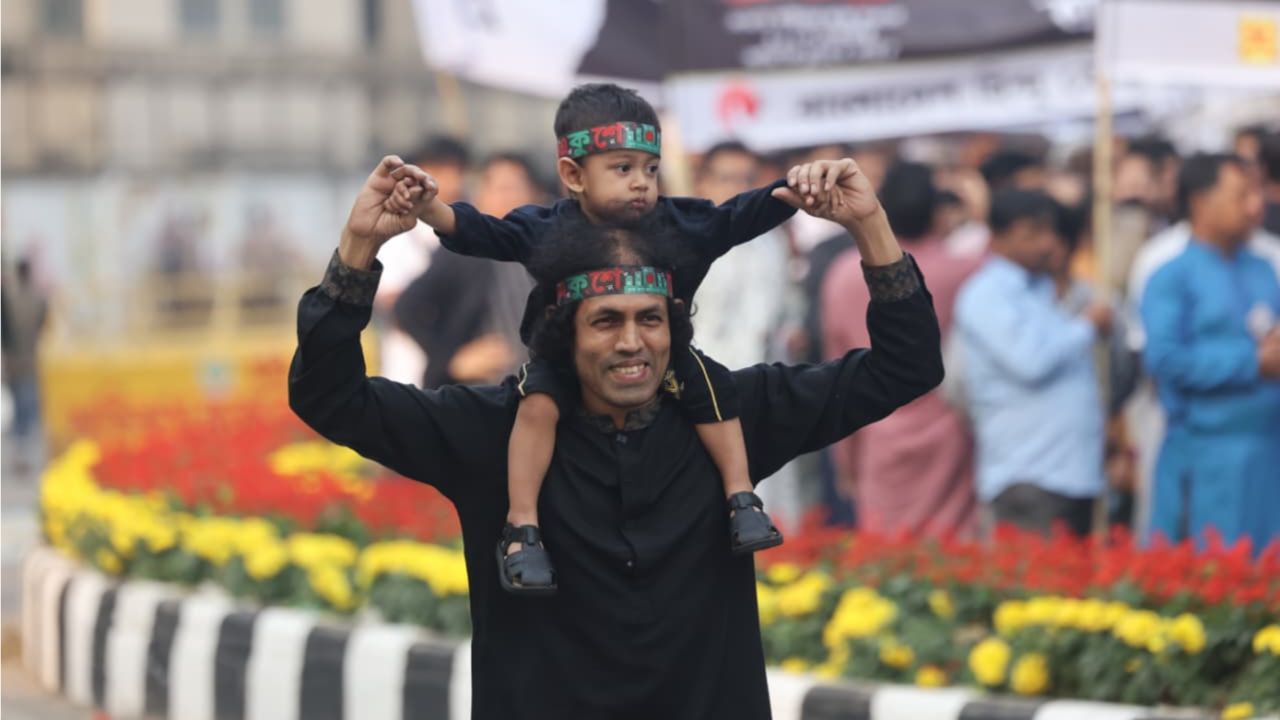

The nation observed Martyrs’ Day and International Mother Language Day with due respect and solemnity across the country on Friday. People from all walks of life paid homage to the Language Movement martyrs at the Central Shaheed Minar and at memorials nationwide.
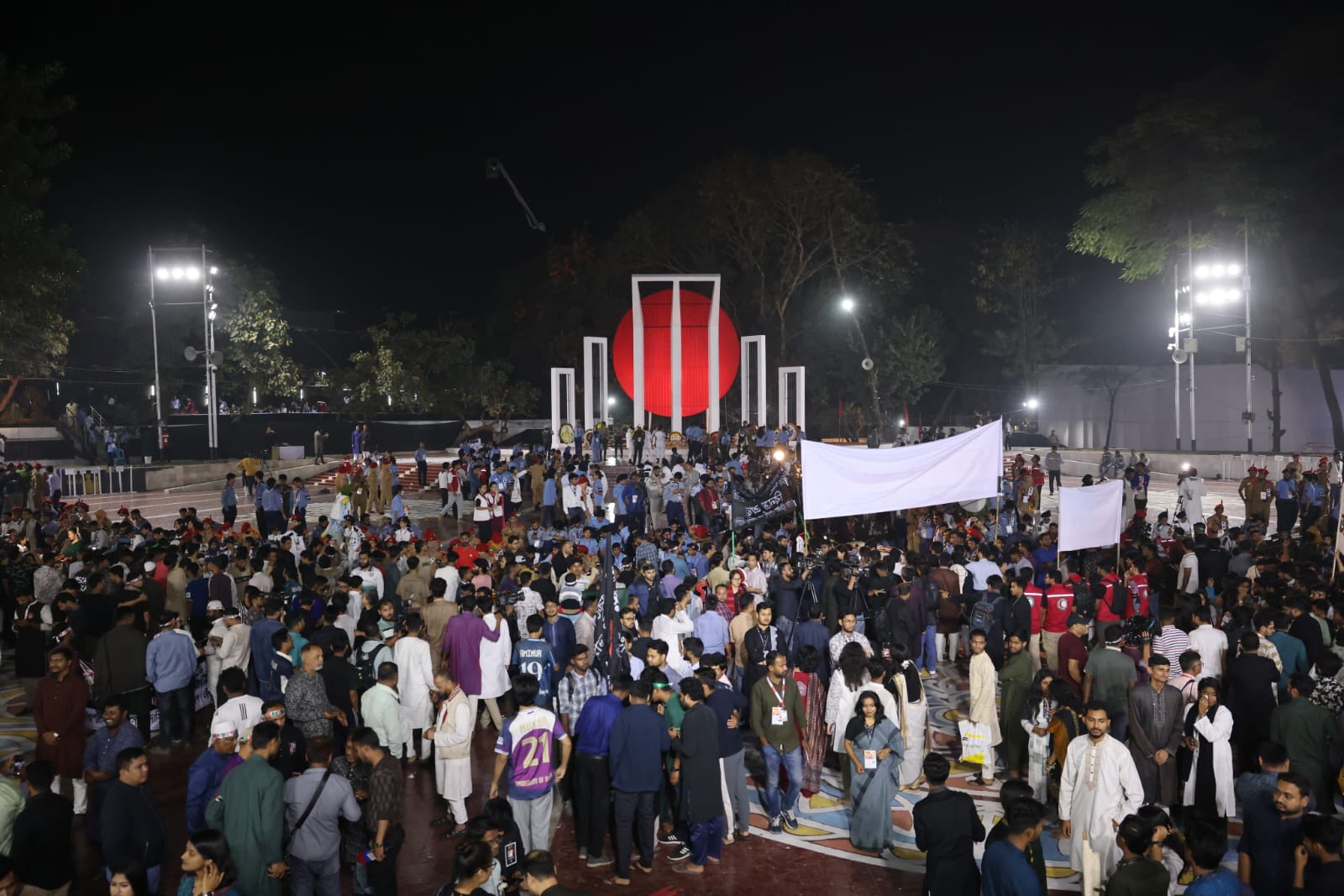
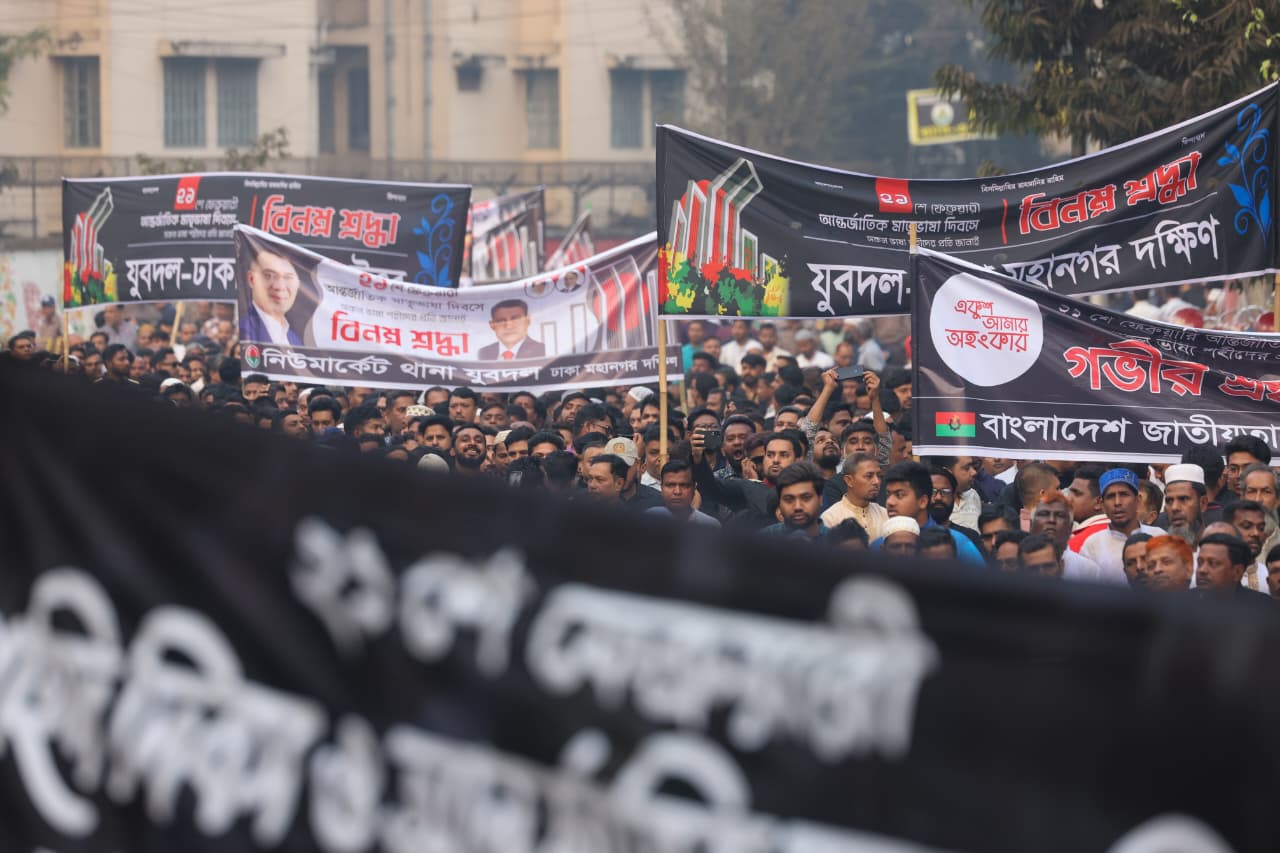
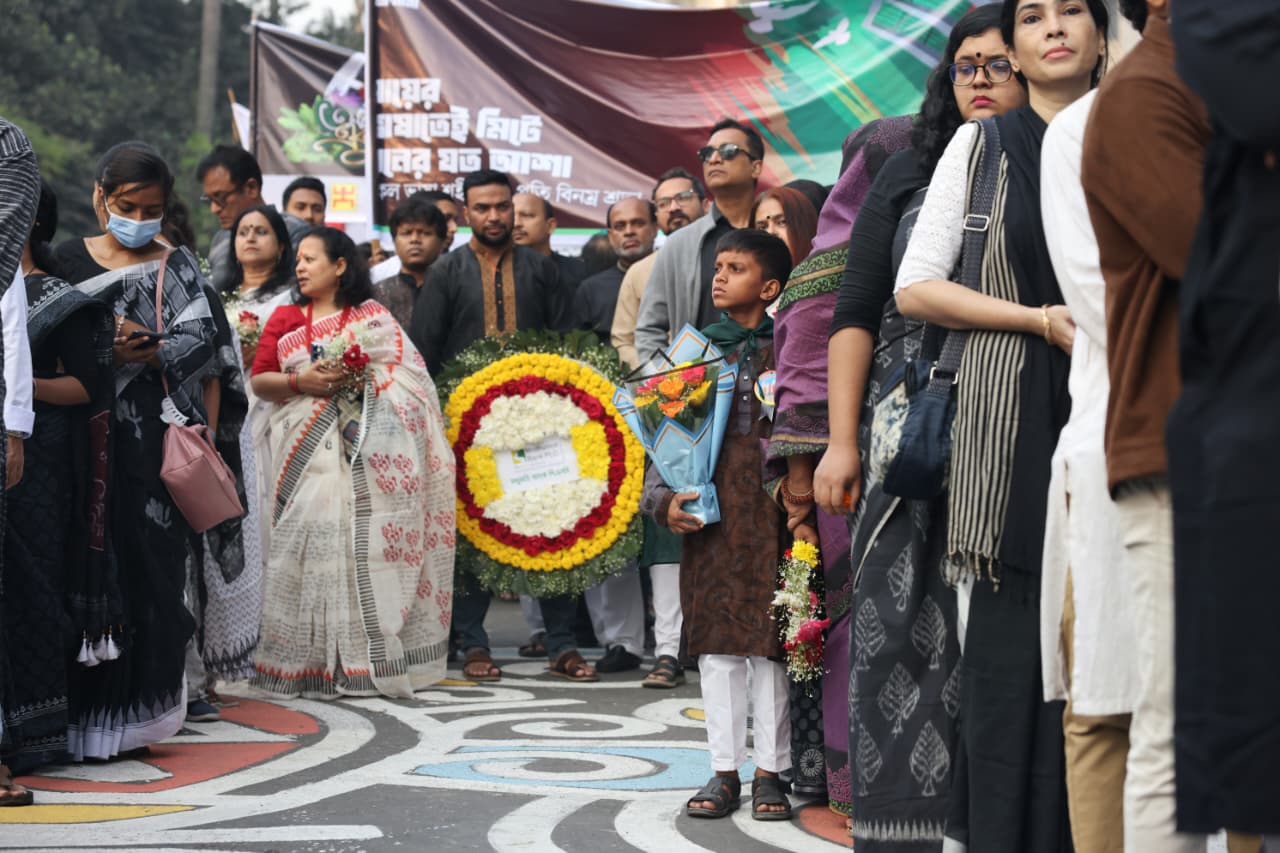
From Saturday morning, a steady stream of people gathered at the Shaheed Minar under the banners of political parties, social and cultural organisations and educational institutions to pay their respects to the martyrs.
After state dignitaries completed their tribute, authorities opened the Shaheed Minar premises to the public.
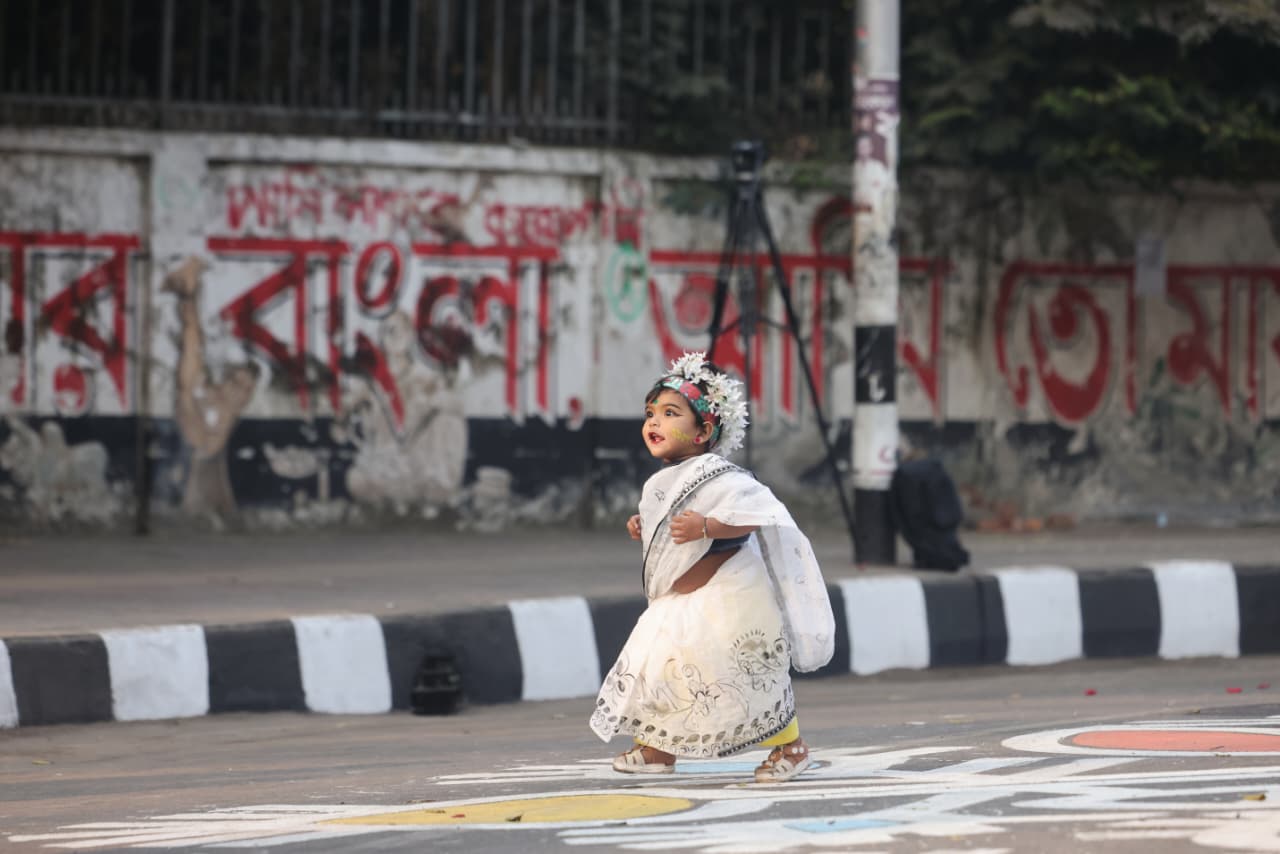
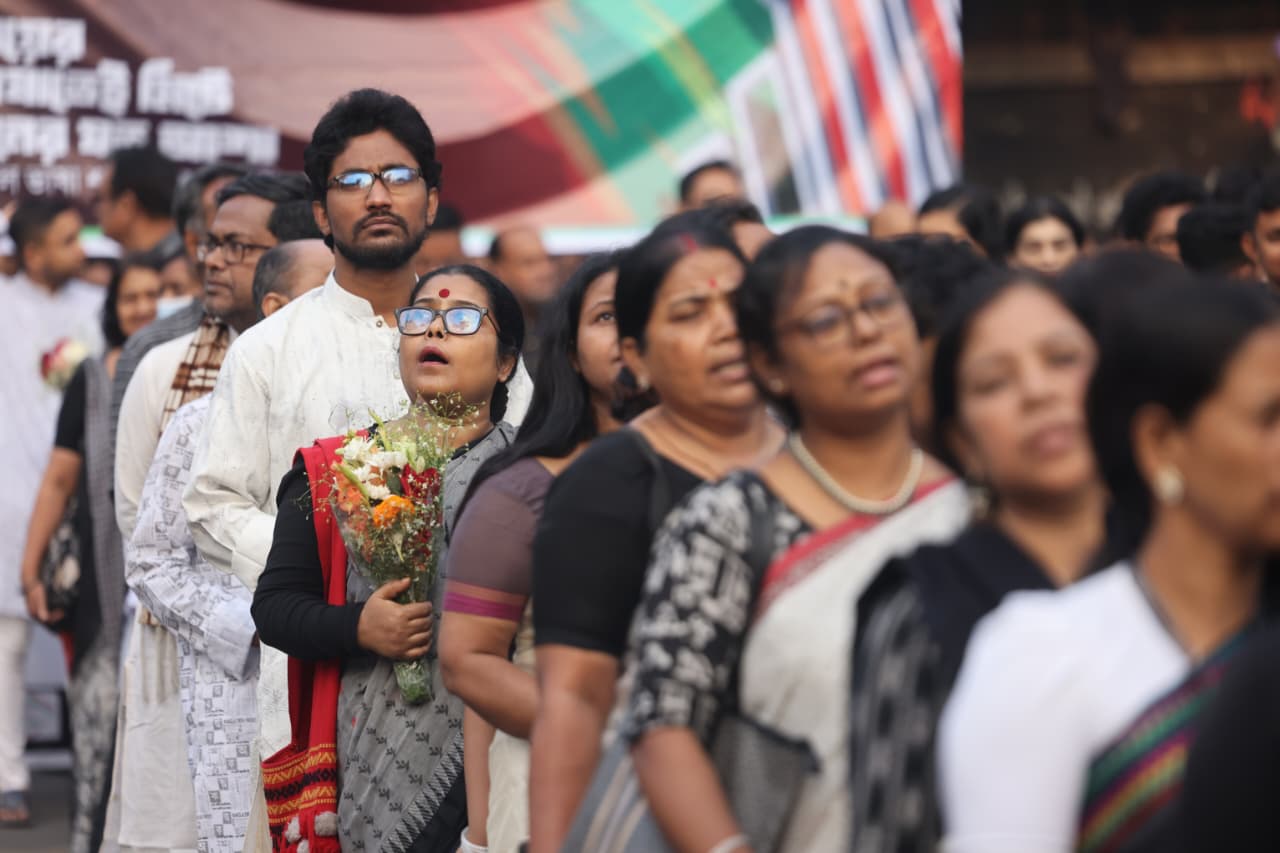
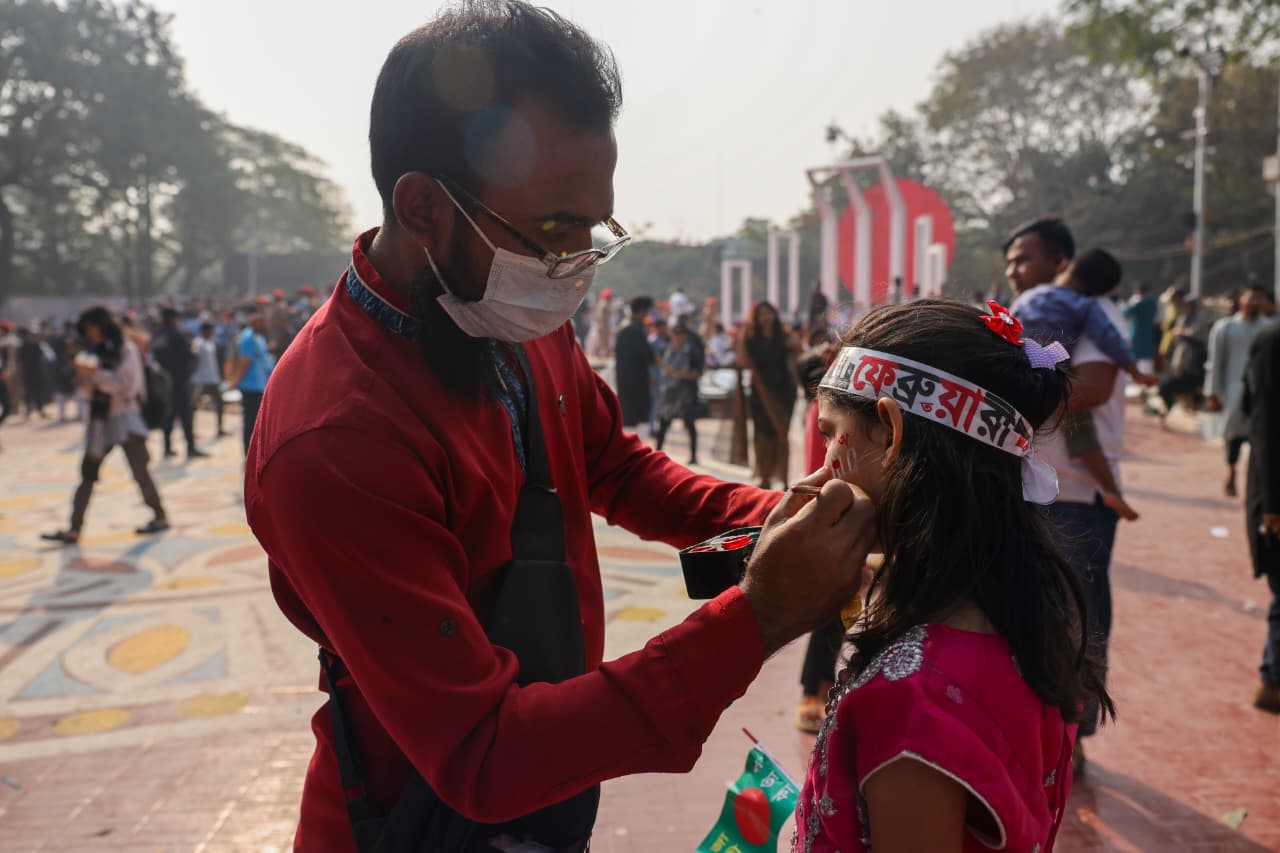
From midnight, crowds gathered barefoot with flowers in hand to honour the martyrs. Many arrived with their families and children to reflect on the historic significance of the Language Movement and to pass on its legacy to the next generation.
At one minute past midnight, President Mohammed Shahabuddin placed a wreath at the Central Shaheed Minar. He stood in silent tribute for a few moments after laying flowers at the altar.

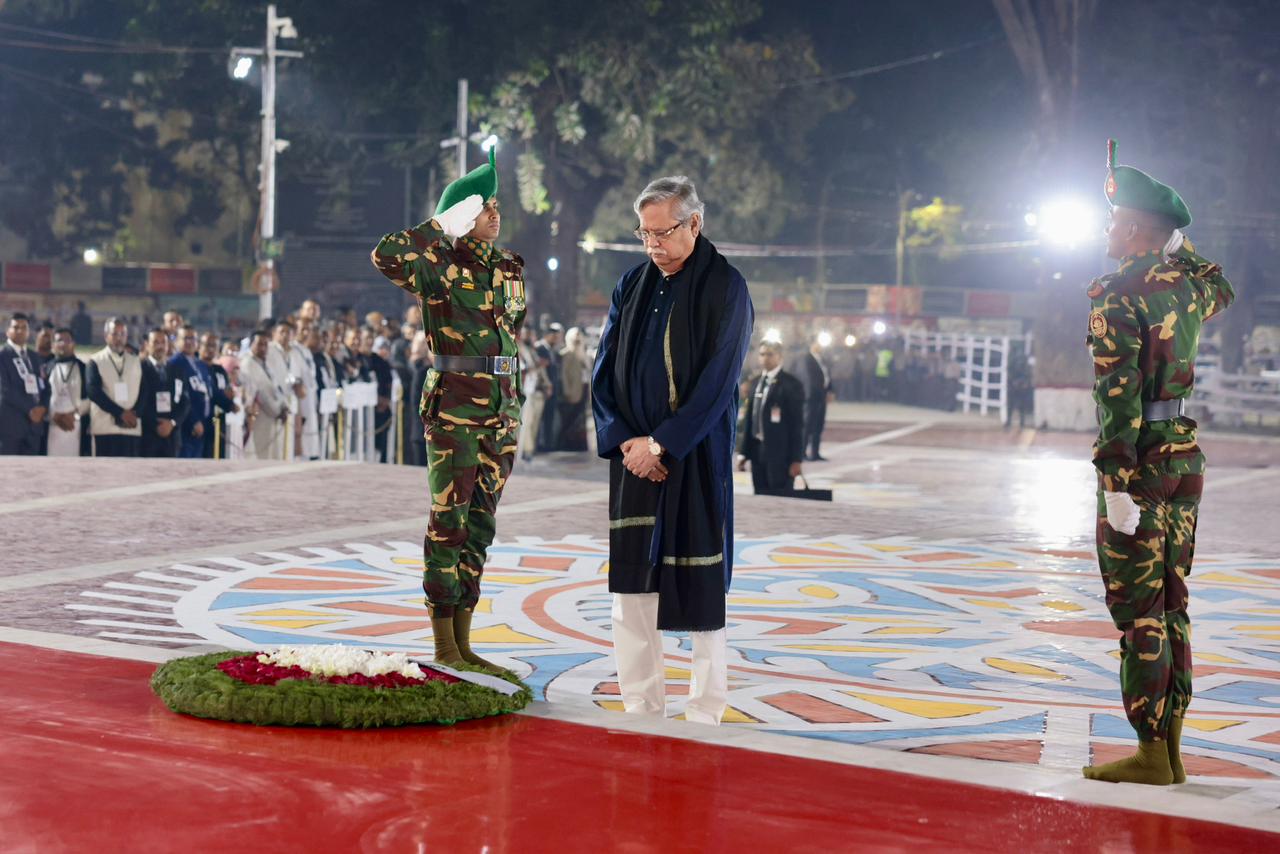
Prime Minister Tarique Rahman later paid homage by placing a wreath at the martyrs’ altar. He also stood in silence to honour the martyrs. Special prayers were offered, seeking eternal peace for those who sacrificed their lives from 1952 to 2024.
The Prime Minister subsequently paid tribute along with members of the Cabinet and his advisory council.

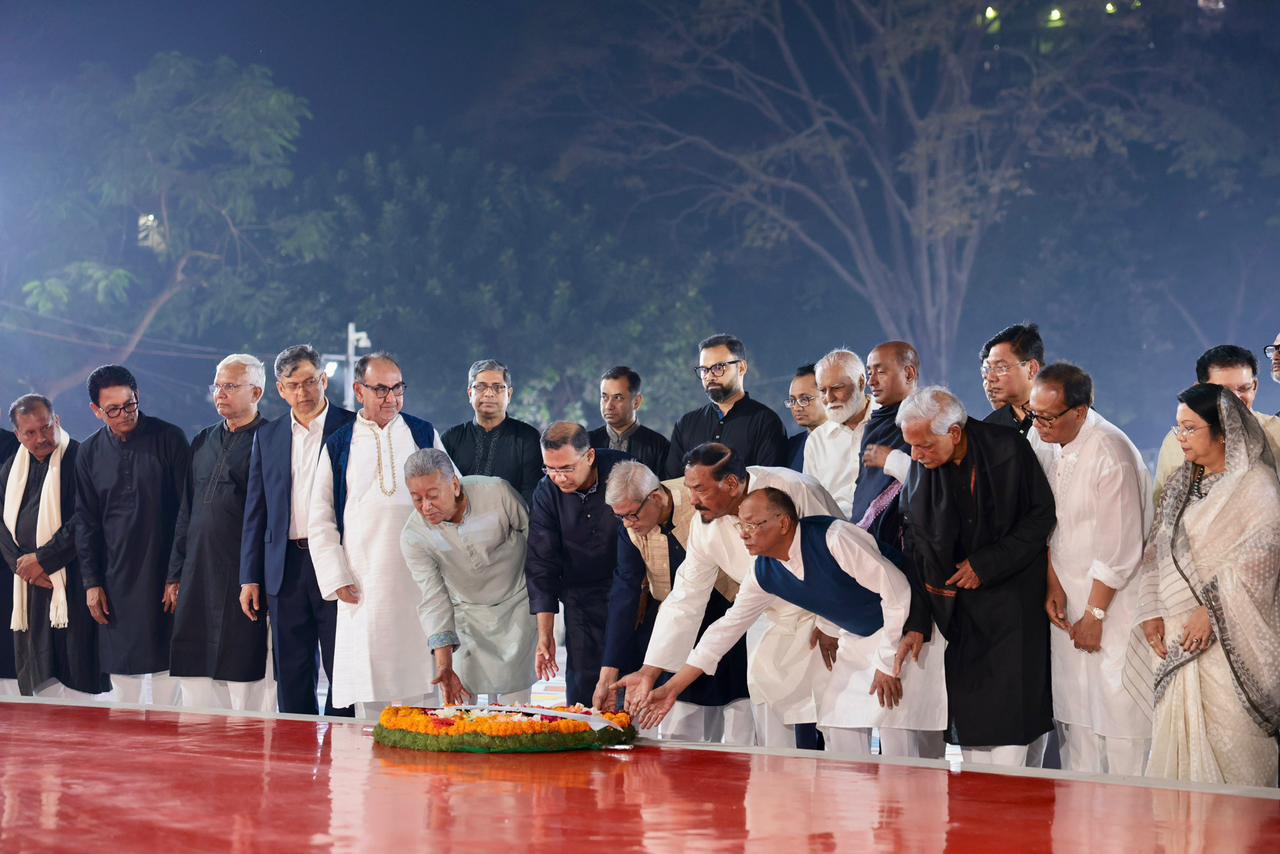
In his capacity as party chief, BNP Chairman Tarique Rahman again paid homage to the Language Martyrs with party leaders. He later laid flowers accompanied by his wife Zubaida Rahman and daughter Zaima Rahman.
After the Prime Minister’s tribute, the chiefs of the three armed forces paid homage by placing wreaths at the altar. The Chief Election Commissioner, the Vice-Chancellor of the University of Dhaka and other state dignitaries also offered tributes in succession.
For the first time, Jamaat-e-Islami Ameer and Leader of the Opposition in Parliament Shafiqur Rahman paid homage at the Central Shaheed Minar.
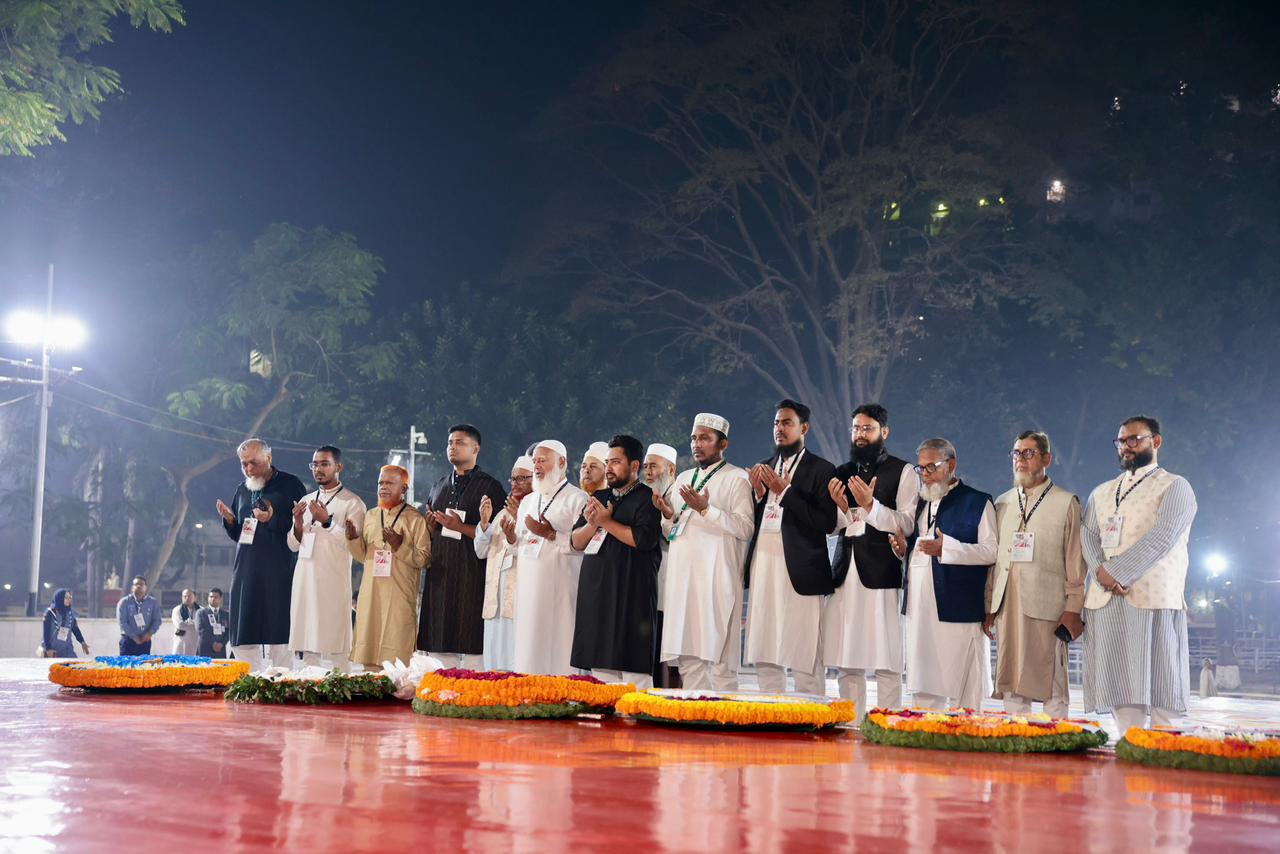
Members of the 11-party alliance in Parliament were present. They also offered prayers for the departed souls. The opposition leader said they attended as part of state protocol. Later, the Jamaat Ameer offered prayers at the graves of the martyrs in Azimpur.
On this day in 1952, the brave sons of the soil laid down their lives to uphold the dignity of Bangla as the mother tongue. Their sacrifice has made this day not only a symbol of mourning, but also of pride and self-respect.
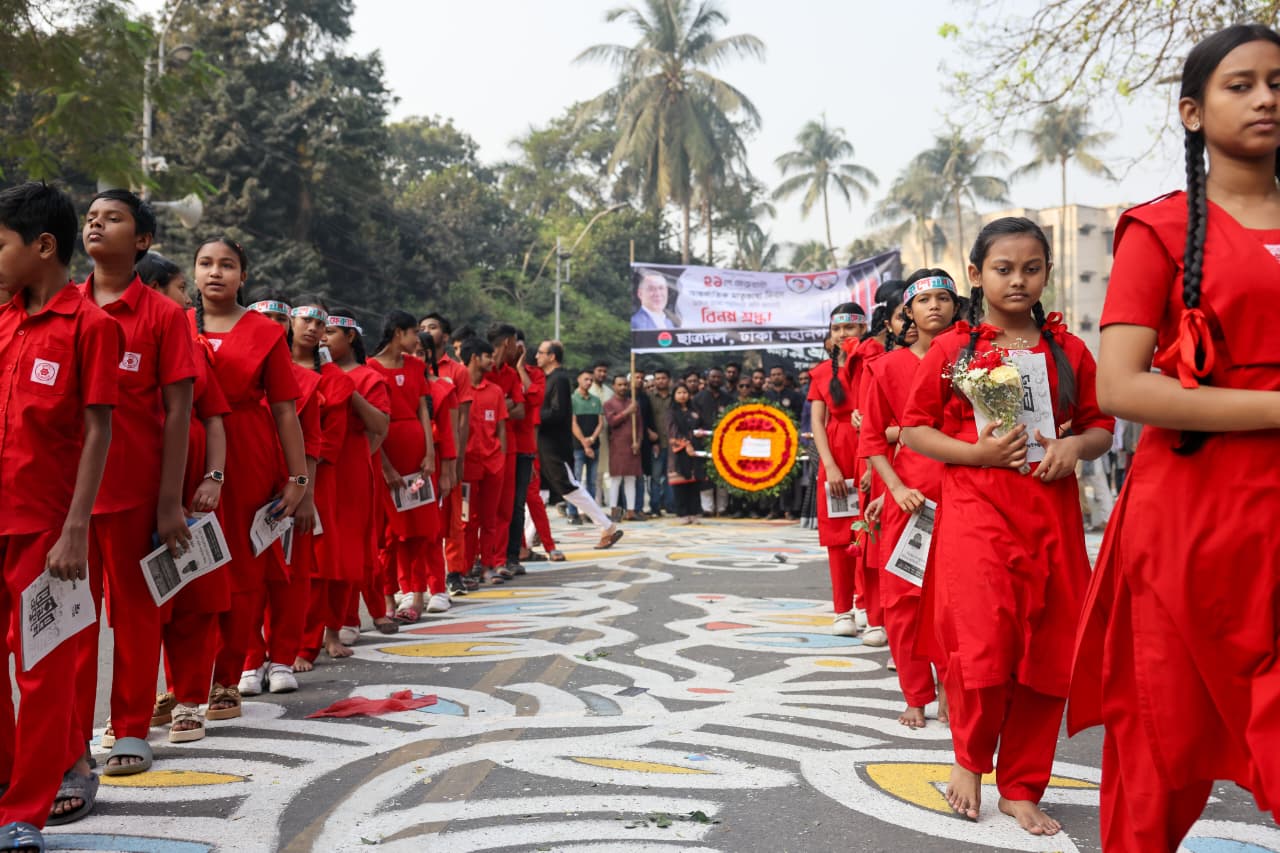
Alongside organisations, many individuals also paid tribute by placing flowers at the altar. Many carried placards calling for the protection of the dignity and proper use of the Bangla language.
The sacrifice of Bangladeshi people has gained global recognition.
The initiative was spearheaded by Rafiqul Islam and Abdus Salam, Bangladeshis living in Vancouver, Canada, who formed the group “Mother Language Lovers of the World” and with active support from the Bangladesh government, UNESCO recognised 21 February as International Mother Language Day on 17 November 1999.
The day has been observed worldwide since 2000. Later, on 21 October 2010, the United Nations General Assembly unanimously adopted a resolution to observe the day every year.
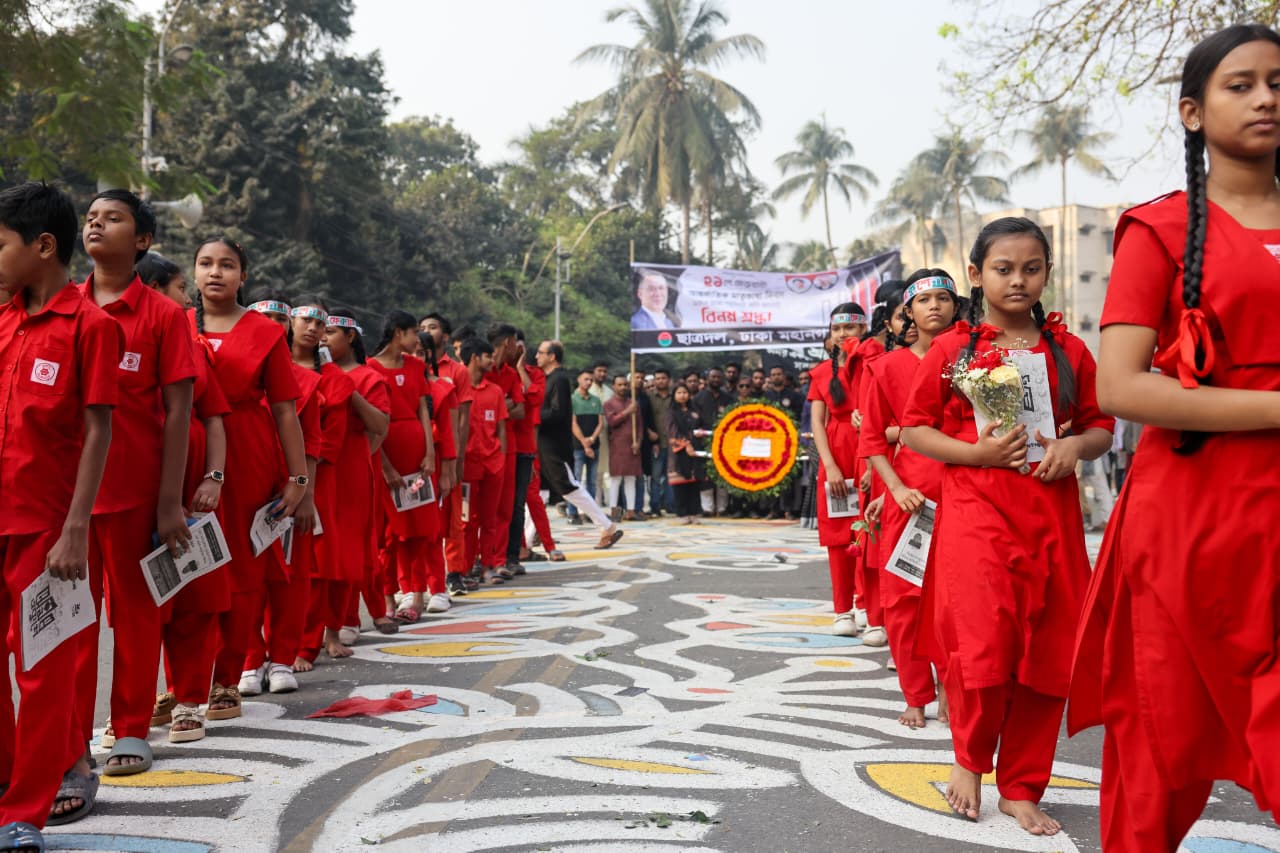
On this occasion, the nation not only remembered the Language Martyrs but also renewed its pledge to practise Bangla correctly and resist cultural distortion. The spirit of Ekushey—never to bow down—remains alive in the hearts of the people.