By midday, the air along Mohammadpur Beribadh turns thick enough to see. It hangs low like a pale, restless fog, only this is no winter mist. It is dust. Relentless, choking dust that settles on skin, clothes, food, and lungs alike.
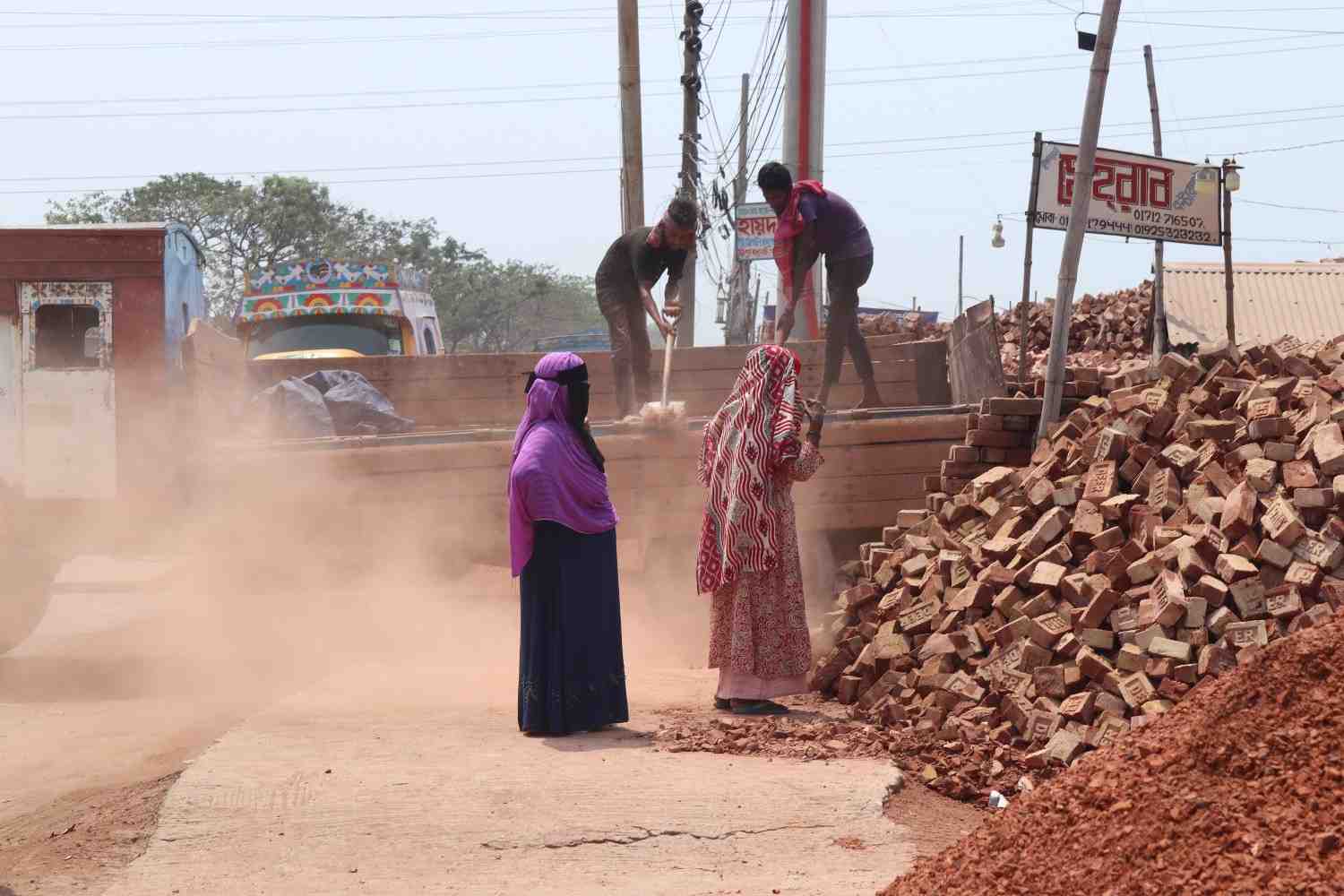
This busy stretch of road, used by thousands every day, has quietly become one of the city’s most unforgiving corridors. Trucks thunder past, carrying sand and bricks, leaving behind swirling clouds that refuse to settle.
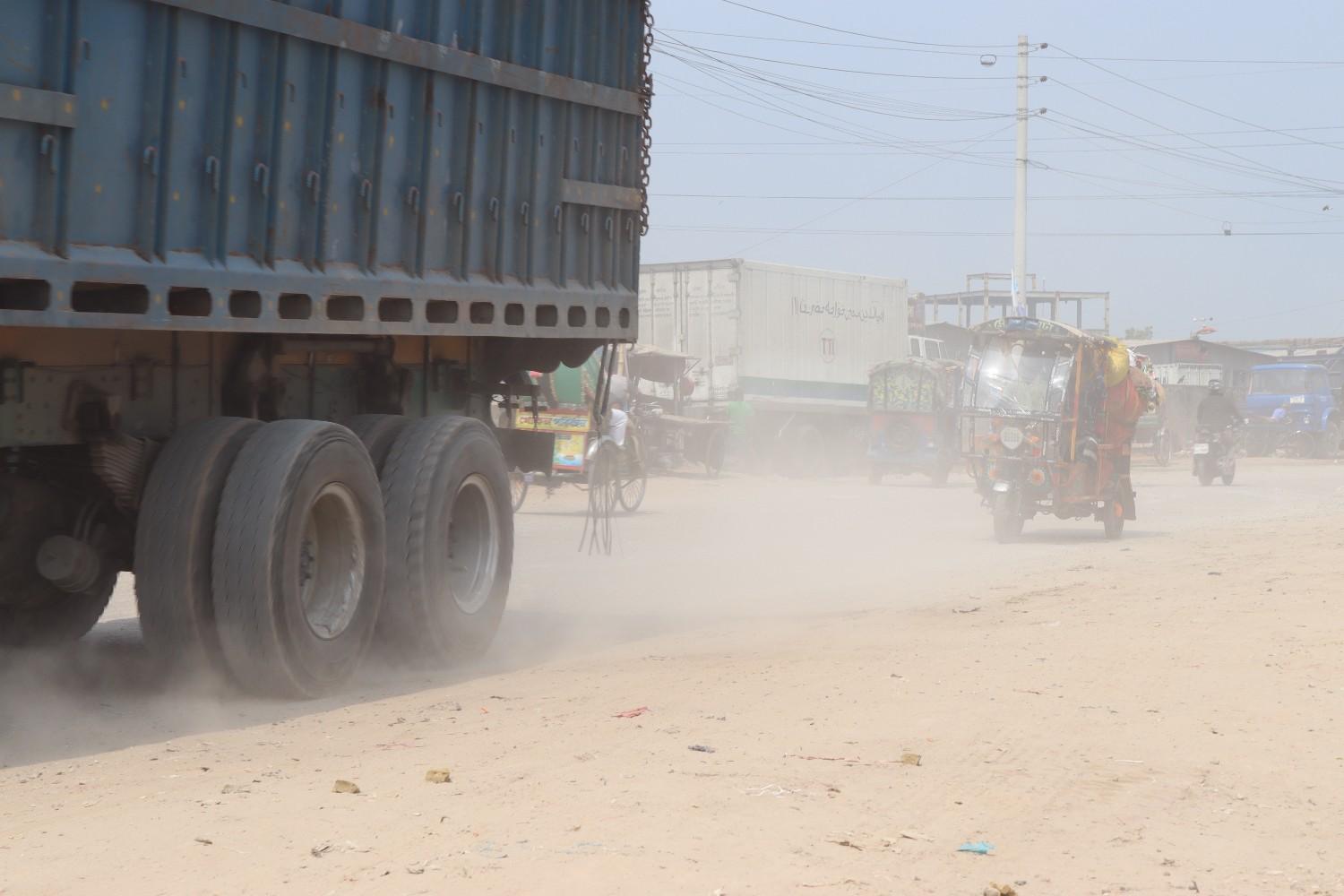
With every passing vehicle, the ground rises into the air, blurring vision and tightening chests. Breathing here is not automatic; it is an effort.

For those who live and work along the roadside, escape is not an option. Small vendors sit beside piles of construction material; their goods layered in a fine coat of grey.
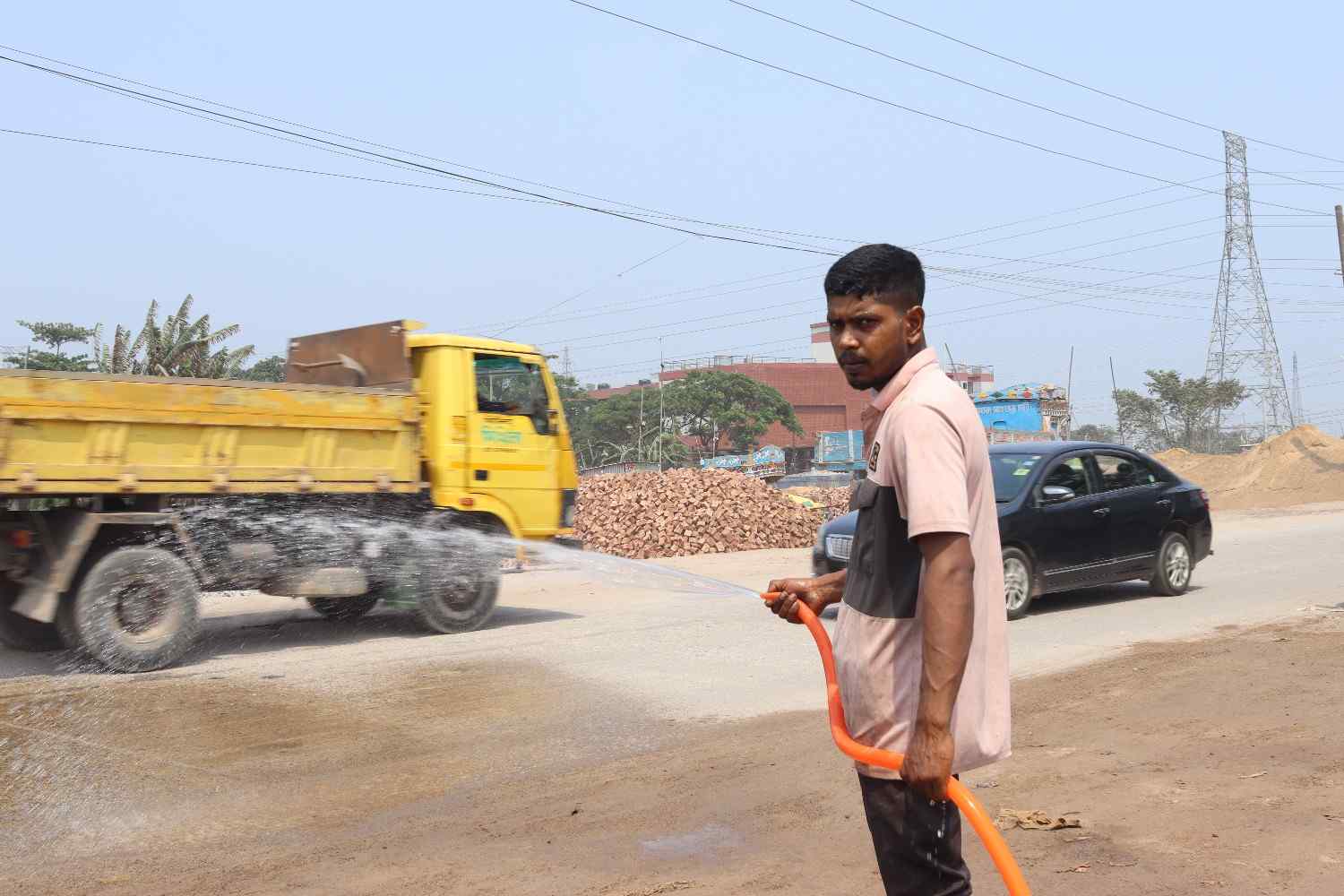
A man with a hose tries to tame the dust, spraying water onto the road, but the relief is brief, evaporating almost as quickly as it arrives. Within minutes, the air is thick again.

Children, perhaps the most vulnerable, walk through this haze every morning on their way to school. Their uniforms, once clean, turn dusty before they reach the classroom. Coughing and sneezing have become routine, not symptoms. Parents worry, but routine leaves little room for alternatives.
Health concerns here are no longer abstract warnings. Locals speak of persistent throat irritation, breathing difficulties, and fatigue.
Doctors link such conditions to prolonged exposure to tiny, invisible airborne particles that penetrate deep into the lungs. Over time, these can lead to respiratory illnesses like asthma and bronchitis, and even more severe complications affecting the heart and lungs.
What makes the situation more troubling is its normalcy. There are no visible large-scale interventions, no sustained efforts to control the dust or regulate the constant flow of construction vehicles. The problem lingers in plain sight, as ordinary as traffic itself.
In Mohammadpur Beribadh, the air does not just surround life; it interrupts it. Until the dust is addressed, every breath taken here will carry a cost.