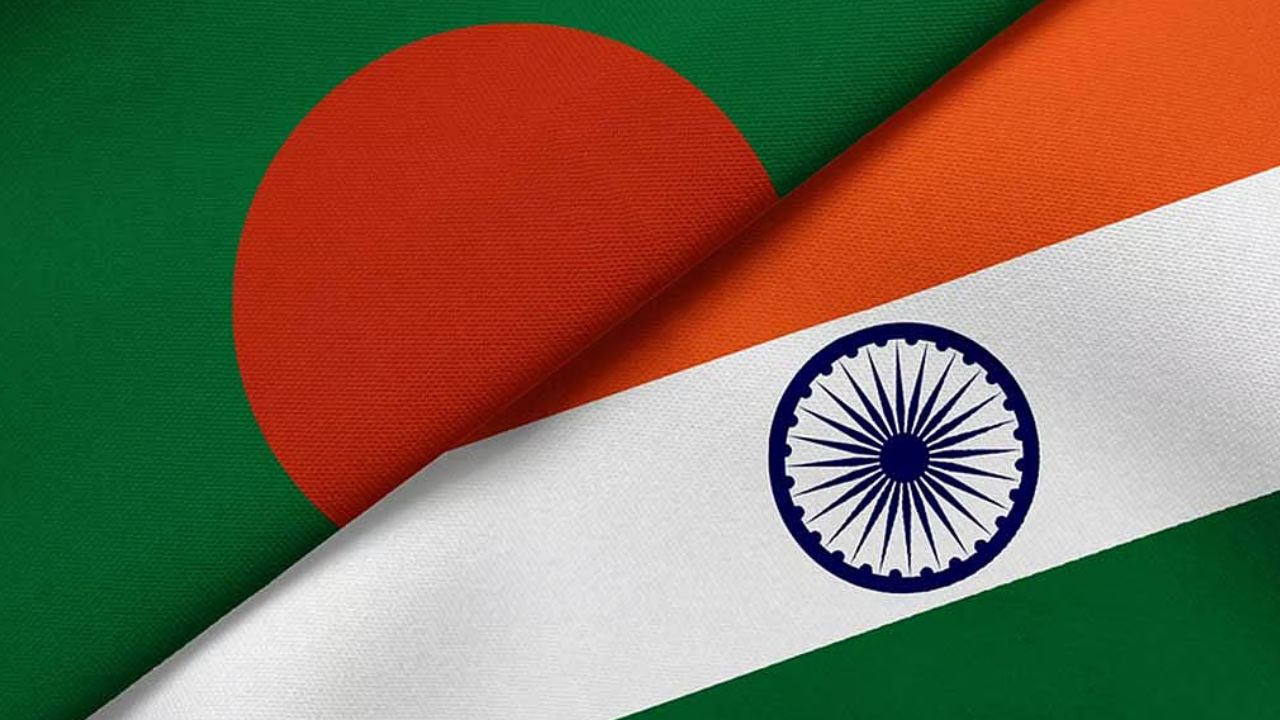
Two major bilateral concerns—water sharing and border management—were notably absent from a letter sent by Indian Prime Minister Narendra Modi to Prime Minister Tarique Rahman, in which the Indian leader invited his Bangladeshi counterpart to visit India.
In the letter dated 16 February, Modi expressed his desire to deepen cooperation across a wide range of sectors. “I look forward to working closely with you to strengthen our multifaceted bilateral relations, enhance regional cooperation, and advance our common goals in connectivity, trade, technology, education, skill development, energy, healthcare, as well as cultural and people-to-people exchanges,” he wrote.
The letter further noted that, as two fast-growing economies and aspiring societies, India and Bangladesh could become catalysts for each other’s sustainable growth, contribute to mutual security, and promote shared prosperity.
However, former Ambassador and former Deputy High Commissioner in New Delhi Mahbub Hassan Saleh pointed out that two of the most sensitive bilateral issues—water sharing and border management—were missing in the letter.

“The letter speaks of multifaceted relations, but water and border issues are totally absent. Bangladesh and India share 54 international rivers and more than 4000 km of land border. These two areas are vitally important for Bangladesh and should be given equal importance by India for a meaningful engagement between the two countries,” he said.
When asked about the implications of the omission, Saleh noted that such diplomatic correspondence is carefully drafted and that the absence of these key issues was unlikely to be accidental. According to him, the message may signal that New Delhi prefers to engage on its own terms, with progress on sensitive matters potentially linked to broader diplomatic considerations.
“It is not a secret that Delhi has been waiting for an elected government to assume office before broader engagement,” said Ambassador Saleh. India calibrates its approach based on Dhaka’s policy toward New Delhi, as well as Bangladesh’s relations particularly with China.

“India’s foremost concern is security, and the depth of its engagement will depend on how effectively the government in Dhaka addresses that issue. At the same time, India must deliver on the extremely important and sensitive issues of water sharing and border killings,” he said.
Saleh noted that one of the key diplomatic challenges ahead will be securing renewal of the Ganges Water Sharing Treaty, which is due to expire in December this year. “If the new government succeeds in renewing the treaty, it could help reduce anti-India sentiment within Bangladesh to some extent,” Saleh added.
In his congratulatory remarks, Modi also wrote, “Your victory is a testimony to the trust and confidence reposed by the people of Bangladesh in your leadership and their mandate for your vision to lead the country on the path of peace, stability and prosperity.”
He emphasized that India and Bangladesh share a deep-rooted friendship built on history, cultural ties, and common aspirations for development, adding that convergence in developmental priorities would guide future cooperation.
The letter was formally delivered by Om Birla, Speaker of the Lok Sabha, who represented the Indian government at the swearing-in ceremony of the BNP-led administration. Birla, accompanied by Indian Foreign Secretary Vikram Misri, later met Prime Minister Tarique Rahman to convey India’s greetings and extend the official invitation for a visit.
The swearing-in ceremony took place Tuesday afternoon at the South Plaza of the Jatiya Sangsad Bhaban, where President Mohammed Shahabuddin administered the oath of office at around 4:15pm. Earlier in the day, the BNP Parliamentary Party formally elected Tarique Rahman as its leader during a meeting at the parliament complex.
During the diplomatic exchange, both sides expressed a shared interest in strengthening bilateral ties through what was described as a “people-centric menu of cooperation” aimed at advancing prosperity in both countries.
The high-level Indian delegation arrived in Dhaka aboard a special aircraft of the Indian Air Force and was received at the Bangladesh Air Force base by Foreign Ministry Secretary Md Nazrul Islam, Indian High Commissioner to Bangladesh Pranay Verma, and Bangladesh High Commissioner to India Md Riaz Hamidullah.