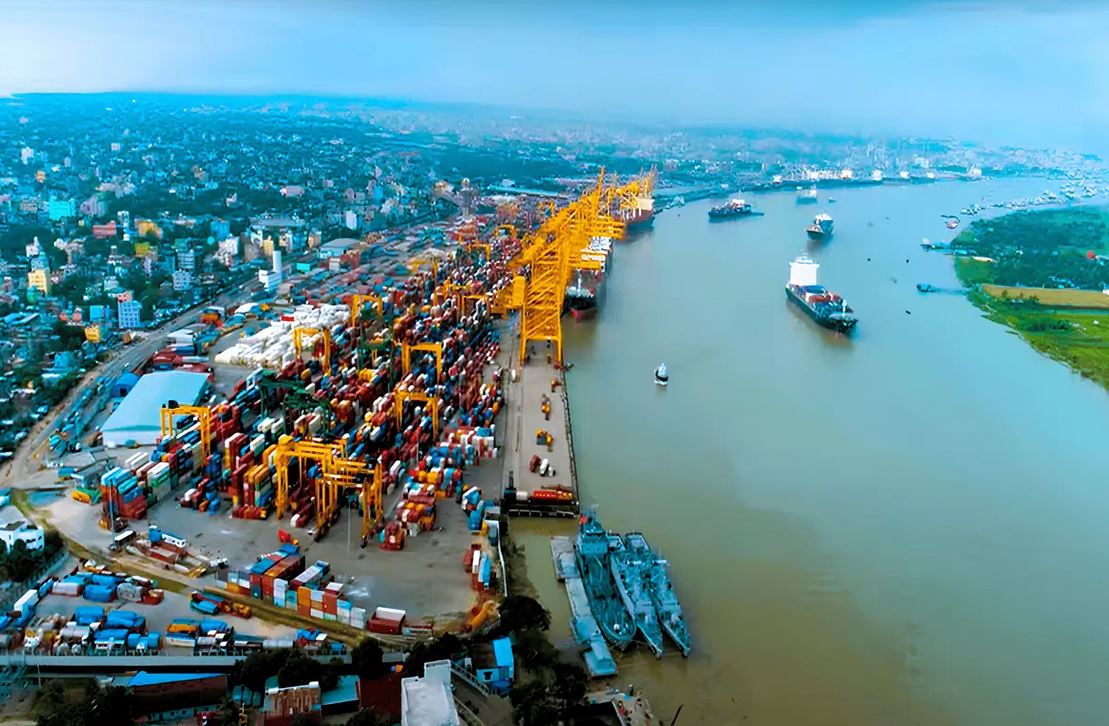

Over the past two decades, Bangladesh’s logistics and trade ecosystem has changed in ways that deserve recognition rather than criticism. Import practices that once relied almost entirely on CIF terms have gradually shifted toward greater use of FOB arrangements. Port operations that were largely manual have moved steadily toward digitisation. An informal freight forwarding sector has been brought under licensing regimes, introducing professionalism, accountability, and regulatory oversight.
These developments are not signs of failure. They reflect Bangladesh’s deeper integration into global trade and increasingly complex international supply chains. But as is often the case in fast-growing economies, institutional frameworks have not always evolved at the same pace as commercial practice. What we see today is not dysfunction, but misalignment between authority and responsibility, between service provision and financing, and between risk allocation and value creation. Addressing this misalignment has now become essential if Bangladesh is to sustain and strengthen its trade competitiveness.
Historically, Bangladesh inherited a carrier-centric cargo delivery model. Shipping lines issue delivery orders, and ports, terminals, off-docks, and ICDs are structured to treat carrier documents as the final authority for physical cargo release. Freight forwarders, even when licensed and technically capable, participate largely through coordination rather than delivery authority. This model was logical when trade volumes were modest and liability structures simple.
Global logistics, however, has moved on. In many advanced and emerging markets alike, freight forwarders now operate as integrated logistics providers. Often under NVOCC-type arrangements, they contract freight, assume responsibility toward shippers and consignees, settle with carriers, and issue delivery instruments recognised across the port ecosystem. Bangladesh today operates somewhere between these two realities. Commercial practices increasingly resemble the latter, while institutional frameworks remain anchored in the former.
In this transitional space, informal procedural tools have gradually taken on roles they were never designed to play. No Objection Certificates, originally intended as limited administrative safeguards, have evolved into de facto instruments for managing commercial disputes at the delivery stage. This did not happen because of malice or regulatory neglect, but because of practical necessity. When disputes arise over charges or responsibility – and no fast, neutral dispute-resolution mechanism exists, cargo movement becomes the only effective leverage. Withholding consent becomes a survival strategy rather than a policy choice.

The consequences are predictable: higher transaction costs, delivery uncertainty, operational delays, and erosion of trust across the supply chain. What may appear from the outside as procedural rigidity is, in reality, an institutional gap being filled by informal control mechanisms.
The gradual acceptance of FOB imports marked an important conceptual shift. It empowered Bangladeshi buyers to control routing, nominate freight forwarders, and negotiate freight as a distinct cost component, bringing Bangladesh closer to global trading norms. Yet FOB-based imports still account for well below one-third of total volumes. This limited adoption is not due to commercial resistance, but to procedural complexity, regulatory uncertainty, and financial constraints that make FOB transactions difficult to scale.
Ironically, many freight forwarders already operate in ways consistent with FOB principles. Freight charges are often prepaid to carriers at origin, while recovery from consignees occurs on deferred terms. In mature logistics markets, this gap is bridged through structured finance, insurance, and legal clarity. In Bangladesh, the same practice exists within a constrained institutional environment.




One of the most significant constraints lies in the tax and banking treatment of freight payments. Banks frequently treat the entire freight amount remitted abroad as the forwarder’s income, rather than recognising that actual revenue is limited to the service margin. As a result, freight forwarders face advance income tax, VAT, or excise duties on gross freight values; liabilities that bear little relationship to real profitability.
Freight forwarding is a service business, not freight trading. Taxing pass-through costs as income makes formal compliance economically punitive. Informal settlement channels must therefore be understood as system-induced outcomes, not preferences for opacity. When tax design, banking procedures, and logistics business models are misaligned, informality deepens rather than disappears.
These financial distortions also reshape competition within the sector. Because forwarders lack delivery authority but remain exposed to carriers and terminals, extending credit to importers becomes a competitive necessity rather than a strategic choice. Forwarders effectively act as informal financiers, absorbing credit risk without access to banking instruments or insurance.
Licensing reforms have undoubtedly professionalised the sector, but licensing alone cannot resolve structural misalignment. When the cost and complexity of licensing increase without corresponding clarity of authority, barriers to entry rise without reducing informality. Licensed forwarders without delivery authority remain dependent on informal controls. Financial exposure increases without legal empowerment. Regulation defines who may operate, but not clearly what authority each actor holds, how risk is allocated, or how disputes are resolved.
Other Asian economies faced similar challenges and responded not by deregulating, but by consolidating authority. India operates under a single national framework that allows freight forwarders to work across all ports and ICDs under uniform tax and regulatory rules. Vietnam licenses freight forwarding centrally as a national logistics service, enabling consistent compliance and supporting rapid expansion of FOB-based trade. Indonesia has centralised entry through online national licensing, shifting oversight toward post-licensing compliance rather than gatekeeping entry.
The lesson from these experiences is consistent: licensing consolidation strengthens compliance by making formal participation economically rational.
Bangladesh’s recent move toward a “one country, one licence” framework for shipping agents reflects this same logic. Extending that principle to freight forwarding would not be a radical departure, but a natural continuation. A coherent reform path could include a single national freight forwarding licence issued centrally, digital and rule-based application and renewal, clear definition of delivery authority for licensed forwarders, tax and banking recognition of freight margins rather than gross flows, separation of dispute resolution from cargo movement, and a fast, specialised mechanism for resolving logistics disputes.
Such reforms would protect ports and carriers through statutory clarity rather than informal controls, while allowing freight forwarders to operate transparently and competitively.
Bangladesh’s logistics challenges are not rooted in failure, but in partial transition. Commercial practices have advanced faster than institutional design. Completing that design is now the task ahead. Logistics competitiveness ultimately rests on confidence- importers need predictable cargo movement, carriers need clear liability, forwarders need recognised authority, and regulators need enforceable rules without informal workarounds.
By aligning delivery authority, tax and banking treatment, credit practices, and licensing within a coherent national framework, Bangladesh can transform logistics from a friction point into a strategic advantage. This is not a negative narrative. It is a reformist one, grounded in respect for what has already been achieved and clarity about what must evolve next.
The writer is a Port Shipping & Logistics Strategist and Industry Analyst and Adjunct Faculty, Bangladesh Maritime University