
The Middle East was thrust into one of its most dangerous moments in decades on Saturday as the United States and Israel launched sweeping strikes across Iran, targeting senior leaders and military infrastructure in an operation that Washington said was aimed at neutralising an “imminent threat”.
Tehran retaliated within hours, firing missiles and drones at Israel and at Gulf states hosting American military bases, triggering air defence systems across the region and sending oil markets and global airlines into turmoil, according to international media.
President Donald Trump described the joint assault as a decisive move to prevent Iran from acquiring a nuclear weapon. In a video address, he urged Iran’s security forces to lay down their arms and called on the Iranian public to “take over your government” once the bombardment ends.
Iran condemned the attacks as illegal and unprovoked, warning that retaliation would continue until its adversaries were “decisively defeated”.
The first wave of strikes, according to US and Israeli officials, focused on senior Iranian military and political figures as well as strategic defence systems. Explosions were reported across Tehran and in cities including Kermanshah and Chabahar.
Iranian state media reported that Israel strikes two schools in southern Iran, killing more than 50 people, though those claims could not be independently verified. Other Iranian outlets said dozens more had died nationwide.

Several sources familiar with the matter said senior members of Iran’s Revolutionary Guards were among the dead. Reports suggested Iran’s Defence Minister and the Guards’ commander had been killed, though there was no official confirmation from Tehran by Saturday evening.
An Israeli official said Supreme Leader Ali Khamenei and President Masoud Pezeshkian were both targeted. Iranian Foreign Minister Abbas Araghchi later said the two men were alive “as far as I know”, amid reports that Mr Khamenei had been moved to a secure location.
Israel said it had struck key air defence assets, including advanced surface-to-air missile systems, in an effort to degrade Iran’s ability to respond.
Iran’s retaliation was swift and geographically expansive. Missiles and drones were launched toward Israel and toward US-allied Gulf states, including Bahrain, Kuwait and Qatar, all of which host American military installations.




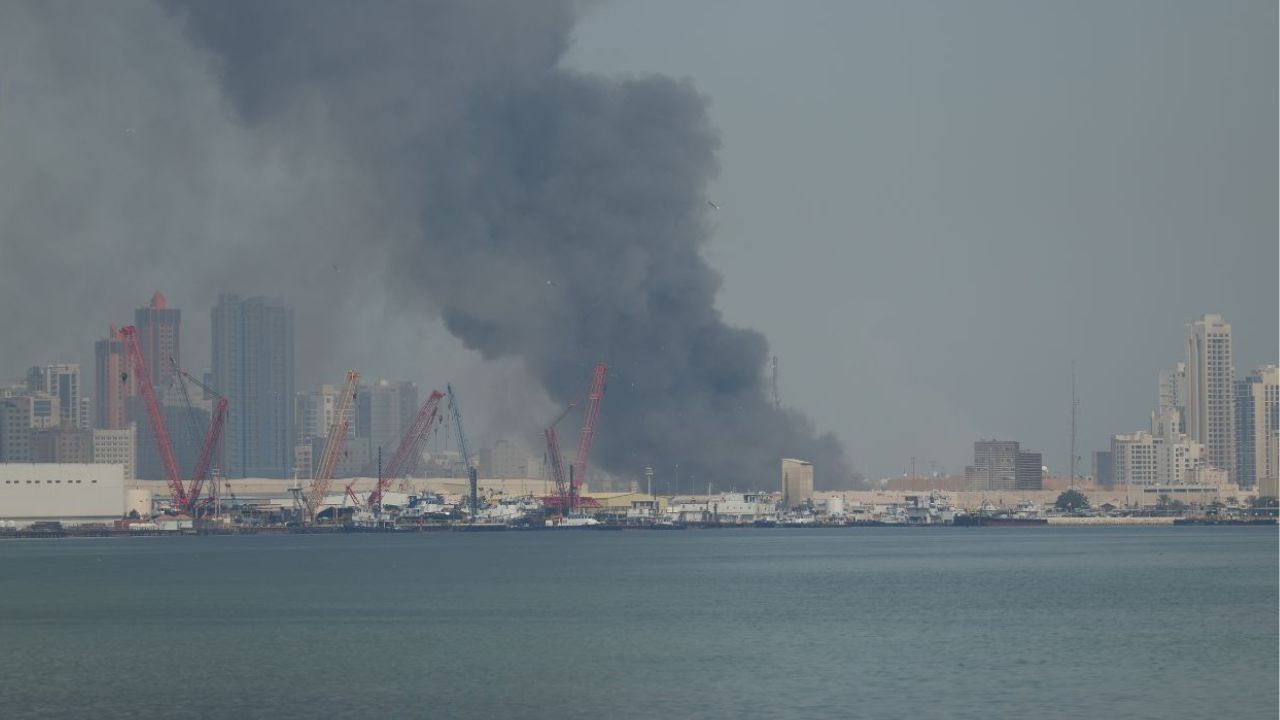
Bahrain said a missile targeted the headquarters of the US Navy’s Fifth Fleet. Qatar and Kuwait reported intercepting incoming projectiles. Loud explosions were heard in Abu Dhabi and Dubai in the United Arab Emirates. Saudi Arabia said attacks aimed at its territory had been repelled.
Iran’s Revolutionary Guards declared that all US bases and interests in the region were within reach. An allied Iraqi militia, Kataib Hezbollah, threatened to attack American facilities.
Israel reported multiple missile barrages from Iran, prompting the closure of holy sites under emergency regulations.
The strikes followed weeks of rising tension over Iran’s nuclear programme. Washington had built up significant military assets in the region while pursuing talks through intermediaries in Oman and Switzerland.
Those negotiations failed to yield a breakthrough. President Trump said the operation was intended to eliminate what he described as imminent threats from the Iranian regime and to ensure Tehran could not develop a nuclear weapon.
Iran insists its nuclear programme is peaceful and says it has the sovereign right to enrich uranium. It has refused to negotiate limits on its ballistic missile programme or its support for armed groups across the region.
Israeli Prime Minister Benjamin Netanyahu said the joint operation would “create the conditions” for the Iranian people to determine their own future and remove what he called the “yoke of tyranny”.
The language from both leaders signalled ambitions that extend beyond military deterrence into political transformation — though neither Washington nor Tel Aviv has outlined what a post-clerical leadership in Tehran would look like.
The confrontation comes after years of shadow conflict between Israel and Iran and months of heightened regional instability following fighting involving Iranian-backed groups.
Iran’s network of regional allies — including Hezbollah and armed factions in Iraq and Yemen — has been weakened by sustained Israeli and American operations. Yet Tehran retains significant missile capabilities and influence across the Gulf.
Global markets reacted nervously. Oil traders warned that any disruption to shipping through the Strait of Hormuz — a critical artery for global energy supplies — could send prices sharply higher. Several major energy companies and trading houses reportedly paused shipments pending security assessments.
Flights across the Middle East were suspended or rerouted as airspace closures spread.
The strikes have sparked debate in the United States. Democratic leaders questioned whether congressional authorisation was required for military action that could amount to an act of war.
International reaction was swift. Oman, which has mediated talks between Washington and Tehran, warned that diplomacy had been undermined and urged restraint. Gulf leaders held urgent consultations as missile interceptions lit up night skies.
For Iran’s clerical leadership, the assault comes at a moment of domestic strain. The country has faced waves of protest and economic hardship under sanctions. Analysts say the external attack could either rally nationalist sentiment around the government or deepen internal fractures, depending on how events unfold.
As night fell, both sides signalled that further action was possible. The scale of Saturday’s strikes — and the breadth of Iran’s response — mark a sharp escalation in a long-running confrontation that now risks spilling into a broader regional war.