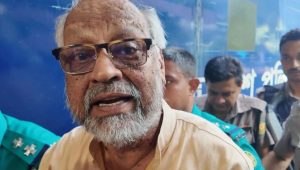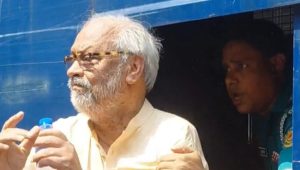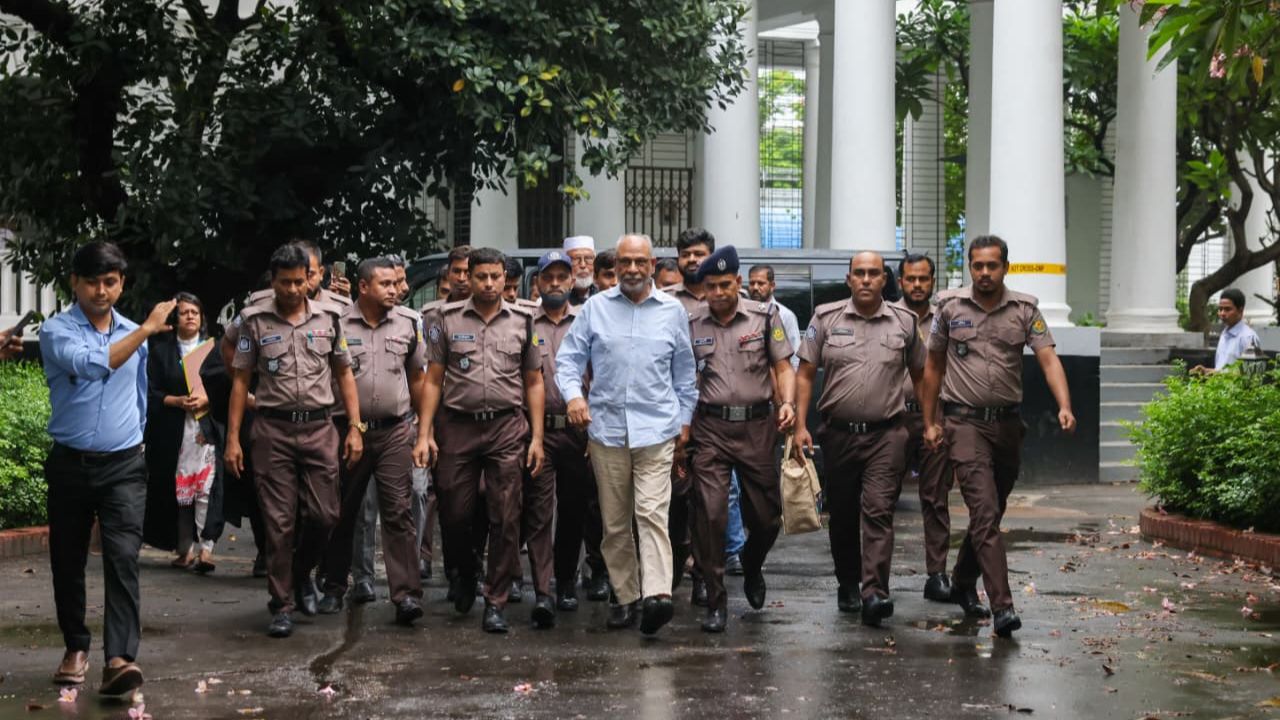



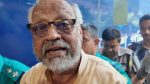
The International Crimes Tribunal (ICT)-2 on Thursday ordered former minister Abdul Latif Siddiqui to be sent to jail after showing him arrested in a crimes against humanity case over the Shapla Chattar killing during a Hefazat-e-Islam rally in 2013.
The order came after Latif Siddiqui was produced before the tribunal around 1pm, a day after members of the Dhaka Metropolitan Police’s Detective Branch (DB) arrested him from his residence in Gulshan.
During the hearing, Prosecutor Mizanul Islam told the tribunal that Latif Siddiqui had been arrested under a warrant issued in the case and produced before the court by law enforcement agencies. As the defence had not filed any application, the prosecution sought an order sending him to jail.
The tribunal accepted the prosecution’s plea, formally showed Latif Siddiqui arrested in the case and ordered that he be sent to prison.
His brother, Abdul Kader Siddiqui, was present during the hearing.
Charges accepted against 41 accused
The case entered the trial stage on 27 July after ICT-2 took cognisance of formal charges filed by the prosecution against former prime minister Sheikh Hasina and 40 others over the Shapla Chattar incident.

In the same order, the tribunal issued arrest warrants for 31 absconding accused and directed authorities to produce the 10 accused already in custody before the court at the next hearing.
According to the prosecution, the case comprises two sets of allegations.
The first relates to the deaths of 32 people during the operation at Shapla Chattar in Motijheel on 5 May, 2013, when Hefazat-e-Islam supporters were holding a mass rally.


The second concerns the deaths of 20 people in Siddhirganj, Narayanganj, on 6 May, 2013, along with other alleged killings in different parts of the country during the same period.
The prosecution has alleged that the operation constituted ‘genocide’ and was a planned campaign of killings carried out under the then Awami League government.
It further claimed that senior law enforcement officials executed the alleged plan and that ministers and senior officials had approved the use of lethal force, including grenades, before the operation.
The prosecution also alleged that Hefazat-e-Islam leaders, activists and children were among those killed.
The allegations are part of the prosecution’s formal charges before the tribunal and are yet to be adjudicated.
Accused in custody and absconding
According to the prosecution, 11 accused are currently under arrest or in jail in connection with this or other cases.
They include former foreign minister Dipu Moni, former state minister for home Shamsul Haque Tuku, former food minister Abdur Razzaq, former information minister Hasanul Haq Inu, former RAB intelligence chief Maj Gen (retd) Ziaul Ahsan, former inspector general of police AKM Shahidul Haque, Ghatak Dalal Nirmul Committee President Shahriar Kabir, former DIG Abdul Jalil Mondal, journalists Mozammel Haque Babu and Farzana Rupa, and Abdul Latif Siddiqui.
Arrest warrants have also been issued for 30 absconding accused, including Sheikh Hasina, several former ministers and Awami League leaders, former inspectors general of police, former senior RAB and Border Guard Bangladesh officials, and other former government officials.
Investigation
The prosecution said investigators prepared the report after examining witness testimonies, video footage, photographs, official documents and other evidence collected during the investigation.
Following verification of the evidence, the formal charges were submitted to the tribunal on 27 July, allowing the case to proceed to trial.
According to the prosecution, investigators have identified 58 people who were killed in connection with the incidents-32 in Dhaka, 20 in Narayanganj, five in Chattogram and one in Cumilla.
The complaint was initially filed with the chief prosecutor of the International Crimes Tribunal by Hefazat-e-Islam leader Azizul Haque on behalf of Hefazat leaders Junaid Al Habib and Mamunul Haque.
The original complaint named 21 accused.
Following the investigation, the prosecution expanded the case and submitted formal charges against 41 individuals.