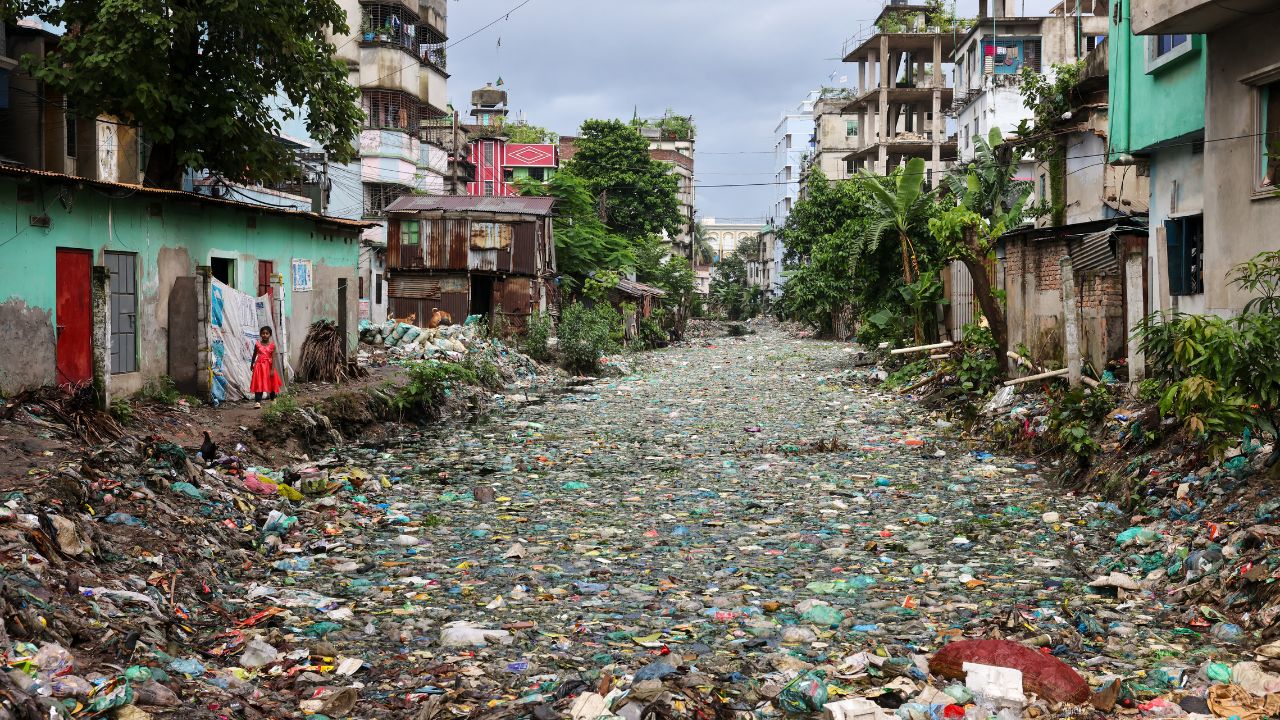

Waterlogging in the capital is not simply the result of heavy rainfall or climate change, but the cumulative consequence of decades of unplanned urbanisation, the filling of canals and wetlands, inadequate waste management and poor coordination among government agencies, experts said.
They stressed that the city cannot overcome the crisis through isolated projects. Instead, they called for a long-term strategy that integrates rivers, canals, wetlands and the drainage system into a single urban water management framework.
The observations were made at a seminar titled “Dhaka is Drowning in Waterlogging, Not Rain” organised by the Bangladesh Poribesh Andolon (BAPA) at the Tofazzal Hossain Manik Miah Hall of the National Press Club on Saturday.
The seminar was chaired by BAPA President Nur Mohammad Talukdar. Architect Iqbal Habib, convener of BAPA’s Urbanisation Committee, presented the keynote paper, while BAPA General Secretary Alamgir Kabir moderated the event.
Dhaka has lost most of its natural drainage
Presenting the keynote paper, Iqbal Habib said Dhaka’s natural drainage system once depended on an extensive network of canals and wetlands connected to the Buriganga, Turag, Balu and Shitalakkhya rivers. However, years of encroachment, land filling and unplanned urban expansion have rendered the system almost ineffective.
He cited a study by the Bangladesh Institute of Planners (BIP), which found that Dhaka has lost around 85 per cent of its wetlands over the past three decades, while built-up areas have expanded by approximately 75 per cent during the same period.

According to the River and Delta Research Centre, the city has also lost around 120 kilometres of canals over the past 80 years.
The keynote paper noted that the 1988 drainage plan assumed that around 40 per cent of rainwater would be absorbed into the ground. Today, with much of the city covered in concrete, that figure has fallen to between 18 and 20 per cent.
As a result, most rainwater now flows into a drainage network that was never designed to handle such volumes.




It also stated that nearly 40 per cent of Dhaka’s solid waste is not collected regularly. Meanwhile, Dhaka WASA’s sewerage network covers only around 20 per cent of the city.
We are flooding the areas that were meant to be protected
Urban planner Prof Anisur Rahman said areas that earlier development plans specifically recommended should not be filled had since been developed, contributing directly to the city’s waterlogging.
“There could be even heavier rainfall in the future. But we have failed to ensure the proper implementation of our plans. It is time to stop shifting the blame from one agency to another,” he said.
Plans are made but never implemented
Researcher and disaster management expert Gawher Nayeem Wahra said Dhaka’s future development plans must take account of the city’s natural topography and water flow, while also ensuring equitable urban development.
He said that whenever a problem emerged, authorities prepared plans and allocated funds, but effective implementation rarely followed.
BAPA Vice-president Khushi Kabir said environmental degradation, poor urban planning and waterlogging were all interconnected issues and required long-term solutions rather than piecemeal interventions.
Dhaka has no comprehensive drainage map
Calling for the preparation and implementation of an integrated drainage master plan, BAPA Vice-president Prof Firoz Ahmed said that there was no comprehensive drainage map for Dhaka and that the shortage of skilled personnel further hindered effective management.
Former director of the Urban Development Directorate Khurshid Jabin Hossain Toufiq said nature was reacting according to its own laws, but the current crisis had become more severe because urban development had consistently ignored natural systems.
Greater accountability needed on the ground
Dhaka South City Corporation Chief Engineer Nur Azizur Rahman said disconnected drains should be linked to reduce waterlogging, public awareness should be raised to stop the dumping of waste into canals and drains, and the capacity of ageing drainage infrastructure should be increased.
He also said drainage designs should be revised to reflect the realities of climate change.
According to Nur Azizur Rahman, the problem cannot be solved by the city corporations alone. Coordinated action involving Rajuk, Dhaka WASA, the Bangladesh Water Development Board and other relevant agencies is essential.
He added that drainage routes were currently blocked in many places and urged engineers and officials to conduct regular field inspections to identify problems and strengthen accountability.
Seven-point recommendations
The seminar concluded with seven recommendations to tackle waterlogging. These included introducing modern waste management, establishing separate sewerage systems, integrating rivers, canals and wetlands into a unified “blue network”, protecting reservoirs and catchment areas, preventing encroachment and pollution, ensuring accountability among relevant agencies, and implementing science-based, long-term planning with active public participation.