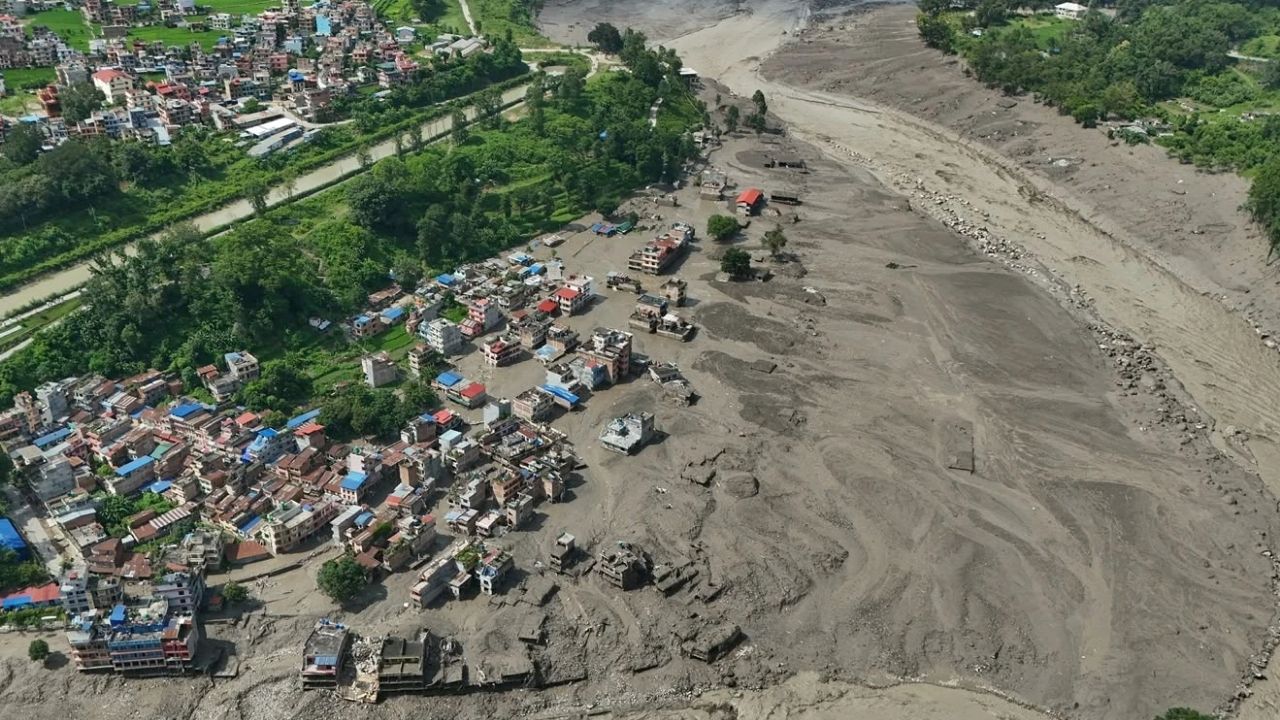
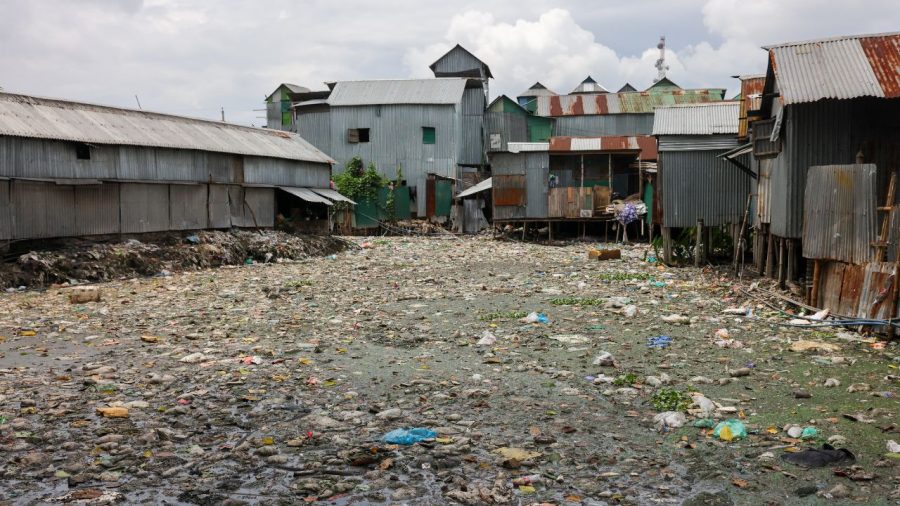

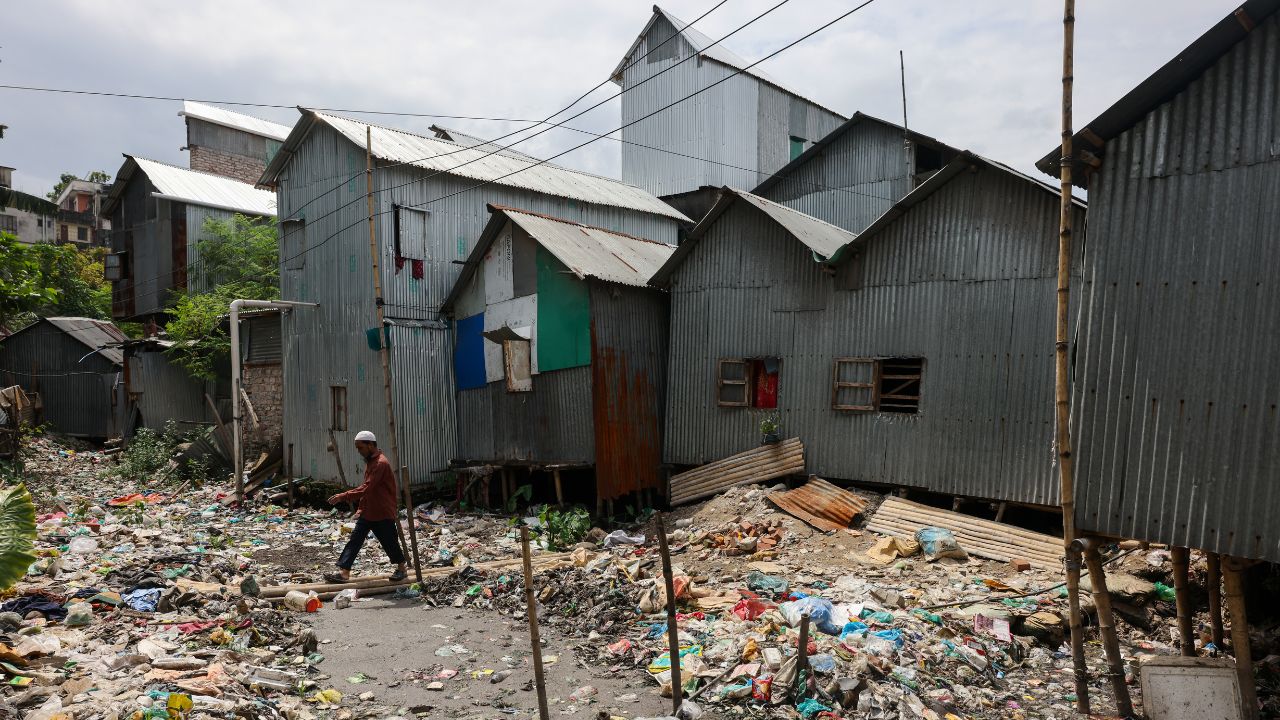
Not far from Dhaka’s affluent Banani-Gulshan area lies Korail Slum. From the surrounding high-rises, its small, crowded huts with tin roofs and bamboo walls are clearly visible. Along the edge of Banani Lake, rows of tin-shed houses stand on narrow wooden and bamboo poles. Residents live with the unbearable stench of polluted lake water.
Korail developed in the 1990s after around 93 acres of land belonging to three government agencies were occupied. It is now one of the capital’s largest slums, with an estimated 40,000 houses and several hundred thousand low-income residents.
During his election campaign, Prime Minister Tarique Rahman, who contested the Dhaka-17 constituency, promised to provide flats for Korail residents if he came to power. Addressing residents, he said, “You are suffering. You are facing difficulties with housing. We want to gradually solve that problem.” But beyond the promise, the reality remains distant.

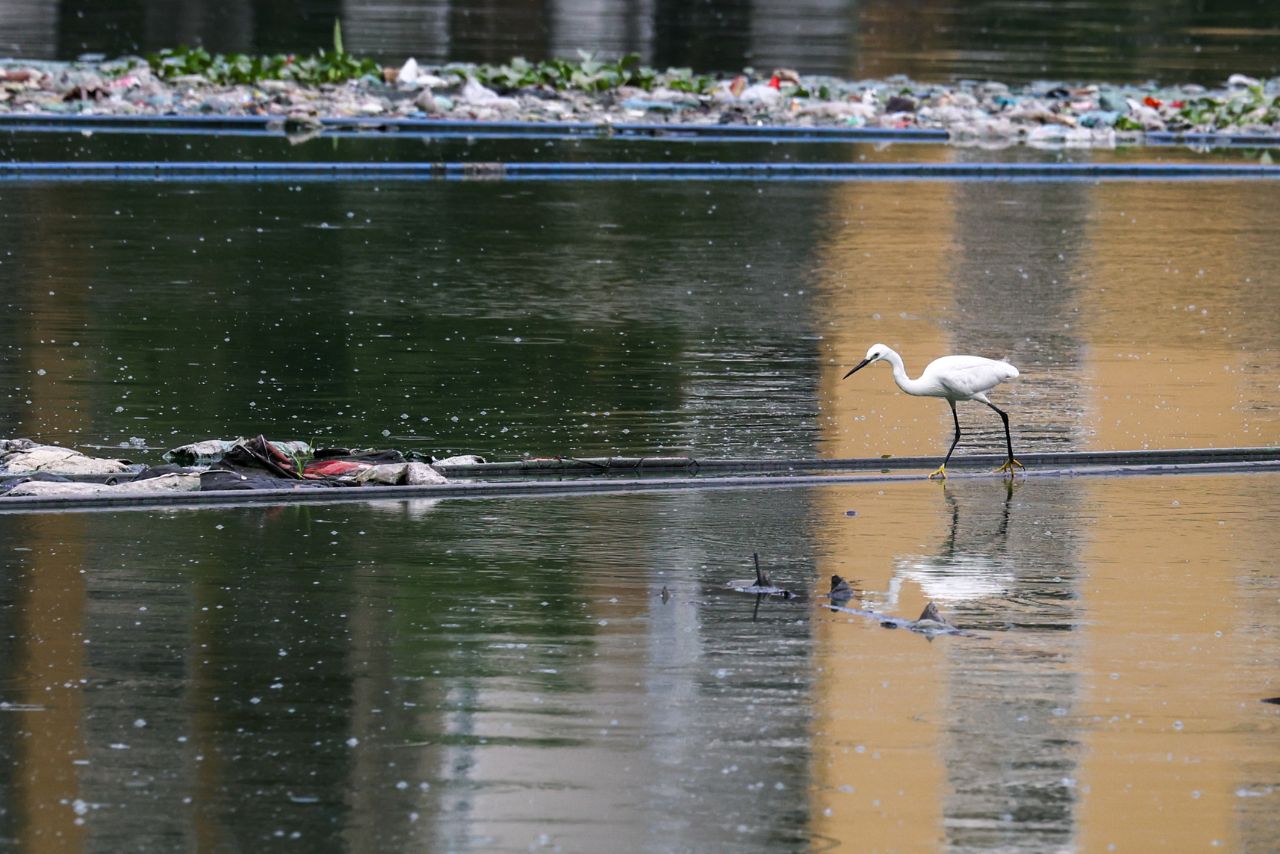
Children are growing up in this toxic environment. Many, barefoot and without shirts, play on tin roofs and sandbags, surrounded by plastic bottles, polythene bags, and rotting waste. The nearby water body is greenish, foul-smelling, and covered with garbage. The pollution surrounding Korail’s children is not only a threat to their health – it is also damaging the lake ecosystem beside which they are growing up.
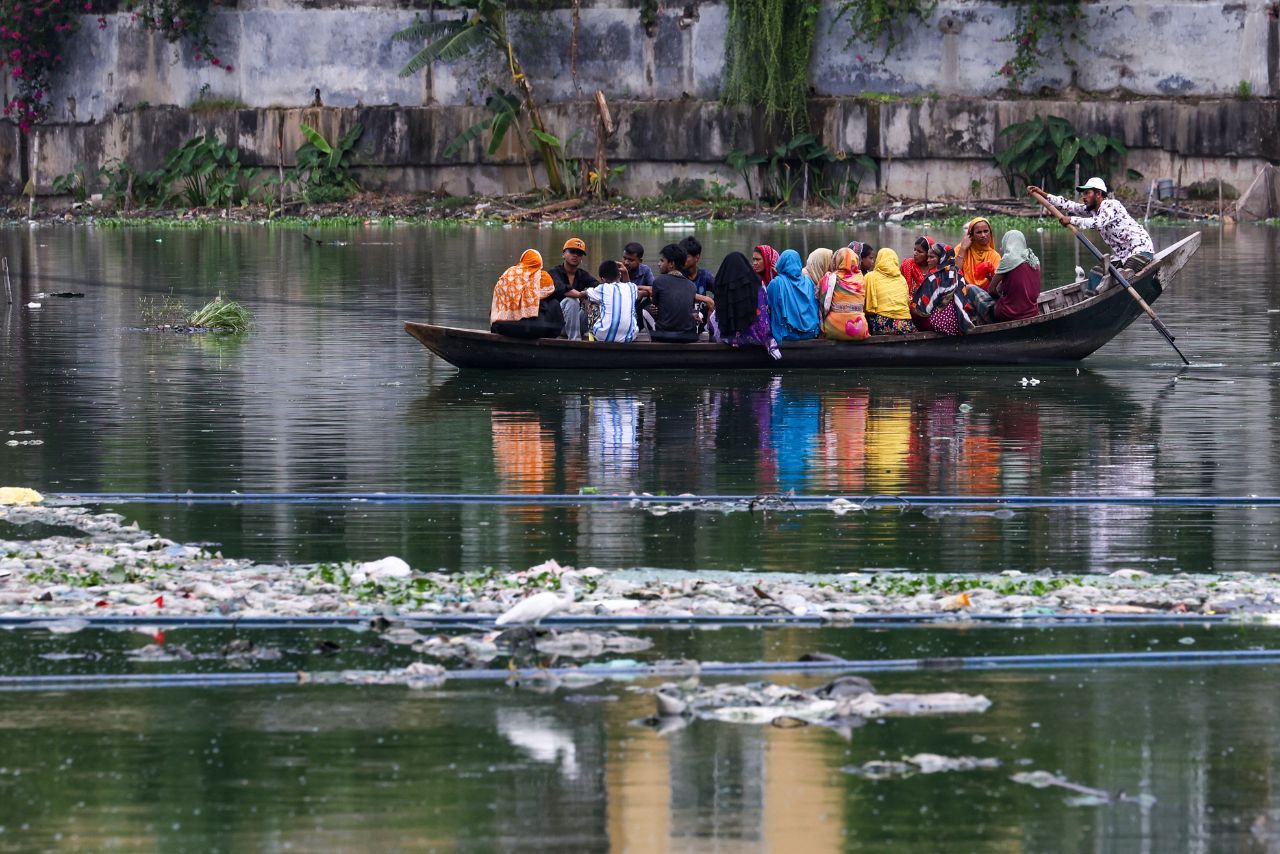
Banani Lake itself is becoming a threatened urban ecosystem. Pollution is destroying the habitat of fish, aquatic animals, plants, and other forms of biodiversity. A 2024 study published in Environmental Science and Pollution Research found that Banani Lake had shifted from eutrophic to hyper-eutrophic state. Its Trophic State Index (TSI) ranged from 84.1 to 97.7, indicating severe ecological degradation.



The study also classified the lake’s water quality as poor or very poor during the study period. The damage is already visible. In 2022, reports said more than 100 fish were dying in Banani Lake every day because of pollution.

Environmental group Poribesh Bachao Andolon (POBA) warned that the lake’s polluted and toxic water posed a serious threat to the environment, public health, and biodiversity. Its chairman, Abu Naser Khan, called for an end to waste dumping and for biological management of the lake.
The lake’s environmental importance has long been recognised. The Gulshan-Banani-Baridhara Lake was declared an Ecologically Critical Area in 2001. Yet pollution continues, with sewage, household and construction waste, encroachment, and poor waste management all contributing to the lake’s decline. A recent DNCC survey found that 2,265 of the 3,830 buildings around the Gulshan-Banani-Baridhara Lake – nearly 60 per cent – have sewage lines directly connected to the waterbody.
For the people of Korail, however, this environmental decline is not a distant concern. They live directly beside the polluted waterbody, and their children grow up within the ecosystem it is steadily degrading.
And for their children? The promise of a better future remains as distant as the gleaming high-rises that tower over their tin-roofed homes. And as Banani Lake continues to die, so too do their chances of growing up in a healthy environment.