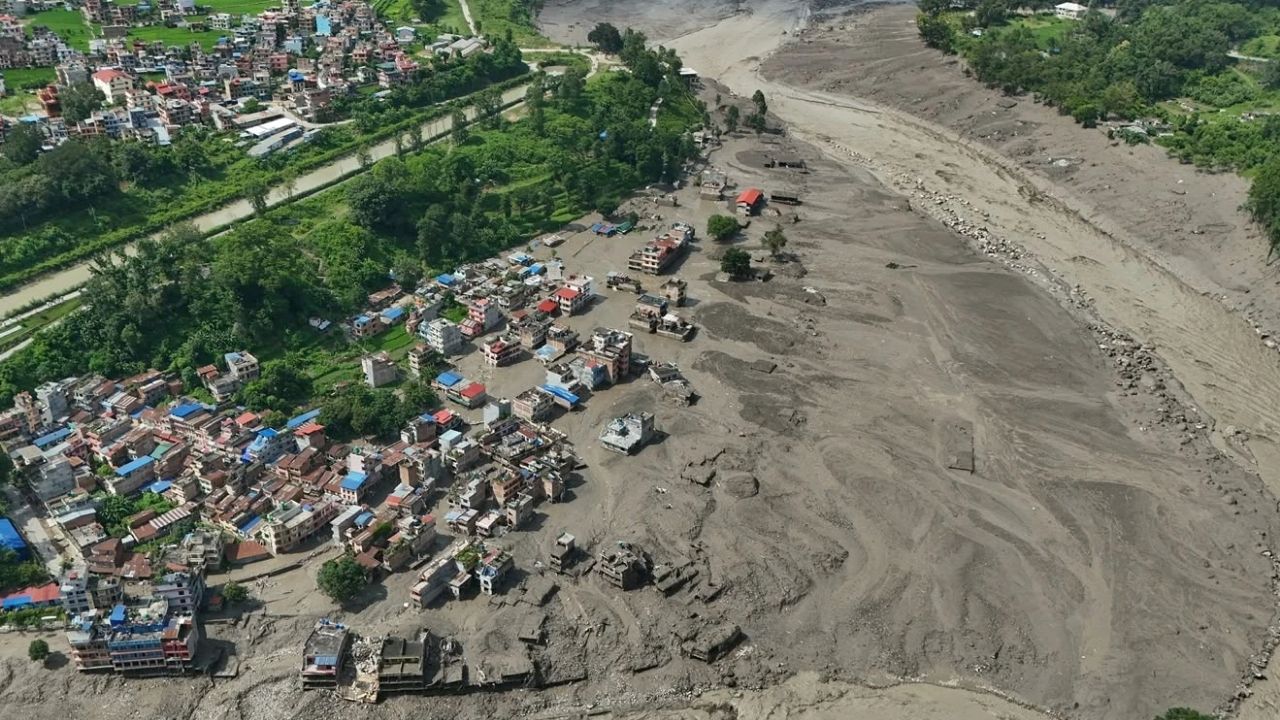



Nepal has recently witnessed one of the deadliest flash floods in its history after a massive glacier collapse near the Nepal-Tibet border triggered a torrent of water, mud, and debris that swept through mountain valleys and downstream communities.
The disaster killed around 550 people, left over 1,500 missing, destroyed homes, roads, bridges, hydropower facilities, and displaced thousands of residents.
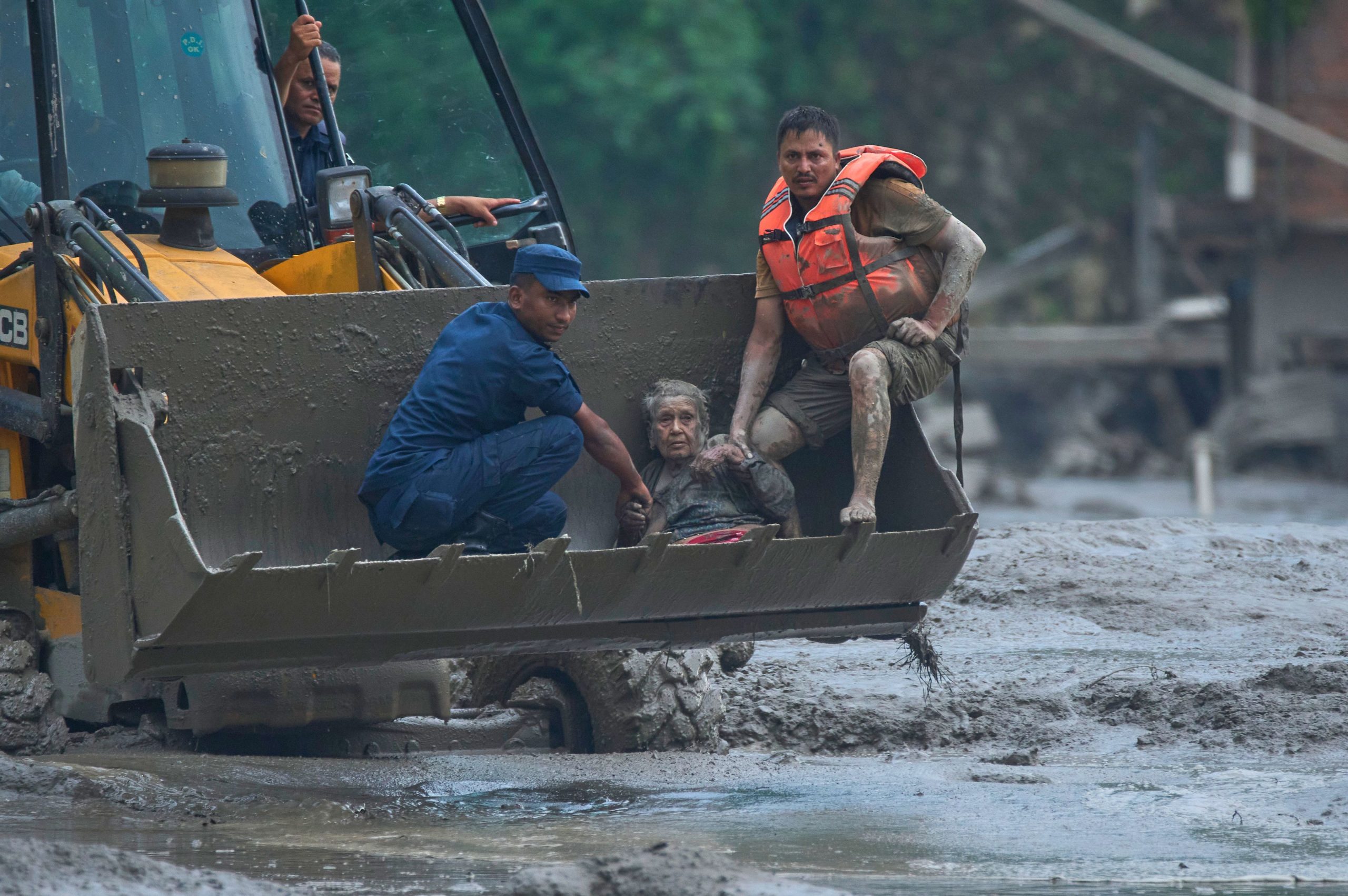
Rescue operations were severely hampered as washed-out roads and collapsed bridges cut off entire settlements. Although the immediate trigger was the sudden collapse of a Himalayan glacier, scientists believe the disaster reflects a much larger problem.

Nepal’s unique geography is the primary cause of the floods and landslides. The country is largely mountainous, with steep hills and narrow river valleys.
During the monsoon season, intense rainfall quickly saturates the soil. When the ground can no longer absorb water, slopes become unstable and collapse, leading to landslides. Rivers overflow, flooding nearby villages and towns.




Climate change has intensified the threat. Rising global temperatures have made extreme weather events more frequent and unpredictable, with short periods of exceptionally heavy rainfall. Melting glaciers contribute to higher river levels, increasing flood risks.

Human activities have worsened the situation. Rapid deforestation, unplanned urban development, and construction on unstable hillsides have weakened the natural environment.
Trees play a vital role in holding soil together; when forests are cleared, the land becomes more vulnerable to landslides. Poor drainage systems and weak infrastructure also make it difficult for communities to cope with heavy rainfall.
Limited disaster preparedness compounds the problem. Many remote villages lack adequate early warning systems, making evacuation difficult. Emergency response teams often struggle to reach affected areas because damaged roads and bridges cut off access.

The devastation in Nepal was not caused by rainfall alone. It resulted from a combination of natural conditions, climate change, environmental degradation, and insufficient disaster preparedness.
Reducing future disasters will require stronger infrastructure, better land-use planning, forest conservation, improved early warning systems, and global efforts to address climate change. By tackling these underlying causes, Nepal can become more resilient and better protect its people from similar tragedies in the future.