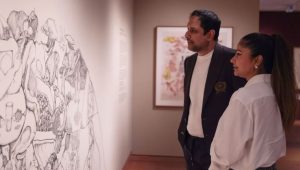
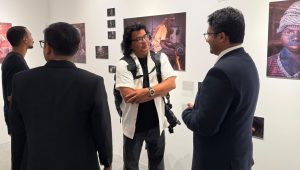
Walking into ‘Josna’ on Tuesday evening, The TIMES of Bangladesh Page Three team felt a threshold being crossed; a shift from cinema memory to a parallel archive. Within Kaali Collective’s five-day open studio,’ Beder Meye Josna’, long celebrated as a titan of Bangladeshi mainstream film, is stripped of its familiar sheen.
Through layered annotations, fragmented posters and experimental reconstructions, the film’s glamorised mythos is broken open, revealing the cultural and political machinery beneath.
Launched on December 1, the unique studio exhibition prompts visitors to consider how the 1989 blockbuster constructed gender, desire, spectacle and the mythology of the Bede community. Directed by Tojammel Haque Bokul, the film remained the highest-grossing Bangladeshi release for over three decades until 2022, its influence stretching far beyond its theatrical run. When the film was first released, Bokul personally carried the movie reels to cinemas to ensure it was screened, demonstrating his dedication to bringing the story to audiences.
In the studio’s quietly electric atmosphere, monitors humming and research notes scattered like clues, co-organisers Gayatree Arun and Rajoyana Chowdhury Xenia described the project as an attempt to unlearn the inherited narratives surrounding the film. Their reframing employs feminist, socio-political and ethnographic lenses, interrogating not only what the film presented, but also what it omitted.
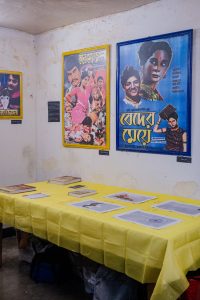
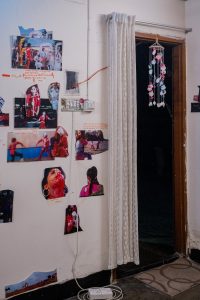
Designed as both an exhibition and a research lab, ‘Josna’ deploys maps, annotated screenshots, collages and archival fragments to revisit the construction of the Bedeni figure, rendered simultaneously as performer, erotic spectacle, healer and outsider. The team examines how gender, caste, class and desire intersect through camera angles, choreography, dialogue and the climactic revelation of concealed upper-caste origins.

Speaking to TIMES, Gayatree elaborated on the screenshot-based analysis guiding the project. “We tried to map the surroundings of Josna and the prince. If you look closely, you notice they grow up almost as parallel figures. The snake charmer and the prince are both swordsmen,” she said.
“Josna performs while people around her remain unchanged; her grandparents age, but her world stays strangely static. These inconsistencies reveal how the film constructs spectacle rather than community,” Gayatree added.
She also challenged the symbolic framing embedded in the title. “If Josna were a reptile, she would be a crocodile; not a snake. The coldness or venom of snakes does not match her. A crocodile’s strength, its jaws, mirrors her more accurately as a character,” she noted.

The research situates the film within the socio-political context of 1985–1990, a period marked by authoritarian rule, rural hardship and the catastrophic 1988 flood.
Released in rural theatres before urban screens, Beder Meye Josna resonated widely, particularly among women who connected with the heroine’s courage and emotional force. Numerous fan accounts endure, including the well-known story of a woman giving birth inside a cinema hall and naming her daughter after the protagonist.
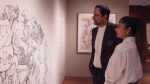
A major section of the exhibition examines the film’s representation of the female body. Through curated screenshots, Kaali analyses dance sequences, persistent mid and close-up shots and costuming choices that produced an eroticised, hyper-visible Bedeni figure. This is contrasted with the historical realities of a marginalised, predominantly Muslim community dispersed across riverbanks and char lands.
Kaali also undertakes a comparative study of poster aesthetics, juxtaposing the hand-painted styles of the 1960s, including Zahir Raihan’s 1969 film ‘Beder Meye’, with the illustrated, star-focused designs of the late 1980s.

The shift reveals how layout and taglines such as “Full film in colour” shaped audience expectations and amplified the blockbuster’s market appeal.
A publication accompanies the exhibition, reflecting research by Aungmakhai Chak, Gayatree Arun, Rajoyana Chowdhury Xenia and Sadia Marium. For Xenia, the project, which began almost two years ago, is about rereading cultural memory with sharper tools.
“We are questioning how myths and stereotypes become normalised imagery,” she told TIMES. “This research lets us revisit a film that shaped generations, but with clarity about what it excluded.”
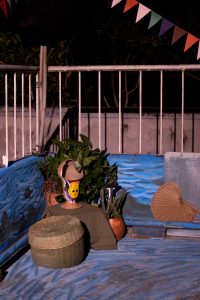
‘Josna’ continues until December 5, from 3:00 pm to 8:00 pm, at Kaqali Collective, 43-O/1 Malobika, Indira Road, Dhaka.
The critical reading session of Beder Meye Josna offers viewers a space to rethink one of Bangladeshi cinema’s most enduring narratives.