Prominent human rights activists, journalists, and social organisers have stressed the need for active engagement from media professionals to ensure human rights of indigenous communities in Bangladesh.
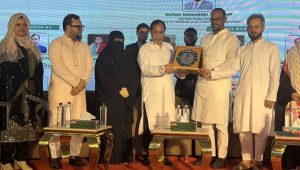
They made these remarks while addressing a discussion titled “The Overall Human Rights Situation of Indigenous Peoples in Bangladesh and the Role of the Media,” held at the National Press Club in Dhaka.
In his keynote speech, Amar Shanti Chakma, joint editor of IPNews, said, “More than 54 indigenous communities have been living on this land for centuries based on their own cultures and traditions.”
“However, even in independent Bangladesh, their state recognition and rights have not been ensured.”

He emphasised that the media must play an active role in establishing the indigenous peoples’ identity, land rights, and constitutional recognition.
Sanjeeb Drong, general secretary of the Bangladesh Indigenous Peoples Forum, said, “The use of the term ‘indigenous’ does not harm the state. Rather, the media can play a vital role in raising public awareness on this issue.”




He also referred to Article 14 of the UN Declaration, highlighting the right of indigenous peoples to establish their own media.
Saifur Rahman Tapan, assistant editor of the national daily Samakal, commented, “Due to editorial policies of media outlets, many important news items about indigenous peoples do not get published.”
He further noted that political leadership has weakened in influencing policy decisions made by military and civil bureaucrats, which he sees as an obstacle to democracy.
Zakir Hossain, joint coordinator of the Chittagong Hill Tracts Accord Implementation Movement and Chief Executive of Nagorik Uddyog, said, “Disinformation about indigenous communities is being spread to create confusion in society.”
He added that national media could raise awareness by regularly reporting and following up on human rights violations.
Expressing concern, Dr Philemon Baskey said, “The government has planned to build EPZs (Export Processing Zones) by seizing ancestral lands of indigenous peoples, which is highly alarming. These lands must be returned to their rightful owners without delay.”
The discussion was organised by indigenous media outlet IPNews BD, with Editor Antony Rema in the chair. Executive Editor Satez Chakma moderated the event.