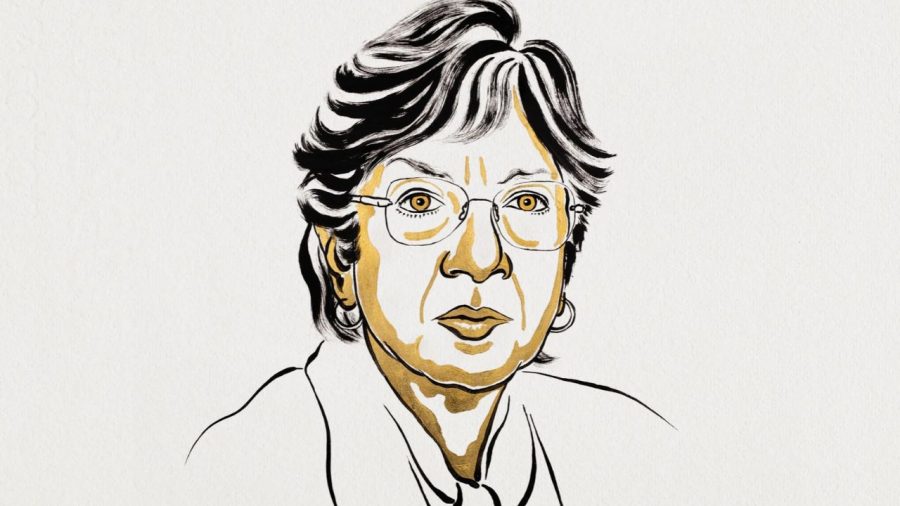



South African jurist Navanethem “Navi” Pillay, aged 85, has been awarded the 2026 Nobel Peace Prize for her lifelong efforts to promote peace and international law.
Announcing the decision in Oslo, Norwegian Nobel Committee Chair Jørgen Watne Frydnes commended Pillay’s decades of work prosecuting genocide and war crimes, citing her judicial rigour, personal integrity, and considerable courage.
The committee emphasised that an international legal order capable of holding war criminals accountable and securing justice for victims is an essential precondition for world peace.
Marking the 125th anniversary of peace prize’s inception, Frydnes said judges guard the thin red line between order and chaos.
The prize carries an award of 12 million Swedish kronor, making Pillay the fifth South African laureate to receive the honour.
Early life and anti-apartheid legal battles
Born on 23 September 1941 in Durban to parents of Indian Tamil descent, Pillay grew up under South Africa’s system of racial segregation.

She earned her law degree from the University of Natal and, in 1967, became the first woman in Natal province to establish her own law firm.
She later earned a Doctor of Juridical Science degree from Harvard University in 1988.
During apartheid, she participated in boycotts and defended prominent political activists, including Phyllis Naidoo and Strini Moodley.




In 1973, Pillay won a landmark legal case securing basic rights and legal access for political prisoners held on Robben Island, where Nelson Mandela was incarcerated.
Following the collapse of apartheid, President Nelson Mandela appointed her in 1995 as the first woman of colour to sit on the High Court of South Africa.
Pioneering international judicial career
Pillay’s international judicial service encompasses several leading global tribunals. In 1999, she was appointed as a judge and President of the International Criminal Tribunal for Rwanda (ICTR).
At the ICTR, she established historic legal precedents by ruling that rape and sexual violence constitute genocide and crimes against humanity, and that propaganda inciting genocide is indictable under international law.
She subsequently served as a judge on the International Criminal Court (ICC) from 2003 to 2008 and as United Nations High Commissioner for Human Rights from 2008 to 2014. Since 2019, she has served as an ad hoc judge on the International Court of Justice (ICJ), appointed by The Gambia in its genocide case against Myanmar regarding the Rohingya minority.
UN inquiry on Gaza and global accountability
From 2021 to 2025, Pillay chaired the United Nations Independent International Commission of Inquiry on the Occupied Palestinian Territory.
The commission determined that Israel was responsible for committing genocide in Gaza and that top Israeli leaders had incited genocide.
The panel also issued reports citing Hamas for war crimes and international humanitarian law violations during its 7 October 2023 attack.
Pillay firmly rejected allegations of bias, noting her long record of working alongside Jewish lawyers during the anti-apartheid struggle.
Acceptance from Nuremberg and global reactions
Pillay learned of the award whilst attending the Nuremberg Forum in Germany, seated in the same courtroom where Nazi war criminals were tried after the Second World War.
Dedicated by Pillay to all survivors of international crimes, the prize drew warm tributes from UN Human Rights Chief Volker Türk, ICC President Tomoko Akane, and South African President Cyril Ramaphosa.
However, Israeli Prime Minister Benjamin Netanyahu accused the Nobel committee of losing its moral compass.
US President Donald Trump criticized the selection, whilst US Secretary of State Marco Rubio announced new sanctions against the ICC hours after the announcement.