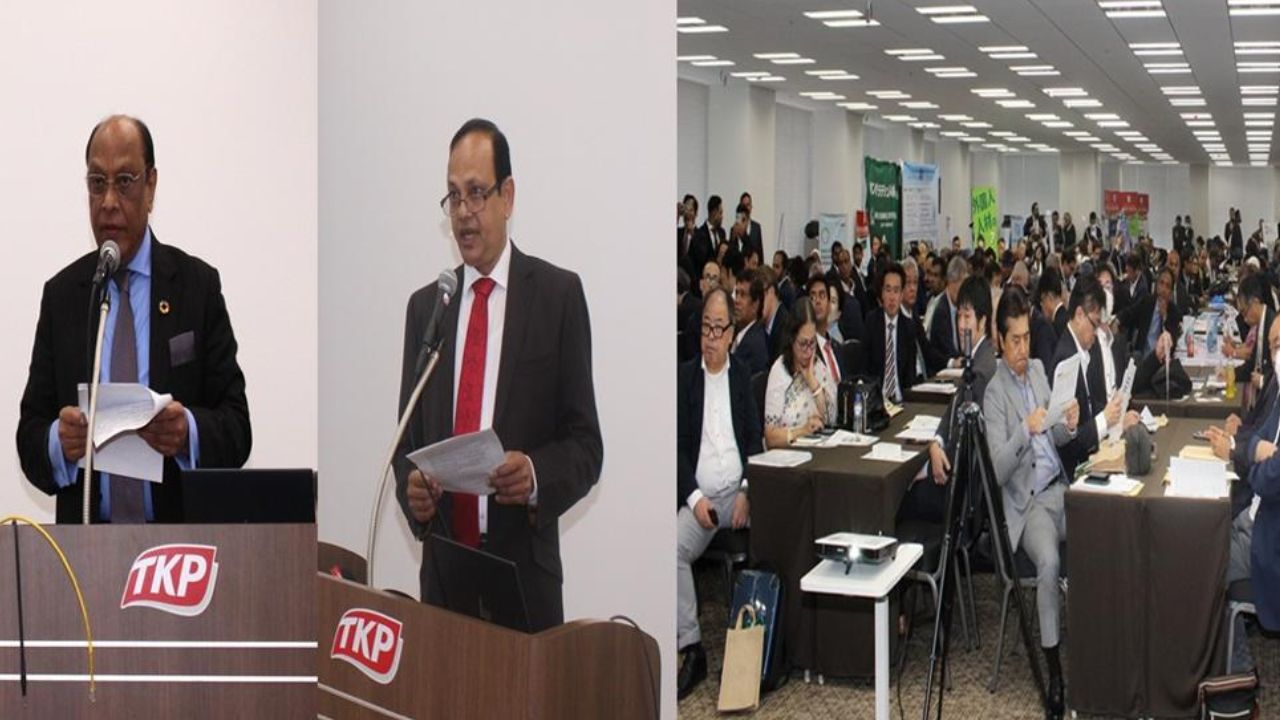

The Embassy of Bangladesh in Tokyo hosted a seminar titled “Bangladesh: A Highly Potential Source Country of Skilled Human Resources for Japan” on 4 November, followed by a business matching session.
The event, held at a Tokyo conference centre, was organised with the support of the Japan International Trainee and Skilled Worker Cooperation Organization (JITCO).
Dr Neyamat Ullah Bhuiyan, senior secretary of the Ministry of Expatriates’ Welfare and Overseas Employment, attended as chief guest.

The seminar drew participation from about 350 manpower-providing and recruiting organisations, including representatives of 250 Japanese companies.
In his opening remarks, Bangladesh’s Ambassador to Japan, Md Daud Ali, assured the embassy’s full support in promoting the placement of skilled Bangladeshi workers in Japan and establishing an efficient deployment mechanism. He urged all stakeholders to strengthen collaboration to maximise opportunities for both nations.




Dr Neyamat Ullah Bhuiyan, in his keynote address, presented comparative data on workforce trends in Japan and Bangladesh. He noted that Japan’s demand for foreign labor is expected to reach around 11 million by 2040, while Bangladesh currently has a surplus of approximately 25 million working-age people, a balance that, he said, “is a good statistical match – the supply side and the demand side”.
He highlighted that 33 Technical Training Centres (TTCs) in Bangladesh have been dedicated to training workers for the Japanese market, with the possibility of expanding that number as needed. He also mentioned the formation of a “Japan Cell” within the Ministry to coordinate communication and policy related to Japan’s labour needs.
The senior secretary outlined ongoing government initiatives to enhance labour cooperation with Japan and expressed optimism that both countries would benefit from the partnerships between Bangladeshi and Japanese recruitment organisations.
Ambassador Shigeo Matsutomi, senior vice president of JITCO, presented an overview of global labour market dynamics and Japan’s employment outlook.
During the event, 13 agreements were signed between Bangladeshi manpower-exporting agencies and Japanese recruiting companies. Officials from the Embassy of Bangladesh in Tokyo were present at the signing ceremony.
Dr Neyamat Ullah Bhuiyan is also scheduled to attend another seminar on human resources in Nagoya on 7 November, where further agreements between Bangladeshi and Japanese firms are expected to be finalised.