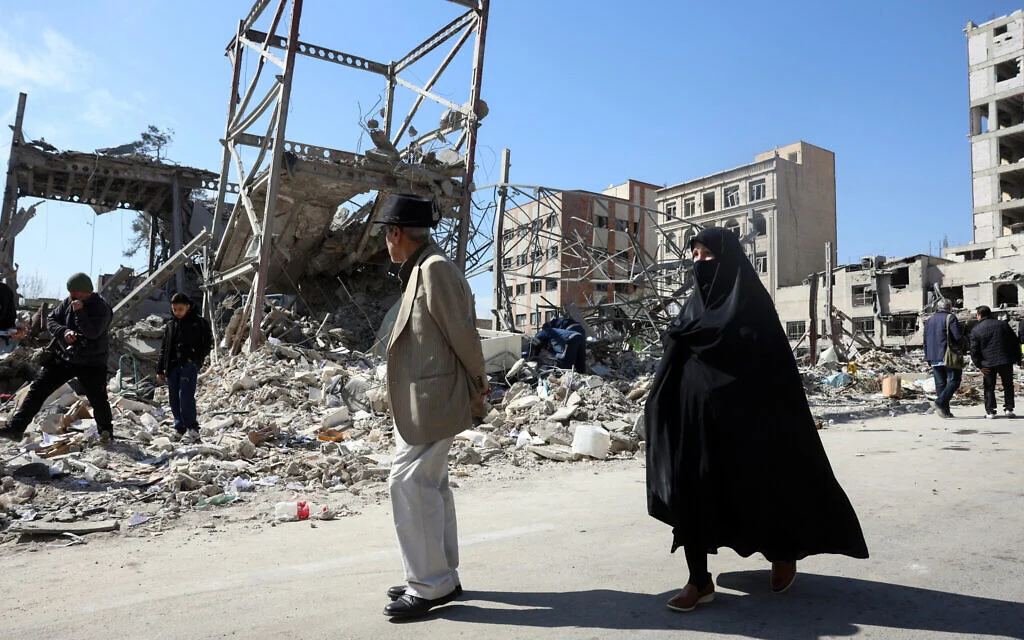



The US–Israel military campaign against Iran is likely to have far-reaching consequences, potentially reshaping the balance of power in the Middle East while influencing global politics, arms procurement patterns and supply chains.
The conflict has also intensified debate over Washington’s evolving role in global security, with critics arguing that the United States may be shifting from a “net security provider” to a source of instability in international affairs.
Analysts say the war could challenge several longstanding assumptions — including the perceived invulnerability of Israel’s security, the strategic posture of Gulf states towards Tehran, and the durability of existing international security alliances. For countries such as Bangladesh, the shifting geopolitical landscape highlights the need for careful diplomatic positioning to protect long-term national interests.
From ‘security provider’ to ‘security violator’?
A “net security provider” refers to a state capable of addressing not only its own security concerns but also those of other nations through military cooperation, training, capacity building, diplomatic engagement and, when necessary, direct intervention.
For decades, the United States has been widely viewed as a global security guarantor, maintaining alliances and intervening in conflicts across multiple regions. Critics, however, argue that recent actions — particularly the joint US–Israel strikes on Iran — raise questions about whether Washington is now contributing to instability rather than preventing it.
The campaign initially began with statements suggesting limited military objectives. Over time, however, the rhetoric shifted towards broader goals, including regime change in Tehran. Despite weeks of military operations, those objectives remain far from being realised.

At the same time, the United States appears to be preparing for a prolonged conflict, with plans to expand arms production and military capacity. Such developments could influence global arms markets, as increased production may eventually be accompanied by efforts to encourage partner countries to purchase US-made military equipment.
Changing power dynamics in the Gulf
The war is also expected to reshape perceptions of power in the Gulf region. Iran’s ability to absorb sustained attacks and continue retaliatory operations has challenged assumptions about the absolute superiority of Israel’s military capabilities.
For decades, many Gulf states have relied on the United States as their principal security partner while treating Iran as a strategic rival. The conflict, however, has demonstrated Tehran’s capacity to withstand pressure and continue fighting, potentially influencing how regional states approach their relations with Iran in the future.
Another notable development has been Iran’s diplomatic restraint towards neighbouring countries. Despite missile and drone operations across the region, most Gulf states indirectly affected by the conflict have refrained from retaliation. Analysts see this as a diplomatic success for Tehran, which has managed to demonstrate military reach while avoiding a wider regional war.




Attacks on US bases across the region have also raised questions about the resilience of Washington’s security architecture in the Middle East, where the United States maintains around 19 military installations.
In this shifting environment, China could emerge as a more prominent diplomatic and defence partner for some regional states. Beijing has already demonstrated its growing influence by mediating the restoration of diplomatic relations between Saudi Arabia and Iran.
Implications for global arms procurement
The conflict may also reshape defence procurement patterns in the Gulf. Many Middle Eastern states have traditionally relied heavily on American weapons systems and military support.
While the region is unlikely to abandon US defence partnerships entirely, the war could encourage greater diversification in arms purchases. European countries, China and Russia may seek to expand their presence in the Gulf arms market as regional states attempt to reduce dependence on a single supplier.
Pressure on existing security blocs
The war has also exposed strains within existing alliance structures. The North Atlantic Treaty Organization (NATO), originally established to guarantee collective security in Europe, has faced internal divisions over broader global security commitments. At the same time, Washington has urged European partners to support its strategic agenda in the Middle East.
In Asia, the AUKUS security pact — comprising Australia, the United Kingdom and the United States — was designed largely to counter China’s growing influence. Yet differing priorities among its members highlight the limits of such alliances when conflicts arise outside their immediate strategic focus.
These developments could eventually lead to the emergence of new regional security arrangements as countries search for alternative mechanisms to safeguard their interests.
Bangladesh’s diplomatic calculus
Against this backdrop of shifting geopolitics, Bangladesh faces the challenge of navigating an increasingly complex international environment.
Analysts say Dhaka should maintain a cautious and balanced foreign policy, prioritising national interests while avoiding alignment with competing geopolitical blocs.
Former ambassador to the European Union Mahbub Hassan Saleh believes Bangladesh should remain committed to a peace-centred diplomatic strategy.
“The approach should be peace-centric and must uphold the principles of territorial integrity and sovereignty,” he said.
According to him, the global environment has become unusually volatile. Even compared with earlier periods, the current phase of international politics appears particularly turbulent.
“The world is going through a very uncertain period,” Saleh said. “Even after the current phase of leadership in the United States ends, it may take time for the international system to stabilise. Countries like Bangladesh must therefore navigate carefully, prioritising long-term national interests while supporting peace and stability.”
As the Middle East conflict continues to unfold, its consequences are likely to extend well beyond the battlefield — influencing diplomacy, alliances and global power relations for years to come.