
A proposed five-year blue-economy strategy estimates Bangladesh will need approximately $30–40 billion in investment to raise the sector’s contribution to at least 5 per cent of GDP and create 3–4 million new jobs, particularly in coastal regions.
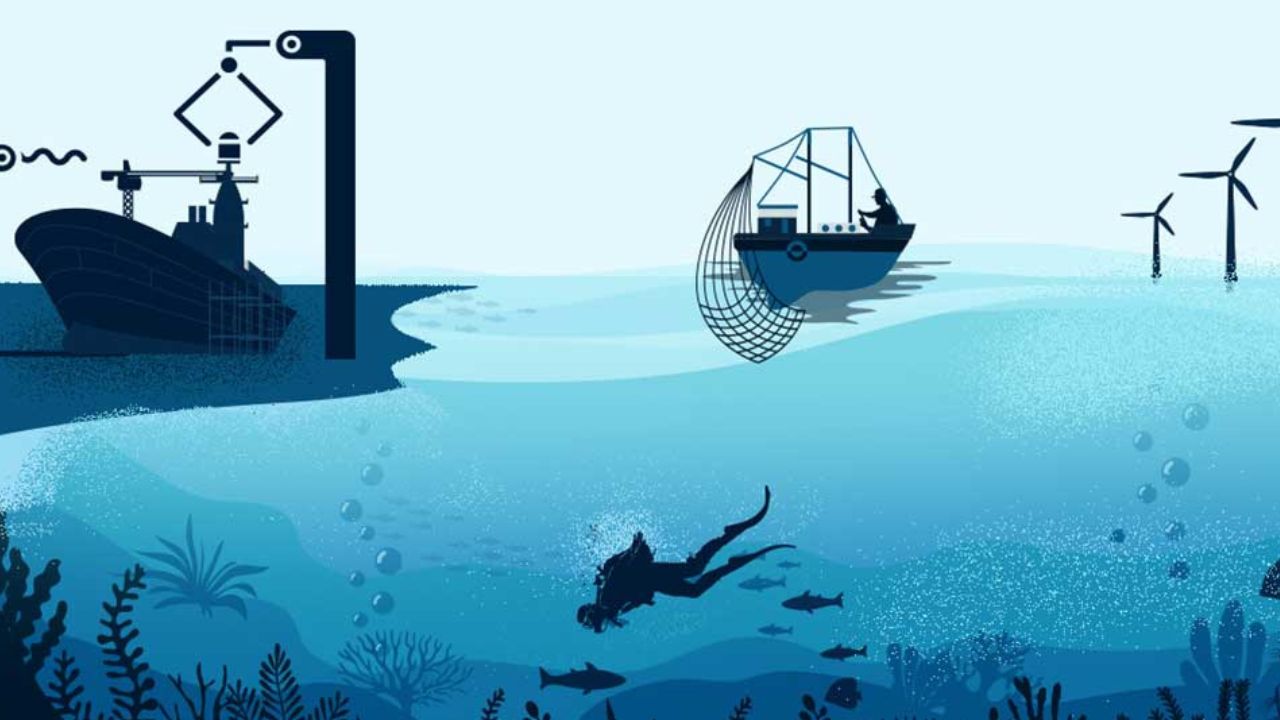
The FY2027–31 framework covers fisheries and aquaculture, maritime trade and logistics, ports, tourism, offshore energy, shipbuilding and ship recycling, marine biotechnology, conservation, maritime infrastructure and governance. Bangladesh’s blue economy currently contributes around 3 per cent of GDP, according to the framework.
Financing is expected to come from government budget allocations, public-private partnerships, foreign direct investment and development partners. The framework also proposes Blue Bonds and a Sustainable Maritime Investment Fund to mobilise financing for maritime innovation, infrastructure and climate-resilient projects.
As part of the expansion, Bangladesh is targeting more than $500 million in annual earnings from marine biotechnology, seaweed cultivation and ocean-based pharmaceuticals.
The strategy identifies the Bay of Bengal’s marine biodiversity as a largely untapped economic resource and seeks to turn marine biological resources into raw materials for pharmaceuticals, nutraceuticals, cosmetics, food, animal feed and biofuel industries through investment in research, technology, processing and export-oriented industries.

It proposes large-scale seaweed farming for food, feed and biofuel, alongside facilities to extract alginate, agar and carrageenan for use in food processing, cosmetics, pharmaceuticals and other industries. An export-oriented seaweed industry would be integrated with coastal aquaculture, allowing vulnerable fishing communities to diversify their livelihoods while reducing pressure on capture fisheries.
Marine biotechnology research centres would identify and commercialise bioactive compounds from algae, sponges and microorganisms, while marine genetic resources would be explored for high-value products, including anti-cancer, anti-inflammatory and antimicrobial applications. The sector could create a high-skilled, technology-driven segment of the blue economy.
Developing the industry would require investment in marine research, laboratories, intellectual property protection, technology transfer and commercial-scale processing, alongside stronger collaboration among universities, research institutes and industry and greater international cooperation.
The strategy also proposes processing low-value and underutilised marine species into fishmeal, fish oil and animal feed, creating additional value chains around the fishing industry.



Bangladesh aims to raise annual marine fish production to 300,000–500,000 tonnes, increase fisheries export earnings by 50–80 per cent and reduce post-harvest losses by 30–40 per cent.
To achieve those targets, the strategy proposes deep-sea fishing, scientific fishing quotas, marine stock assessments, stronger action against illegal fishing and expanded aquaculture involving seaweed, crab, oyster, mussel and cage farming.
Energy is another component of the proposed expansion. The framework makes offshore hydrocarbon exploration a priority and sets a target for comprehensive exploration of all offshore blocks by 2030.
It proposes reforms to production-sharing contracts, a deepwater exploration strategy, offshore infrastructure development and stronger environmental governance.
According to the framework, successful offshore exploration could increase domestic gas production, reduce dependence on imported LNG, attract foreign investment and strengthen energy security.
Alongside hydrocarbons, the strategy proposes developing 500–1,000 megawatts of offshore renewable energy capacity through offshore wind, tidal and wave energy.
Cox’s Bazar and Maheshkhali are identified for potential offshore wind development, while the Meghna estuary and adjacent tidal channels are proposed for tidal power. The framework also calls for a national marine energy policy, integration with Marine Spatial Planning, private and foreign investment and greater research and technology transfer.
Marine Spatial Planning would divide Bangladesh’s maritime territory into Western, Central and Eastern zones for fisheries, ports and shipping, industry, tourism, energy, marine protected areas and environmentally critical areas. The Western zone around Khulna, Satkhira and Bagerhat would focus on the Sundarbans, shrimp and crab aquaculture, Mongla Port and industry while protecting mangrove ecosystems.
The Central zone around the Meghna estuary, Bhola, Noakhali, Lakshmipur and parts of Barishal and Patuakhali would prioritise fisheries, hilsa breeding grounds, navigation, char-land livelihoods and disaster resilience, while the Eastern zone covering the Chattogram–Cox’s Bazar coast and offshore areas would combine tourism, ports, ship recycling, fisheries and offshore energy.
With more than 90 per cent of Bangladesh’s international trade handled through maritime routes, the strategy targets a 50 per cent increase in trade-handling capacity and a 15–20 per cent cut in logistics costs to establish the country as a regional maritime hub. It also targets $1–1.5 billion in annual coastal and marine tourism revenue and more than 500,000 jobs through eco-tourism zones, community-based tourism and improved coastal infrastructure.
To address fragmented marine-resource management, the framework proposes a National Blue Economy Authority under the Prime Minister’s Office to coordinate policy, regulate licensing and simplify management. Until then, the Cabinet Division would coordinate blue-economy activities.
Bangladesh has approximately 118,813 square kilometres of maritime area in the Bay of Bengal following the settlement of its maritime boundaries with Myanmar and India.