


India’s central government has stepped up security measures in New Delhi as the ‘Cockroach Janata Party’ (CJP) movement continues to gather momentum, with 20 companies of the Central Reserve Police Force (CRPF) deployed in the capital to deal with the youth-led protests.
The paramilitary deployment came as thousands of protesters remained at Jantar Mantar despite heavy rain, vowing to continue their agitation demanding education reforms and the resignation of Union Education Minister Dharmendra Pradhan over allegations linked to examination paper leaks.
According to reports, the Indian Home Ministry arranged the movement of 20 CRPF companies from West Bengal, where they had been deployed for election-related duties, to Delhi. The forces have been brought in to handle both the CJP protests and demonstrations by political groups supporting the movement.
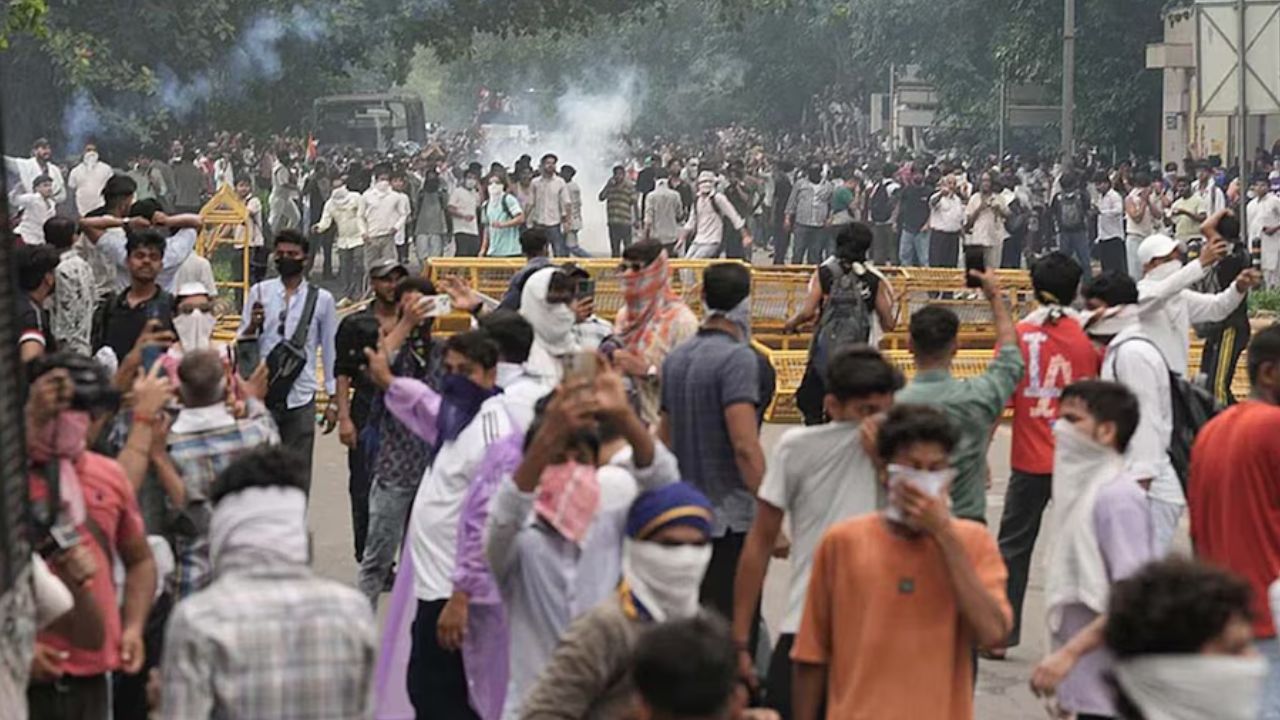
The deployment marks a significant escalation in the government’s response after a major protest march towards Parliament on Monday ended in clashes between demonstrators and police. Tens of thousands of protesters had gathered in central Delhi after the CJP called for a ‘Parliament march’, with police using batons and tear gas to disperse crowds. At least 60 people were injured, including protesters and police personnel.

The authorities have also tightened movement around key areas of the capital. Several Delhi Metro stations, including Lok Kalyan Marg, Rajiv Chowk, Central Secretariat, Patel Chowk and Ramakrishna Ashram Marg, were closed following the protests.
Despite the increased security presence, the protesters have refused to leave their base at Jantar Mantar, where they have maintained a round-the-clock sit-in. The movement has continued even after police dismantled temporary structures at the protest site following Monday’s confrontation.



Sonam Wangchuk, an educationist and environmental activist who joined the movement and began an indefinite hunger strike, has also refused to withdraw her protest. She said she would end the hunger strike only after the government responds to the demands raised by millions of students and young people.
The CJP said after Wangchuk’s statement that it would continue its agitation until its demands were met. The movement’s key demands include the resignation of Pradhan, action over examination paper leaks and withdrawal of cases against protesting students.
The government, however, has maintained that it is ready for dialogue. Parliamentary Affairs Minister Kiren Rijiju said the government was prepared to discuss the issue of examination paper leaks in Parliament, calling for a constructive debate on matters affecting students.
Pradhan has accused opposition parties of using students for political purposes, saying the government remains committed to providing answers, reforms and accountability. The ruling Bharatiya Janata Party has also rejected allegations of excessive force during Monday’s crackdown.
The CJP, which is not a registered political party, has grown into one of the most visible youth-led protest movements against the Modi government in recent years. The movement has expanded beyond Delhi, with demonstrations reported in cities including Mumbai, Hyderabad, Bengaluru and Ahmedabad.
The latest paramilitary deployment signals the government’s determination to contain the protests as the movement enters another critical phase, with demonstrators showing no sign of ending their campaign.