The full 500-page verdict sentencing Jatiya Samajtantrik Dal (JASOD) President Hasanul Haq Inu, to a total of 30 years’ imprisonment for crimes against humanity during the July 2024 mass uprising has been published.
International Crimes Tribunal-2 (ICT-2) Deputy Registrar Mahmudul Hasan informed TIMES on Sunday, 20 September, that the complete judgment was released on 16 September and a copy was supplied to the defence on Sunday.
Earlier on 30 June, the three-member ICT-2 bench, led by Justice Nazrul Islam Chowdhury and comprising Judge Md Manjurul Basid and Judge Nur Mohammad Shahriar Kabir, delivered the verdict, finding Inu guilty on three of the eight charges brought against him while acquitting him of the remaining five.
The tribunal handed down a 10-year prison sentence for each of the three proven charges. Defence lawyer Sifat Mahmud told TIMES that Inu did not receive justice in the verdict and confirmed that an appeal would be lodged within the stipulated time frame.
Inu, who served as information minister during the Awami League administration, had contested the 12th parliamentary election from his constituency in Kushtia as a nominee of the Awami League-led alliance, but was defeated by an Awami League rebel candidate. He was tried on eight charges before the tribunal, which found the third, sixth, and seventh charges proven against him.

Under the third charge, for which he received a 10-year prison term, the tribunal found that on 20 July 2024, Inu acted as an influential leader of the 14-Party Alliance and telephoned the Superintendent of Police (SP) in his home district of Kushtia to suppress the student-people movement.
He instructed the SP to compile lists of demonstrators after identifying them from photographs, ordered action against them, and endorsed prior acts of torture.
Following these directions, police forces under the SP and armed cadres of the 14-Party Alliance opened fire on protesters at various locations in Kushtia town between 18 July and 5 August.

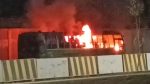


This firing resulted in the deaths of worker Ashraful Islam, Suruj Ali Babu of Burmese Gali, student Abdullah Al Mustaqin on the Haripur-bound road, Md Osama, businessman Bablu Faraji of Tulapatti Gali, and service holder Yusuf Sheikh on the road opposite the Fire Service, while Raisul Haq and many others were injured or detained and tortured.
Regarding the sixth charge, the tribunal noted that Inu attended a 14-Party Alliance meeting chaired by then prime minister Sheikh Hasina on 29 July, where he labelled protesters as BNP, Jamaat, terrorists, and communal elements to suppress and divert the trajectory of the movement.
He incited and provoked the implementation of the decision to ban Bangladesh Jamaat-e-Islami, while legitimising the killings and torture carried out by law enforcement agencies, the Awami League, and armed cadres of the 14-Party Alliance. For this charge, he was sentenced to 10 years’ imprisonment and ordered to pay Tk1 lakh in compensation.
Under the seventh charge, Inu was convicted of maintaining constant communication with Sheikh Hasina to offer advice on quelling the movement, participating in conspiracy, planning, incitement, and directions concerning curfew enforcement, shoot-on-sight orders, lethal weapon usage, and the targeting, detention, and torture of students and citizens labelled as militants.
On the afternoon of 4 August, he approved the decision to impose a curfew and open fire, engaged in a telephone conspiracy with Sheikh Hasina to execute these measures, and implemented them through leaders and activists of his own party.
The tribunal handed down a 10-year prison sentence and a Tk1 lakh compensation order for this charge as well, while acquitting him of the remaining five charges.
Outlining the trial timeline, the investigation began on 25 March last year, and the investigation agency submitted its report to the prosecution on 11 September.
On 25 September 2025, the prosecution submitted eight specific charges, which the tribunal took into cognizance following a hearing that same day, with formal charges framed on 2 November.
Prosecution testimony commenced on 1 December last year, with a total of 10 witnesses testifying—including the investigating officer, three eyewitnesses, two expert witnesses, one victim’s family member, and two seizure list witnesses—while the defence presented two witnesses.
Following lengthy arguments from both sides, the tribunal kept the verdict pending (CAV) on 14 May this year. Later, on June 22, the tribunal set June 30 as the date for announcing the verdict.