A former police sub-inspector, sentenced to death by the International Crimes Tribunal (ICT) on Thursday for his role in the burning of bodies in Ashulia, has raised explosive allegations of corruption, claiming he was given the capital punishment naturally because he could not afford to pay bribes.
Abdul Malek, one of six individuals handed the death penalty for the 2024 mass uprising atrocities, alleged that other defendants who paid money received significantly lighter sentences of seven to eight years.
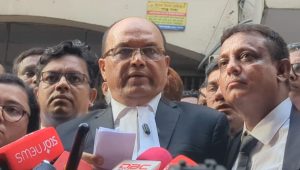
Malek’s allegations surfaced immediately after the verdict was delivered. Witnesses reported that the former officer collapsed and fainted in court upon hearing the judgment. While being led to the lock-up, a distraught Malek told reporters, “I am a poor man. I couldn’t pay money, so I was sentenced to death.”

He maintained his innocence, asserting that he did not set the fire.
Instead, Malek accused Constable Mamun of igniting the blaze and Constable Jewel of providing the wood. Most notably, Malek claimed that ASI Monir, who he alleges actually set the fire, was shielded by being made a witness for the prosecution.



The convict’s elder brother, Mohammad Golam Hossain, echoed these claims of a biased investigation.
He stated that Malek was not even present at the scene and accused Investigation Officer Jane Alam of filing a charge sheet against innocent individuals while protecting the actual perpetrators. “We have not received justice,” Hossain told journalists.
The case revolves around the horrific events of 5 August 2024 in Ashulia, where six people were shot dead by police during the July-August mass uprising. Their bodies were subsequently piled into a police van and set on fire.
The prosecution highlighted the brutality of the act, stating that at least one victim was still alive when petrol was poured on the bodies. The identified victims include Sajjad Hossain (Sajal), As Sabur, Tanzil Mahmud Sujoy, Bayezid Bustami, and Abul Hossain, while the identity of a sixth victim remains unknown.
The ICT’s judgment sentenced six people to death, seven to life imprisonment, and two to short-term prison sentences, while one individual was pardoned.
The case for crimes against humanity was officially filed on 11 September 2024, following an investigation that led to the recently contested charge sheet.