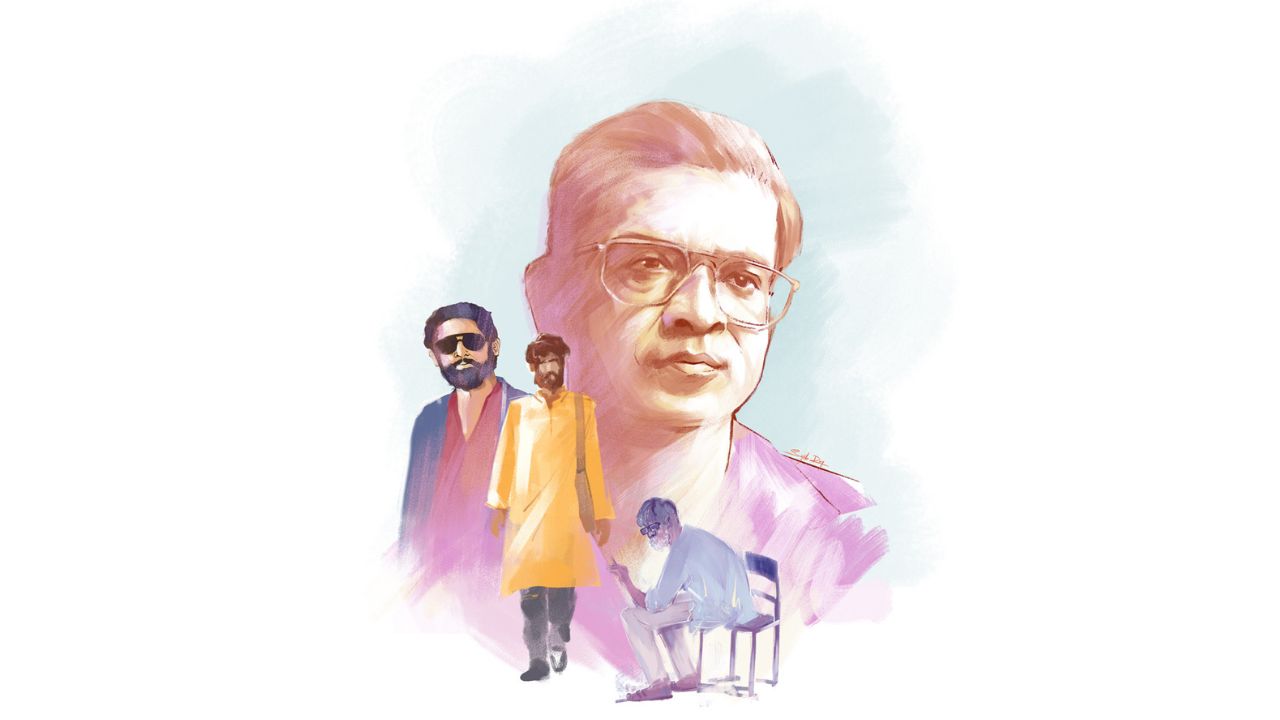

Humayun Ahmed did more than write memorable characters he created people who became part of our lives. We have all encountered a Himu wandering through the night, admired Misir Ali’s calm logic, or wished Baker Bhai would appear when injustice seemed impossible to fight.
That is why these characters have never faded with time. Their unusual traits were never mere literary gimmicks; each reflected a different side of Bangladeshi society and the values, struggles and aspirations of its people.
Himu: The wanderer in search of freedom
If Sherlock Holmes is known for his pipe and Tintin for his iconic hairstyle, Himu is remembered for his bare feet.
Dressed in a yellow panjabi and refusing to wear shoes, Himu roams the streets with no fixed destination, profession or ambition. His barefoot walks are more than an eccentric habit they symbolise his rejection of material success, social expectations and the conventional definition of achievement.

His father dreamed of shaping him into a mahapurush, an extraordinary spiritual being. Whether Himu truly possesses supernatural insight or simply understands people more deeply than most remains unanswered. Humayun Ahmed deliberately leaves readers suspended between logic and mystery.
Through Himu, he explored freedom, loneliness, spirituality and the quiet sadness hidden beneath ordinary lives. Himu listens more than he speaks, appears without warning, touches lives in unexpected ways and disappears just as quietly. He represents the desire to live without the burdens of status, wealth or society’s expectations a dream that continues to resonate across generations.
Misir Ali: The man who searched for reason
Where Himu follows instinct, Misir Ali follows logic.




A psychology professor with an exceptional analytical mind, Misir Ali approaches every ghost story, miracle or unexplained event with patience and scepticism. Frail, absent-minded and often troubled by stomach ulcers, he lacks the glamour of traditional fictional detectives. His greatest strength is simply his curiosity.
Humayun Ahmed used Misir Ali to question blind faith without dismissing it. In a country rich with folklore and supernatural beliefs, Misir Ali listens first, investigates carefully and searches for rational explanations. Yet not every mystery is fully solved, reminding readers that reason also has its limits.
He represents scientific thinking without arrogance. His stories encourage readers to question, observe and think critically while respecting people’s experiences. His greatest lesson is that intelligence lies not in having every answer, but in asking the right questions.
Baker Bhai: The hero every neighbourhood wanted
Few fictional characters have inspired the public response that Baker Bhai did. After Kothao Keu Nei aired in the 1990s, viewers reportedly protested his death sentence, unwilling to accept the loss of a character who had come to feel real.
Baker Bhai is no flawless hero. He is hot-tempered, fearless and often resorts to force. Yet beneath that rough exterior is unwavering loyalty, honesty and a powerful sense of justice.
He protects the vulnerable, confronts local bullies and refuses to tolerate corruption. Through him, Humayun Ahmed captured a society’s longing for someone who would stand up for ordinary people when institutions failed them. Baker Bhai reflects the belief that true heroism is not perfection but the courage to defend others, even at great personal cost.
Why they still matter
Himu, Misir Ali and Baker Bhai embody three timeless ideals: freedom, truth and justice. They are not superheroes or mythical figures, but ordinary people carrying extraordinary ideas.
That is the enduring magic of Humayun Ahmed’s writing. Long after the final page is turned, his characters continue to walk beside us barefoot on an empty road, quietly solving an impossible mystery, or standing between the weak and those who would harm them.