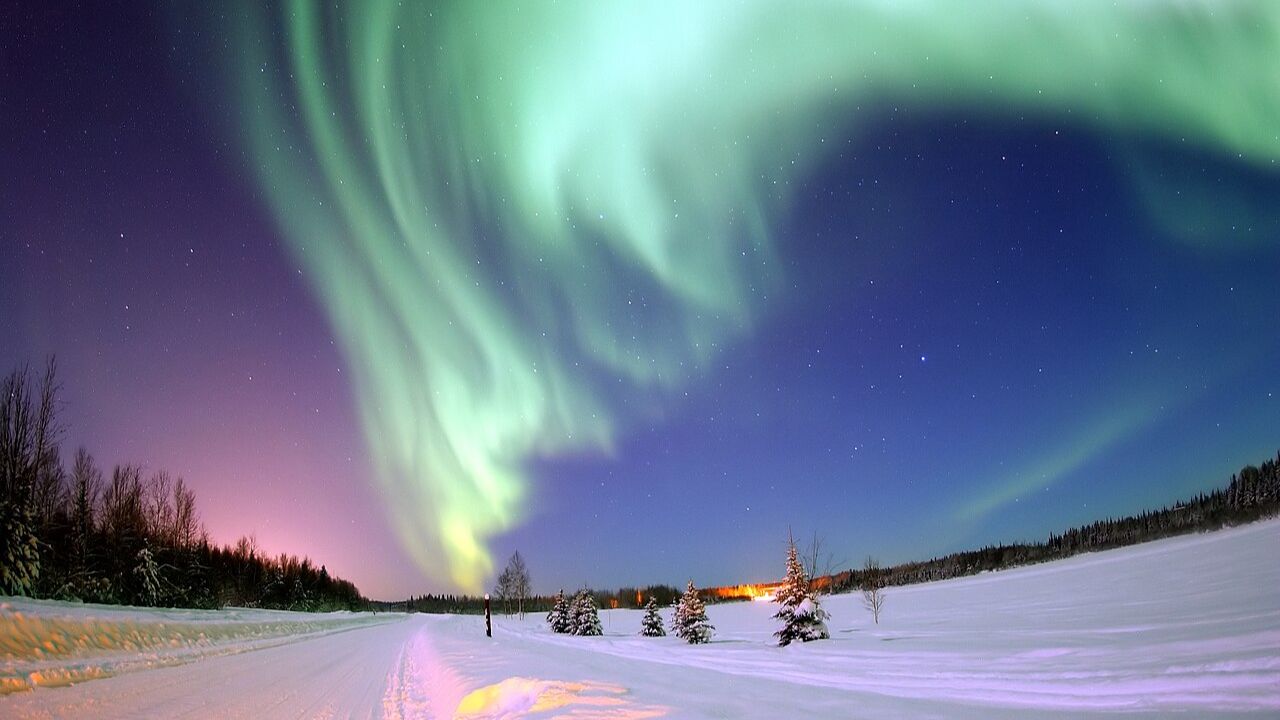



Experts predict 2026 will be a peak year for spotting the aurora borealis. Photographer Wil Cheung, who has witnessed the spectacle more than 400 times, shared his expert advice for aspiring observers.
In March 2015, Wil Cheung visited Iceland with friends for a solar eclipse when he received a tip about an exceptionally strong aurora forecast over Thingvellir National Park.
“I remember thinking, is it really worth it? We’d need to hire a car and drive in the freezing cold,” Cheung said.
“But once we started driving, we began to see these colours, and they just got stronger. We ended up lying on the snow in the national park and seeing these huge pillars of light, hundreds of miles high. I’m not religious, but it felt like this huge angel above me. We were there for hours mesmerised, and I was hooked.”
Already a volunteer at a local observatory in Northumberland, England, Cheung immersed himself in celestial photography upon returning home. “I thought that if I could photograph the night sky and the aurora, then hopefully I could inspire people to see it themselves,” he added.
By late 2017, Cheung was conducting star-gazing talks and aurora presentations at Northumberland National Park. His launch of overseas aurora-hunting tours generated such demand that the initial waiting list stretched to 17 years.

To date, Cheung has seen the lights over 400 times across locations from northern France to the Arctic. With 2026 forecast to be one of the best aurora years in more than a decade, his count is set to rise sharply.
Essential tips for the aspiring aurora hunter
Choosing your location
The auroral oval typically sits above the Arctic Circle. Prime locations include Norway, Finland, northern Sweden, Greenland, northern Iceland, Canada, and Alaska.




“Tromsø in Norway is often touted as one of the best places, as it’s inside the Arctic Circle, but the challenge with Tromsø is that it’s often under cloud,” Cheung noted.
“For me, Akureyri, in northern Iceland, is one of the best places, as the location is good for both weather conditions and aurora. I also like Iceland because it’s so easy to drive around.”
He also recommended cruises for escaping cloud cover and light pollution. “A few weeks ago, I was on a cruise off the coast of northern Norway and I have never seen the sky such a crazy blood red.”
Mastering the conditions
The ideal time is during a moonless sky. While a full Moon has less impact in northern latitudes, darkness is preferable. Seek locations far from city lights and use resources like lightpollutionmap.info.
“The number one challenge with aurora chasing is actually clear-sky chasing,” Cheung advised. “If you’re booking your own trip, I’d recommend leaving it until as late as possible and checking the weather to give you the best chance.”
He added that aurora season typically coincides with the quietest tourist season in Norway and Iceland, often making last-minute flights inexpensive.
Cheung described the ultimate goal as witnessing the ‘corona’. “When you’re underneath it, you see these rays coming straight for you, raining down on you… It’s like you’re being beamed up into infinity.”
Recalling one experience at Iceland’s Skógafoss waterfall, he said, “I parked up and knew within 10 minutes that it was going to go crazy and, sure enough, it was right above me. It was the most incredible thing.”
Practical planning advice
Cheung recommended securing accommodation in a dark-sky area to monitor the aurora’s phases throughout the night. “The most exciting phase can sometimes last just minutes, so ideally you want to stay somewhere you can keep popping your head out.”
For those booking tours, thorough research is crucial. “The right tour will have good local knowledge of things like light conditions, weather conditions [and] microclimates… There are a lot of dodgy tours out there, so I would recommend reading the reviews.”
Final preparations: What to pack
Function overrides fashion for aurora hunting. Essential items include footwarmers, thermal layers, waterproofs, a three-in-one jacket, and even a heated gilet. Statistically, the equinoxes around 21 March and 21 September offer the best odds, as geomagnetic storms are twice as likely.