A political storm has erupted in India after opposition leader Rahul Gandhi attempted to quote from an unpublished memoir by a former army chief that allegedly criticises the country’s political leadership during a deadly 2020 military standoff with China, bringing parliament to repeated standstills, reports BBC.
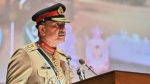
The controversy centres on Four Stars of Destiny, an unpublished book by General MM Naravane, who served as India’s army chief from 2019 to 2022. The manuscript has been awaiting government clearance since 2024 amid reports that it contains sensitive operational details relating to the clashes with Chinese forces along the disputed Himalayan border.
At least 20 Indian soldiers and four Chinese troops were killed in June 2020 in the Galwan river valley in Ladakh, in the first fatal confrontation between the two nuclear-armed neighbours since 1975. Tensions persisted for several years before easing in 2024 following sustained military and diplomatic talks that led to disengagement agreements in contested areas.
The latest dispute was triggered after The Caravan magazine published an essay over the weekend that it said was based on excerpts from Naravane’s unreleased memoir. The BBC said it had not seen the manuscript and could not independently verify the passages. Naravane and his publisher, Penguin Random House, have not publicly commented.

During a debate in the lower house of parliament on Monday, Gandhi attempted to read from a photocopy of the article. He said the memoir described a moment during the 2020 crisis when Chinese tanks advanced towards Indian positions and the army chief was told to take decisions as he saw fit, without clear political direction.
Gandhi was repeatedly interrupted by lawmakers from the governing Bharatiya Janata Party, including Defence Minister Rajnath Singh and Home Minister Amit Shah. The BJP accused him of insulting the armed forces, misleading parliament and violating rules by quoting from an unpublished book. Proceedings were adjourned amid shouting and protests.
Parliamentary Affairs Minister Kiren Rijiju said Gandhi could have continued speaking but argued that material which was untrue, unverified or not permitted under parliamentary rules should not be forced on the house.

The disruptions continued on Tuesday when Gandhi again tried to raise the issue, prompting fresh protests and leading to the suspension of eight lawmakers from his Congress party for disorderly conduct.
On Wednesday, Gandhi held up what he said was a copy of Naravane’s unpublished book while speaking to reporters outside parliament. He said claims by the government that the book did not exist were false and quoted passages suggesting there was a standing order not to fire on Chinese troops unless authorised by top political leaders.
Gandhi said the memoir indicated that when Naravane repeatedly contacted Rajnath Singh during the crisis, he was relaying a message from Prime Minister Narendra Modi that effectively left the decision-making to the army chief. Gandhi said this showed the prime minister had abdicated responsibility during the Ladakh crisis.
The BJP has strongly rejected such accusations. Gandhi has repeatedly accused the Modi government of conceding Indian territory to China during the 2020 standoff, claims the government denies, insisting that no land was lost.
Naravane’s memoir has yet to receive official clearance. Under Indian rules, retired military, intelligence and security officials are required to obtain approval before publishing material that could affect national security, sovereignty or operational plans.
Naravane has previously said his role ended after submitting the manuscript to the publisher and that discussions were under way between Penguin Random House and the defence ministry to secure the necessary permissions.
Retired Lieutenant General KJS Dhillon said earlier this week that any serving or retired officer wishing to publish operational details must submit the manuscript to army headquarters. He said such submissions can be approved, sent back for consultation, or rejected if deemed to pose a security risk.
Naravane is not the first former army chief to write about India’s military confrontations. In 2006, General VP Malik published an account of the 1999 Kargil conflict with Pakistan. Dhillon himself has written about his command in Indian-administered Kashmir and about India’s 2025 tensions with Pakistan.
For now, the unpublished memoir has become a flashpoint in India’s already polarised politics, fuelling clashes in parliament and reopening sensitive debates over civil-military decision-making during one of the country’s most serious recent security crises.