Four candidates are set to present their case this week for the post of United Nations secretary-general, a significantly smaller field compared to a decade ago, when António Guterres was selected to lead the global body.
On Tuesday, former Chilean president Michelle Bachelet, one of two women and three Latin American contenders, will be the first to face ambassadors from all 193 UN member states in a three-hour question-and-answer session. She will be followed by Rafael Mariano Grossi of Argentina, head of the UN nuclear watchdog. On Wednesday, UN trade chief Rebeca Grynspan will appear before the General Assembly, while former Senegalese president Macky Sall will conclude the lineup, according to an Associated Press (AP) report from the United Nations.
In 2016, a highly competitive race featured 13 candidates. So what has changed?
The deeply fractured and conflict-ridden world of 2026 stands in contrast to the relatively more stable global environment of 2016, the year Donald Trump first won the US presidency. The UN’s global standing has also weakened. A decade ago, the organisation was boosted by the success of the Paris climate accord and the adoption of 17 global goals aimed at economic growth, environmental protection and reducing inequality.
Today, major power rivalries have deepened to such an extent that the UN has been sidelined from its core role of maintaining international peace and security. The Security Council remains paralysed, unable to act on wars in Ukraine, Gaza and Iran, among other crises.

Richard Gowan of the International Crisis Group, a long-time UN observer, said the geopolitical climate has reshaped the race to succeed Guterres, whose second five-year term ends on 31 December. He noted that a decade ago, many candidates entered the race knowing they had little chance but used it to raise their profiles.
“There was no real cost to losing,” Gowan said. “This time, candidates and their backers are far more cautious. One misstep that annoys Washington or Beijing could cause real diplomatic damage.”
How the 2016 selection worked
In 2016, pressure mounted to elect the first female UN chief, with seven of the 13 candidates being women. However, Guterres was widely seen as the strongest performer in the UN’s “interactive dialogues” with General Assembly members.
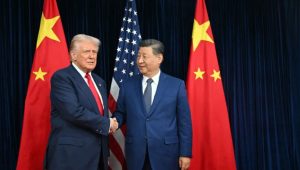
The UN Charter provides little detail on the selection process beyond stating that the General Assembly appoints the secretary-general on the Security Council’s recommendation. This gives the five permanent members—the United States, Russia, China, Britain and France—veto power and decisive influence.



By tradition, the post rotates by region. Guterres (Europe) followed Ban Ki-moon (Asia) and Kofi Annan (Africa). It is now Latin America’s turn, although Eastern Europe has never held the post and lost out in 2016.
Candidates must be nominated by a UN member state, not necessarily their own. More names could still emerge, but in 2016 the Security Council began straw polls in late July, effectively setting the cutoff.
How the current candidates were nominated
This week, the four candidates are expected to face questions on their vision, global crises and the future of the UN.
Michelle Bachelet, 74, was initially nominated by Chile, Brazil and Mexico. However, after Chile’s far-right president José Antonio Kast took office in March, his government withdrew support for the leftist former president. She remains in the race with backing from Brazil and Mexico.
Rafael Mariano Grossi, 65, the Argentine diplomat and International Atomic Energy Agency (IAEA) chief since 2019, was nominated by Argentina.
Rebeca Grynspan, 70, former Costa Rican vice president and head of UNCTAD since 2021, was also nominated by her country.
Macky Sall, 64, was nominated by Burundi. However, his home country Senegal told the African Union it had not endorsed him, and the divided 55-member regional bloc also did not support his candidacy.
A fifth contender, Argentine diplomat Virginia Gamba, was nominated by the Maldives, but the Indian Ocean nation withdrew her candidacy in late March without explanation.
Pressure for a female UN chief continues
Although only two women remain in the race, calls for a “madam secretary-general” continue, including from Guterres, who has pushed for gender parity within the UN system.
Britain and France have also expressed support for a female candidate. Advocacy groups such as 1 for 8 Billion and GWL Voices, led by former Argentine foreign minister Susana Malcorra, a 2016 candidate, have also campaigned strongly.
Bachelet already faces US opposition
In a 25 March letter to Secretary of State Marco Rubio, 28 Republican lawmakers urged the US to veto Bachelet, calling her “a pro-abortion zealot intent on overriding state sovereignty.” During a Senate hearing, US Ambassador to the UN Mike Waltz told Republican Senator Pete Ricketts—one of the letter’s signatories—that he shared those concerns, though he stopped short of confirming whether the US would formally oppose her.
Gowan said the prospects for a female secretary-general shifted sharply after Donald Trump returned to the White House. “Before that, many assumed a woman had to win,” he said. “Now, many diplomats think Washington will insist on a man as a matter of principle. I’m not sure that’s necessarily correct.”